Mechanics & Origins of Bipedalism (Coursera)

Offered by Dartmouth College,
Mechanics & Origins of Bipedalism (Coursera)

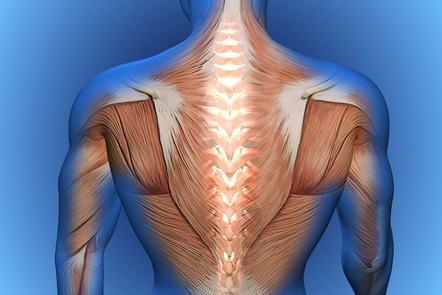
This course will take you through the kinematics of human locomotion including modeling upright walking as a controlled fall, how muscles and bones work together to move individuals using a series of joints and levers, and how the abductor mechanism works to solve the “seesaw problem” of side-to-side wobbling.

Class Deals by MOOC List - Click here and see Coursera's Active Discounts, Deals, and Promo Codes.

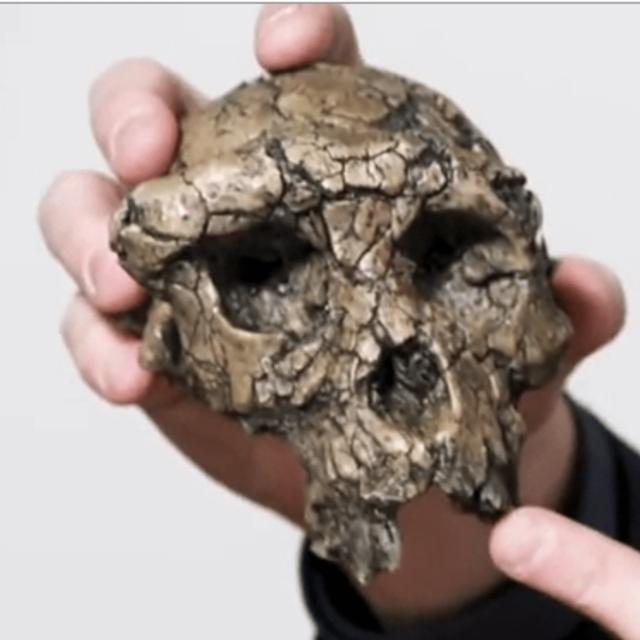
You will also understand how paleoanthropologists look for musculoskeletal adaptations in fossils to reconstruct how something in the past moved. You’ll explore how musculoskeletal adaptations correlate with bipedalism, as well as what significance these clues hold for telling us about how hominins moved. Additionally, you will learn the kinematics of other habitual striding bipeds found in the animal kingdom.
Every module of this course has been created with the intention of a “hands-on” learner experience, where you can play around with and learn from 3D renditions of different human and animal fossils. Through these exercises, you will be able to observe and describe animal behavior in order to explain the function of their locomotion and how that relates to our own.
This course is part of the Bipedalism: The Science of Upright Walking Specialization.

Syllabus

Module 1: An Overview of Bipedalism and Musculoskeletal Adaptations
This module provides an introduction to the kinematics of human locomotion and the musculoskeletal adaptations for bipedalism.

Module 2: More About the Mechanics of Bipedalism
This module explores how other bipedal walkers move uniquely.

Module 3: The Origins of Bipedalism and its Evolution
This module provides an overview of human evolution and explores the origin of bipedalism.

Go to Class
MOOC List is learner-supported. When you buy through links on our site, we may earn an affiliate commission.

Related Courses

Introducing Robotics: Making Robots Move (FutureLearn) FutureLearn
Queensland University of Technology

Introducing Robotics: Making Robots Move (FutureLearn)

The world needs people who understand how to get robots moving. Making robots move requires both mathematical knowledge and programming skills. We begin with the problem of describing where things are in the world. Starting simply, we consider objects in a two-dimensional plane, exploring the concepts of position, pose, rotation, and translation. Robot movement relies on the principles of kinematics – the motion of a body or bodies. You’ll program forward kinematics equations in MATLAB and learn approaches to inverse kinematics.

No sessions available
3 Weeks
Robotics (edX) EdX
Columbia University,ColumbiaX

Robotics (edX)

Learn the core techniques for representing robots that perform physical tasks in the real world. We think of Robotics as the science of building devices that physically interact with their environment. The most useful robots do it precisely, powerfully, repeatedly, tirelessly, fast, or some combinations of these. The most interesting robots maybe even do it intelligently. This course will cover the fundamentals of robotics, focusing on both the mind and the body.

This course is archived
5-12 Weeks
Experiments and Variations in Bipedalism (Coursera) Coursera
Dartmouth College

Experiments and Variations in Bipedalism (Coursera)

This course will help you learn how fossils give us an insight into how the early members of our lineage walked bipedally. The four million years old bone of Australopithecus anamensis is the oldest undisputed evidence for bipedalism in our lineage. Similarly, Lucy’s, who was Australopithecus afarensis, fossil also helped scientists discover a lot about how bipedalism evolved over time.

Jun 15th 2026
4 Weeks
Musculoskeletal Health: A Public Health Approach (FutureLearn) FutureLearn
Public Health England

Musculoskeletal Health: A Public Health Approach (FutureLearn)

Learn about the important public health messages of how to maintain good musculoskeletal health (MSK). Using the evidence to inform public health policy decisions for good MSK. Having and maintaining a healthy musculoskeletal system is crucial for your overall health. So, what public health approaches can policy makers and organisations take to ensure that for everyone? On this three-week course you’ll learn about the importance of maintaining good musculoskeletal health.

May 31st 2021
3 Weeks
Modern Robotics, Course 2: Robot Kinematics (Coursera) Coursera
Northwestern University

Modern Robotics, Course 2: Robot Kinematics (Coursera)

Do you want to know how robots work? Are you interested in robotics as a career? Are you willing to invest the effort to learn fundamental mathematical modeling techniques that are used in all subfields of robotics? If so, then the "Modern Robotics: Mechanics, Planning, and Control" specialization may be for you. This specialization, consisting of six short courses, is serious preparation for serious students who hope to work in the field of robotics or to undertake advanced study. It is not a sampler.

Jun 15th 2026
4 Weeks
Socle en Mécanique (FUN) FUN
Ecole Nationale Supérieure d’Arts et Métiers

Socle en Mécanique (FUN)

L’objectif du Mooc socle en mécanique est de vous permettre d’analyser des situations et des mécanismes en les rapportant aux principes de base de la mécanique générale: la cinématique est l’étude du mouvement indépendamment de ses causes. Elle permet de décrire des déplacements, des trajectoires, des vitesses et accélérations; et la statique est l’étude des actions mécaniques, des efforts ou des moments.

No sessions available
5-12 Weeks
Introduzione alla fisica sperimentale: meccanica, termodinamica (POK) Polimi OPEN KNOWLEDGE
Politecnico di Milano

Introduzione alla fisica sperimentale: meccanica, termodinamica (POK)

Il corso affronta le tematiche della meccanica e della termodinamica partendo dall’applicazione del metodo sperimentale, per prepararsi al meglio all'ingresso all'università. The course addresses the thematic of Mechanics and thermodynamics starting from the applications of the experimental method, to better prepare to start the college experience with the fundamental knowledge.

Available
5-12 Weeks
Rigid Body Dynamics (Coursera) Coursera
Korea Advanced Institute of Science and Technology - KAIST

Rigid Body Dynamics (Coursera)

This course teaches dynamics, one of the basic mechanics subjects of Mechanical Engineering. Students would be able to organize their knowledge about force and motion, work-energy, impulse-momentum in view of Newton's 2nd law and its integration over time and displacement. The Engineering Dynamics consists of two parts: particle dynamics and rigid body dynamics. This is the second part of the dynamics: rigid body dynamics.

May 25th 2026
13-24 Weeks