Smart Grids for Smart Cities: Towards Zero Emissions (FutureLearn)

Smart Grids for Smart Cities: Towards Zero Emissions (FutureLearn)

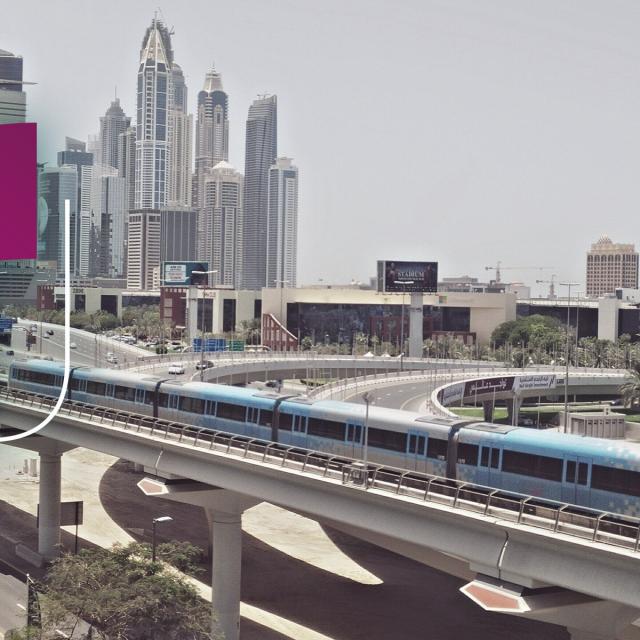
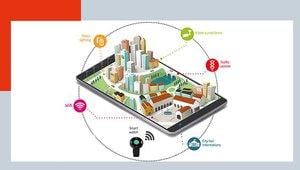
Find out how smart grids and big data can help citizens, companies and cities understand energy use and reduce carbon footprint. This online course provides a technological and behavioural framework to help citizens, companies and cities to reduce their carbon footprint.

Class Deals by MOOC List - Click here and see FutureLearn's Active Discounts, Deals, and Promo Codes.

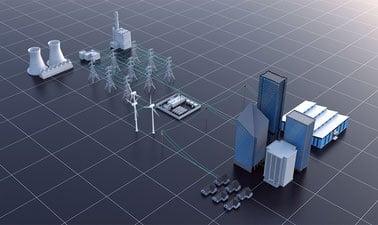
You’ll look at energy production models and use basic tools to integrate yourself into the energy production cycle. You’ll find out how smart grids work, at both a small and large scale. And you’ll collect big data from smart grids and analyse it to understand energy consumption.
Finally, you’ll look at how you can lobby public institutions, to boost energy innovation and sustainability, in both urban and rural environments.

What topics will you cover?

  • The power and energy transition impact in the world economy
  • How smart grids will enhance the era of information
  • What is a smart city and how can we make cities smarter
  • Smarts citizens: new forms of mobility and energy consumption and production
  • New business models for smart cities

What will you achieve?
By the end of the course, you'll be able to...

  • Interpret the new energy paradigm and reach a common knowledge to develop specific skills and strategies related to smart cities
  • Describe and understand a holistic perspective of energy related topics and other complex issues
  • Assess the complexity of energy systems and its transformation to a low carbon economy
Go to Class
MOOC List is learner-supported. When you buy through links on our site, we may earn an affiliate commission.

Related Courses

Introduction to Urban Geo-Informatics (edX) EdX
The Hong Kong Polytechnic University,HKPolyUx

Introduction to Urban Geo-Informatics (edX)

Learning about geospatial technologies, such as GIS, Remote Sensing, GNSS and Underground Mapping, to solve urban environmental issues. In this course, you will explore various technologies involved in Geo-Informatics, how the technologies help us to retrieve spatial data, and more importantly how the geographical data becomes the information used in decision making.

No sessions available
5-12 Weeks
clean-IT: Towards Sustainable Digital Technologies (openHPI) OpenHPI
Hasso-Plattner-Institut

clean-IT: Towards Sustainable Digital Technologies (openHPI)

Digitalization is a game changer in the pursuit of a sustainable future. The latest digital technologies and applications like cloud, AI, and mobile devices enable us to achieve the Sustainable Development Goals and reduce carbon emissions in many sectors. Yet computer systems themselves have an immense energy requirement for their countless devices, data centers, applications and global networks. To effectively reduce the carbon footprint of digitalization, it is necessary to apply algorithmic efficiency and sustainability by design as guiding principles in digital engineering.

Mar 31st 2021
5-12 Weeks
Digital transformation of megapolises: from zero to #1 in UN digital e-government ranking (Coursera) Coursera
Higher School of Economics - HSE University

Digital transformation of megapolises: from zero to #1 in UN digital e-government ranking (Coursera)

This course will help you to navigate ambiguity in definitions of "Smart City". You can review successful cases and practices of different approaches to transformation management, determine the potential of your city in the digital transformation, as well as find useful practical advices on search for funding of various digital projects in your city. In addition, lecturers introduce you with formation of Smart City structure and infrastructure from the officials’ point of view.

Aug 1st 2022
5-12 Weeks
Electric Power Systems (Coursera) Coursera
University at Buffalo,The State University of New York

Electric Power Systems (Coursera)

This course familiarizes you with standards and policies of the electric utility industry, and provides you with basic vocabulary used in the business. It introduces the electric power system, from generation of the electricity all the way to the wall plug. You will learn about the segments of the system, and common components like power cables and transformers.

Jul 27th 2026
4 Weeks
How to Measure, Reduce, and Offset your Company’s Carbon Footprint (FutureLearn) FutureLearn
BIMA,MSQ

How to Measure, Reduce, and Offset your Company’s Carbon Footprint (FutureLearn)

Help tackle climate change with this guide to carbon footprint measurement, offsetting, and reduction strategies for your company. Explore the different carbon footprint modelling tools No matter how many green practices you have in place, companies still produce at least some carbon in their operations.

Sep 6th 2021
5-12 Weeks
Technological challenges of participatory smart cities (FUN) FUN
INRIA

Technological challenges of participatory smart cities (FUN)

The course is a high level introduction to the constituents of the smart cities’ digital infrastructures, from the network up to the software layers. The proposed survey highlights the technical aspects to be taken into account to create practical services and to develop smarter cities involving citizen participation. In particular, it will impart information on privacy and interoperability aspects.

Mar 30th 2019
5-12 Weeks
Avoid SAP S/4HANA Project Delays with Third-Party Systems Service Virtualization (openSAP) OpenSAP
SAP

Avoid SAP S/4HANA Project Delays with Third-Party Systems Service Virtualization (openSAP)

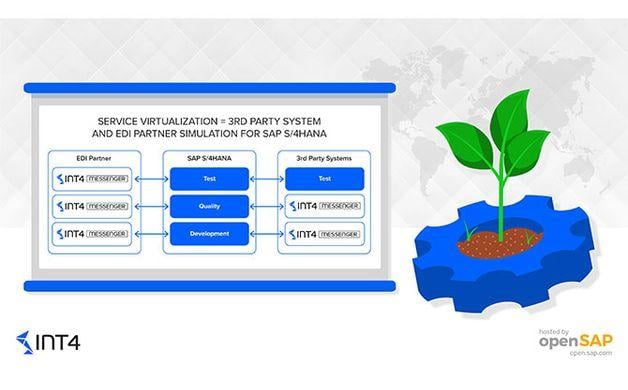
Join this free online course to learn how SAP-tailored service virtualization helps you optimize your SAP S/4HANA projects by avoiding delays and making them more sustainable. Dependencies caused by 3rd party systems, B2B, and EDI partners often result in delays in SAP S/4HANA transformation projects. SAP-tailored service virtualization enables you to avoid delays by virtualizing electronic messages from external applications and break dependencies in all stages of the project.

Nov 9th 2022
3 Weeks
Villes du monde en système (FUN) FUN
Université Paris 1 Panthéon-Sorbonne

Villes du monde en système (FUN)

Les villes regroupent déjà la moitié de la population mondiale et en concentreront les trois quarts avant la fin de ce siècle. C’est donc là que les sociétés doivent résoudre les problèmes majeurs pour leur durabilité, tant en matière de développement économique, de transition écologique, que d’équité sociale. Une bonne compréhension de la diversité des villes et de ce qui la cause est essentielle pour la réussite de ces évolutions nécessaires.

No sessions available
5-12 Weeks
Global Resource Politics: the Past, Present and Future of Oil, Gas and Shale (FutureLearn) FutureLearn
Hanyang University

Global Resource Politics: the Past, Present and Future of Oil, Gas and Shale (FutureLearn)

Understand the critical energy challenges the world faces and analyse the political economy of the global energy industry. Energy is often said to be the lifeblood of modern society. Multiple sea changes are currently afoot in the global economy, at the heart of which lies energy.

No sessions available
5-12 Weeks
O Futuro das Cidades, os Cidadãos e a UE: uma Construção com o Poder Local (NAU) NAU
Instituto Nacional de Administração - INA

O Futuro das Cidades, os Cidadãos e a UE: uma Construção com o Poder Local (NAU)

Aprenda a otimizar recursos como a mobilidade, a água ou a energia, tornando-os mais eficazes, mas também mais baratos e úteis. Uma das missões do Horizonte Europa (próximo programa-quadro da UE para a investigação e a inovação) e das linhas do Pacto Ecológico Europeu é a aposta em cidades inteligentes e com impacto neutro no clima. É nesse contexto que é importante saber o que é uma cidade inteligente e conhecer os instrumentos que permitem à administração local e aos cidadãos participar neste processo de transformação do ambiente urbano. Conheça o papel que a Administração Local pode desempenhar, no contexto da integração europeia, para promover uma cidadania ativa (local e europeia) e consolidar a construção de cidades inteligentes e verdes.

No sessions Available
Self-Paced