Electric Power Systems (Coursera)

Electric Power Systems (Coursera)

This course familiarizes you with standards and policies of the electric utility industry, and provides you with basic vocabulary used in the business. It introduces the electric power system, from generation of the electricity all the way to the wall plug. You will learn about the segments of the system, and common components like power cables and transformers.

Class Deals by MOOC List - Click here and see Coursera's Active Discounts, Deals, and Promo Codes.

This course is for individuals considering a career in the energy field (who have a high school diploma, at minimum, and basic knowledge of mathematics), and existing energy sector employees with less than three years of experience who have not completed similar training and would benefit from a course of foundational industry concepts.

The course is a combination of online lectures, videos, readings and discussions.
This is the first course in the Energy Production, Distribution & Safety specialization that explores various facets of the power sector, and features a culminating project involving creation of a roadmap to achieve a self-established, energy-related professional goal.
Course 1 of 4 in the Energy Production, Distribution & Safety Specialization.

Syllabus

WEEK 1
Basic Electricity
Electricity is a term that covers all the phenomena caused either by static electric charge or by the movement of charge (current) and the electrical and magnetic fields associated with that.
This module looks at: Nature and Effects of Electricity; Basic Electrical Properties and Simple Circuits.

WEEK 2
Generation, Transmission, & Distribution
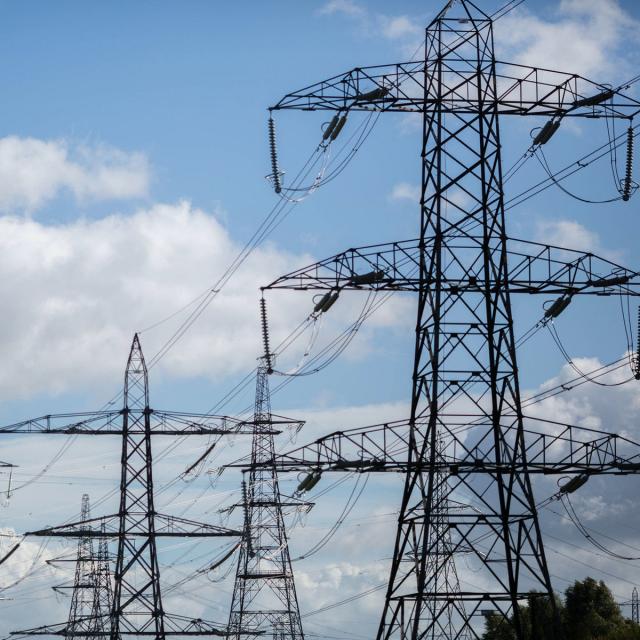
Electrical energy is transmitted and distributed via overhead lines and underground cables operating at different voltage levels. It is necessary to mesh networks to ensure dependable supply for consumers even if individual transmission paths fail.
This module focuses on: Substations & Transformers; Generation; Transmission & Subtransmission and Distribution.

WEEK 3
System Design & Switching
Circuit breakers are complicated electromechanical devices and must be serviced regularly. So that work on them can be perform safely, switches are installed before and after them.

WEEK 4
Renewable Energy & Smart Grid Technologies
Our nation’s electric power infrastructure that has served us so well for so long – also known as “the grid” – is rapidly running up against its limitations.
This module looks at Smart Grid Risks; Smart Grid, Utilities & Customers; Smart Grid & the Environment and Renewable Energy.
Go to Class
MOOC List is learner-supported. When you buy through links on our site, we may earn an affiliate commission.

Related Courses

Energy, Environment, and Everyday Life (Coursera) Coursera
University of Illinois at Urbana-Champaign

Energy, Environment, and Everyday Life (Coursera)

This course teaches you everything you need to know about energy, the environment, and at least a number of things in everyday life. It starts by talking about energy itself and where it comes from. This includes how much we have, who has it, who uses it, and what that all means. The video clips are produced in a fast-paced multimedia format during which Professor Ruzic throws in fun and demonstrations. There are multiple-choice questions to check your understanding and some more in-depth exercises to guide you deeper into the subject.

Aug 31st 2026
5-12 Weeks
Creating a Pro-Renewables Environment (edX) EdX
Imperial College London,ImperialX

Creating a Pro-Renewables Environment (edX)

Understand the policy, regulatory and fiscal measures that can incentivise renewable power and drive cleaner investment along the entire electricity supply chain. This course provides the tools needed to build a low-carbon power sector around the world. By diving into the perspective of different players in the power sector - from investors through to utilities, regulators and project developers - you will be able to choose the right strategies, policies and other levers needed to incentivise a cleaner power mix in your own context.

Self Paced
Self-Paced
Electrodynamics: In-depth Solutions for Maxwell’s Equations (Coursera) Coursera
Korea Advanced Institute of Science and Technology - KAIST

Electrodynamics: In-depth Solutions for Maxwell’s Equations (Coursera)

This course is the fourth course in the Electrodynamics series, and is directly proceeded by Electrodynamics: Electric and Magnetic Fields. Previously, we have learned about visualization of fields and solutions which were not time dependent. Here, we will return to Maxwell's Equations and use them to produce wave equations which can be used to analyze complex systems, such as oscillating dipoles. We will also introduce AC circuits, and how they can be simplified, solved, and applied.

Sep 14th 2026
5-12 Weeks
Electrical Industry: Production and Economics (FutureLearn) FutureLearn
University of Padova

Electrical Industry: Production and Economics (FutureLearn)

Understand how the electricity system has developed over time, see what the future holds and the need to move to decarbonisation. Discover how electricity is produced and exchanged and the reasons behind it. This innovative, three-week course from the University of Padova is designed to illustrate how electricity is produced, and exchanged, and why.

Self Paced
4 Weeks
Energy and Environment (Coursera) Coursera
Dartmouth College

Energy and Environment (Coursera)

This course deals with both renewable and non-renewable energy. By applying scientific principles and considering real-world examples, you will examine: 1. Non-renewable fossil fuels with a focus on coal, petroleum and natural gas and the benefits and consequences of using each. 2. Renewable fuels such as wind and solar and identify that even renewable “green” energy sources have impacts as well as benefits. 3. Biodiversity and global change, which are the integrating units of environmental science.

Aug 31st 2026
4 Weeks
Industrial Biotechnology (Coursera) Coursera
University of Manchester

Industrial Biotechnology (Coursera)

Fossil fuels have been the primary energy source for society since the Industrial Revolution. They provide the raw material for the manufacture of many everyday products that we take for granted, including pharmaceuticals, food and drink, materials, plastics and personal care. As the 21st century progresses we need solutions for the manufacture of chemicals that are smarter, more predictable and more sustainable.

Sep 7th 2026
5-12 Weeks
Electric Industry Operations and Markets (Coursera) Coursera
Duke University

Electric Industry Operations and Markets (Coursera)

This is a two week course. In the first week you will learn about the core activities that the Industry executes to bring electricity to customers. We will review what electricity is, how it is generated, how it is transmitted, how it comes into buildings, and how consumption of electricity instantly feeds back on the transmission and generation of electricity.

Sep 21st 2026
2 Weeks
The Sustainability Imperative (Coursera) Coursera
University of Colorado Boulder

The Sustainability Imperative (Coursera)

In this course, learners begin with a macro-level view of the current state of the world and touch upon topics such as climate change, plastic pollution, social inequity, and the economic systems that got us to where we are today. Learners investigate how such an economy cannot sustain itself and the need for a rapid transition to something different. We define sustainability, the meaning of sustainable development, and the United Nations' Sustainability Goals.

Jan 6th 2025
5-12 Weeks
Renewable Energy Technology Fundamentals (Coursera) Coursera
University of Colorado Boulder

Renewable Energy Technology Fundamentals (Coursera)

Renewable energy is one of the fastest growing industries on the planet, with billions of dollars invested each year to meet international energy sustainability goals. This course will provide you with a solid foundation for understanding and deploying important renewable energy technologies such as wind and solar. In addition, you will come away with a good understanding of important energy storage technologies such as pumped hydro, batteries, and hydrogen.

Sep 7th 2026
5-12 Weeks
Global Energy and Climate Policy (Coursera) Coursera
University of London,SOAS University of London

Global Energy and Climate Policy (Coursera)

The Global Energy and Climate Policy course offers an introduction to the theoretical and practical understanding of how energy and climate change policies are designed, shaped, advocated and implemented. As energy markets go truly global, domestic energy policies are becoming more and more entangled with wider issues of international governance. Concurrently, the urgent need to mitigate and adapt to climate change and transition to a low-carbon future is adding a further layer of complexity.

Sep 21st 2026
5-12 Weeks