FUN

Technological challenges of participatory smart cities (FUN)

Offered by INRIA,
Technological challenges of participatory smart cities (FUN)

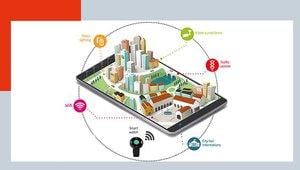
The course is a high level introduction to the constituents of the smart cities’ digital infrastructures, from the network up to the software layers. The proposed survey highlights the technical aspects to be taken into account to create practical services and to develop smarter cities involving citizen participation. In particular, it will impart information on privacy and interoperability aspects.

The course is designed for engineers or project leaders working for a company developing or willing to develop smart city projects involving citizen participation. It also addresses the challenges of professionals of a city government or a public institution who implement a smart city project which involves the deployment of digital technologies in the urban environment.

The course allows you to:

  • understand what is a smart city and the digital technologies supporting it
  • identify the required skills to design, develop and deploy innovative services toward smarter cities
  • picture new digital services for the urban environment while capturing the technologies they rely on
  • apprehend the costs and impediments (both technological and societal) that may occur to deploy a new digital service in the city
  • investigate public participation in the development of smart cities and the technological and societal challenges that emerge from it.

Course Syllabus

Module 1 : Introduction: a perspective on smarter cities
Module 2 : Network infrastructures for participatory urban systems
Module 3 : Software infrastructures for participatory urban systems
Module 4 : Cloud-based urban data management
Module 5 : Privacy-preserving urban systems

Go to Class
MOOC List is learner-supported. When you buy through links on our site, we may earn an affiliate commission.

Related Courses

Cities are back in town : sociologie urbaine pour un monde globalisé (Coursera) Coursera
Sciences Po

Cities are back in town : sociologie urbaine pour un monde globalisé (Coursera)

La mondialisation et l'européanisation favorisent le développement rapide des villes à travers le monde. L'urbanisation atteint de nouveaux sommets aujourd’hui avec l'essor des mégacités (plus de 15 millions d'habitants) comme Calcutta, Los Angeles, Dhaka, Le Caire, Tokyo, New York, Shanghai, Mexico ou Séoul. Au-delà de la métropole moderne, les chercheurs tentent de donner un sens à ces grandes régions urbaines au moyen de concepts divers tels que « post-métropoles », « villes globales », et « régions métropolitaines globales ».

Sep 21st 2026
5-12 Weeks
Big Data Emerging Technologies (Coursera) Coursera
Yonsei University

Big Data Emerging Technologies (Coursera)

Every time you use Google to search something, every time you use Facebook, Twitter, Instagram or any other SNS (Social Network Service), and every time you buy from a recommended list of products on Amazon.com you are using a big data system. In addition, big data technology supports your smartphone, smartwatch, Alexa, Siri, and automobile (if it is a newer model) every day. The top companies in the world are currently using big data technology, and every company is in need of advanced big data technology support. Simply put, big data technology is not an option for your company, it is a necessity for survival and growth.

Sep 7th 2026
5-12 Weeks
Villes du monde en système (FUN) FUN
Université Paris 1 Panthéon-Sorbonne

Villes du monde en système (FUN)

Les villes regroupent déjà la moitié de la population mondiale et en concentreront les trois quarts avant la fin de ce siècle. C’est donc là que les sociétés doivent résoudre les problèmes majeurs pour leur durabilité, tant en matière de développement économique, de transition écologique, que d’équité sociale. Une bonne compréhension de la diversité des villes et de ce qui la cause est essentielle pour la réussite de ces évolutions nécessaires.

No sessions available
5-12 Weeks
Data Storytelling with Power BI (Coursera) Coursera
Edureka

Data Storytelling with Power BI (Coursera)

Welcome to the Data Storytelling with Power BI course, where you'll embark on a journey to acquire practical expertise in data transformation and visualization. Leverage the potential of Power BI to craft narratives through structured data, leading to the discovery of more profound insights. Throughout this course, you'll explore the industry-specific applications of Power BI and delve into its various features and functionalities.

Sep 14th 2026
5-12 Weeks
Healthy Urban systems Part 2 : Theories, models and tools (Coursera) Coursera
University of Lausanne

Healthy Urban systems Part 2 : Theories, models and tools (Coursera)

This MOOC is the second part (out of three parts) of the whole MOOC on Healthy Urban Systems. These PART II is very recommended (but not obliged) to take after the PART I and before the PART III. Once you understood the main concepts and visions of Urban Health, and the best practices of observation in PART I, you are ready to think about theories and to practice models for this PART II.

Sep 21st 2026
4 Weeks
Cities are back in town : urban sociology for a globalizing urban world (Coursera) Coursera
Sciences Po

Cities are back in town : urban sociology for a globalizing urban world (Coursera)

Urbanization is reaching a new peak in the contemporary world with the rise of mega cities. Researchers try to make sense of these large urban areas using a variety of concepts. The class will review debates and present social science models of cities to analyse and compare contemporary developments. The class will review debates and present social science models of cities and metropolis to analyse and compare contemporary developments.

Sep 21st 2026
5-12 Weeks
Smart Cities - Management of Smart Urban Infrastructures (Coursera) Coursera
École Polytechnique Fédérale de Lausanne

Smart Cities - Management of Smart Urban Infrastructures (Coursera)

Learn about Smart Cities within the context of management of urban infrastructures. The introduction of Smart urban technologies into legacy infrastructures has resulted in numerous challenges and opportunities for contemporary cities and will continue to do so. This course will help you to understand how to make the best of these smart technologies in your cities’ legacy infrastructures.

Sep 18th 2026
5-12 Weeks
IBM Data Privacy for Information Architecture (Coursera) Coursera
IBM

IBM Data Privacy for Information Architecture (Coursera)

Data privacy controls how information is collected, used, shared, and disposed of, in accordance with policies or external laws and regulations. In this course, students will gain an understanding of what data privacy is along with how to identify and understand typical data protection and privatization objectives that an enterprise may have, and how to choose a data protection approach.

Sep 14th 2026
5-12 Weeks
Getting Started with Data Visualization in R (Coursera) Coursera
Johns Hopkins University

Getting Started with Data Visualization in R (Coursera)

Data visualization is a critical skill for anyone that routinely using quantitative data in his or her work - which is to say that data visualization is a tool that almost every worker needs today. One of the critical tools for data visualization today is the R statistical programming language. Especially in conjunction with the tidyverse software packages, R has become an extremely powerful and flexible platform for making figures, tables, and reproducible reports. However, R can be intimidating for first time users, and there are so many resources online that it can be difficult to sort through without guidance.

Sep 7th 2026
3 Weeks
Healthy Urban Systems - Part 1 (Coursera) Coursera
University of Lausanne

Healthy Urban Systems - Part 1 (Coursera)

Welcome to an immersive exploration of Urban Health Systems with our expertly developed MOOC, specifically designed for professionals and enthusiasts in Urban Health. This inaugural part of our MOOC series (consisting in 3 MOOCs) launches you into a comprehensive 4-week journey, navigating through multidisciplinary frameworks and analytical observations crucial to understanding urban health complexities.

Sep 21st 2026
4 Weeks