Global Resource Politics: the Past, Present and Future of Oil, Gas and Shale (FutureLearn)

Offered by Hanyang University,
Global Resource Politics: the Past, Present and Future of Oil, Gas and Shale (FutureLearn)

Understand the critical energy challenges the world faces and analyse the political economy of the global energy industry. Energy is often said to be the lifeblood of modern society. Multiple sea changes are currently afoot in the global economy, at the heart of which lies energy.

Class Deals by MOOC List - Click here and see FutureLearn's Active Discounts, Deals, and Promo Codes.

Understand the numerous critical energy challenges the world faces
The goal of this free online course is to examine the numerous critical energy challenges we are facing, and the complex interaction between the economics and politics of global energy markets.
Over six weeks, we will explore: the causes and implications of low oil prices for global energy markets and geopolitics; the success of North American shale gas and the desire of other countries, particularly China, to replicate it in future; the state of US natural gas and oil production; and the impact of the shale revolution and low oil prices on OPEC and Russia.

Analyse the political economy of the global energy industry
Global Resource Politics will give you an introduction to the basic elements of energy production, consumption and transportation, and the functioning of the global energy markets, industry and investments.
Learning with Professor Younkyoo Kim, from the the Division of International Studies at Hanyang University in Seoul, Korea, you will acquire an understanding of energy security and energy policy in today’s highly politicised, volatile energy markets.

What topics will you cover?

  • Overview of current global energy politics
  • Why low oil prices
  • US shale revolution
  • US shale revolution: Geopolitics
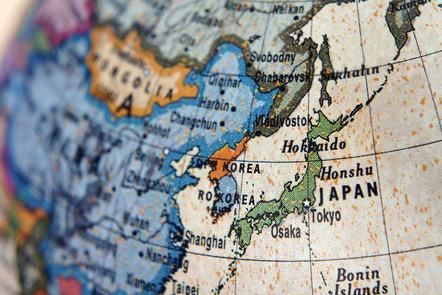
  • Energy security in Northeast Asia
  • Global energy governance

What will you achieve?
By the end of the course, you'll be able to...

  • Explore the basic elements of energy production, consumption, transportation, the functioning of the global energy markets, industry, and investments.
  • Examine recent global economic and security changes in the wake of the US shale gas revolution.
  • Explore the energy industry, energy market, and energy security in Asia, including Russia, China, Japan, and Korea.
  • Understand the concept of energy security and the politics of energy policy in today’s highly politicised, volatile energy markets.
Go to Class
MOOC List is learner-supported. When you buy through links on our site, we may earn an affiliate commission.

Related Courses

Energy, Environment, and Everyday Life (Coursera) Coursera
University of Illinois at Urbana-Champaign

Energy, Environment, and Everyday Life (Coursera)

This course teaches you everything you need to know about energy, the environment, and at least a number of things in everyday life. It starts by talking about energy itself and where it comes from. This includes how much we have, who has it, who uses it, and what that all means. The video clips are produced in a fast-paced multimedia format during which Professor Ruzic throws in fun and demonstrations. There are multiple-choice questions to check your understanding and some more in-depth exercises to guide you deeper into the subject.

Jun 8th 2026
5-12 Weeks
Marchés du Carbone : Examen des Politiques de l’UE pour l’Action Climatique Transnationale (FutureLearn) FutureLearn
European University Institute - EUI

Marchés du Carbone : Examen des Politiques de l’UE pour l’Action Climatique Transnationale (FutureLearn)

Explorez les politiques actuelles créées par l'UE, et évaluez leurs efficacités dans la promotion de l'action climatique mondiale. Comprendre et évaluer les mesures prises pour créer un cadre de politique climat. Alors que l’impact du changement climatique continue d’affecter notre planète, il est impératif que notre communauté mondiale se batte pour réduire ses émissions. Cependant, de nombreuses sociétés transnationales et États n’ont pas fait de changement pour réduire leur impact négatif sur la planète.

Apr 25th 2022
5-12 Weeks
Comprendre l'écologie, pour une économie innovante (Coursera) Coursera
ESCP Europe

Comprendre l'écologie, pour une économie innovante (Coursera)

Conçu conjointement par le think-tank Ecolo-Ethik et ESCP Europe, ce MOOC se propose de vous aider à dépasser les idées reçues sur l’écologie, dans le souci d’une démarche ouverte et multiple. A ce titre, de grands experts reconnus interviendront pour illustrer, approfondir et enrichir les différentes thématiques.

Jun 8th 2026
5-12 Weeks
Carbon Markets: Examining EU Policies for Transnational Climate Action (FutureLearn) FutureLearn
European University Institute - EUI

Carbon Markets: Examining EU Policies for Transnational Climate Action (FutureLearn)

Explore the current policies being created by the EU and assess their efficacy in promoting global climate action. Understand and evaluate the steps taken to create a climate policy framework. As the impact of climate change continues to affect our planet, it’s imperative that our global community fights to reduce their emissions and live sustainably.

Feb 28th 2022
5-12 Weeks
Introduction to Sustainability (Coursera) Coursera
University of Illinois at Urbana-Champaign

Introduction to Sustainability (Coursera)

This course introduces the academic approach of Sustainability and explores how today’s human societies can endure in the face of global change, ecosystem degradation and resource limitations. The course focuses on key knowledge areas of sustainability theory and practice, including population, ecosystems, global change, energy, agriculture, water, environmental economics and policy, ethics, and cultural history.

Jun 8th 2026
5-12 Weeks
21st Century Energy Transition: how do we make it work? (Coursera) Coursera
University of Alberta

21st Century Energy Transition: how do we make it work? (Coursera)

Affordable, abundant and reliable energy is fundamental to human well-being and prosperity. For the past 150 years, more and more people have gained access to energy, primarily in the form of fossil fuels – coal, petroleum and natural gas. But now, even while half of humanity cannot access adequate energy supplies, we are beginning a profound transition to more diverse energy sources. Climate change, environmental sustainability, and energy poverty are all important – and sometimes conflicting – drivers as we strive to supply more energy to more people with fewer negative impacts on Earth’s environments.

Jun 8th 2026
5-12 Weeks
Introduction to Thermodynamics (FutureLearn) FutureLearn
University of Hull

Introduction to Thermodynamics (FutureLearn)

Discover the laws of thermodynamics as you learn how to calculate chemical properties and predict chemical reactions. Get an introduction to thermodynamic properties and systems. Curious about thermodynamics or thinking about studying it at university? This short course from the University of Hull offers a short introduction to the fundamentals of thermodynamics – the branch of physics that deals with heat and its relation to energy.

Available now
3 Weeks
Electrodynamics: An Introduction (Coursera) Coursera
Korea Advanced Institute of Science and Technology - KAIST

Electrodynamics: An Introduction (Coursera)

The depth and breadth of electromagnetism, the foundation for many fields including materials science, electrical engineering, and physical chemistry, requires a long, steep, and steady learning curve. This course aims to bridge the gap between the fundamental principles taught in electromagnetism and its practical application to specific fields such as materials, physics, and chemistry related to energy storage and harvesting.

Jun 8th 2026
5-12 Weeks
Energy Management for IoT Devices (Coursera) Coursera
Starweaver

Energy Management for IoT Devices (Coursera)

Energy Management for IoT Devices is a comprehensive course designed to introduce participants to the integration of energy management techniques within IoT systems. Through a blend of theoretical insights and practical applications, the course equips current and aspiring professionals with a deep understanding of the pivotal role energy management plays in the IoT landscape. Over 4.0 hours, participants will explore various thematic aspects of energy management in IoT, emphasizing real-world applications and skill-building exercises.

Jun 8th 2026
4 Weeks
Battery Storage Technology: Opportunities and Uses (FutureLearn) FutureLearn
EIT InnoEnergy

Battery Storage Technology: Opportunities and Uses (FutureLearn)

Explore battery storage technology - how and why it works, and how it could revolutionise the European energy landscape. Could battery storage technology be the answer to energy demands? Imbalances in power supply, combined with rising energy demands pose a growing risk. But the emerging field of ‘battery storage’ could be the solution.

No sessions available
3 Weeks
Education on climate change, energy and ecological footprint (Coursera) Coursera
Inter-American Development Bank - IDB

Education on climate change, energy and ecological footprint (Coursera)

This course explores key concepts of climate change, such as climate, terrestrial systems, and energy. Their relationships are analyzed, and a diagnosis is proposed to promote school awareness of the short-term and long-term causes and effects of climate change. Additionally, the identification of local and global actions to mitigate it is encouraged.

Jun 8th 2026
2 Weeks