EdX

Principles of Modeling, Simulations, and Control for Electric Energy Systems (edX)

Offered by MIT, MITx,
Principles of Modeling, Simulations, and Control for Electric Energy Systems (edX)

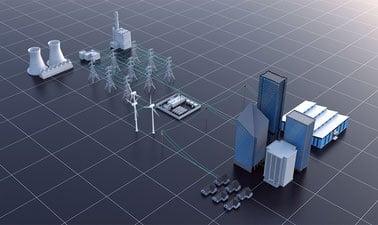
Apply a dynamic systems-level approach and engage emerging research on efficient, sustainable, and physically and economically feasible electric power systems of the future. As global energy demand grows, to mitigate climate change we must drive a swift transition to clean energy resources and enhanced electric power grid infrastructure. In this course, you will explore systemic principles of future electric power system management, such as the role of smart grids, data-enabled machine learning, power electronics-control, and data-driven decision-making.

Class Deals by MOOC List - Click here and see EdX's Active Discounts, Deals, and Promo Codes.

You will learn how energy technologies, including intermittent renewable energy technologies, can be modeled and controlled at both the component and system level to achieve sustainable, well-functioning, and economically sound results.
You will also learn about assumptions underlying today’s hierarchical control and the innovations needed to support end-to-end flexible efficient electricity services by conventional and new resources. A particular emphasis is on data-enabled distributed cooperative systems solutions.
Throughout, you will examine examples of real-world industry problems and solutions, such as methods for achieving stable integration of diverse power resources, demand response, and fast storage at reasonable cost. Modeling can be used for developing the next generation software needed to operate these systems, and for implementing incentives for new technologies in electric energy markets.
This course is designed for people engaging the energy transition across disciplines and professions. It introduces fundamental concepts for those interested in working in power systems planning, operations, and management. Researchers with a background in dynamical systems and control will learn how to model the dynamics and objectives of enabling clean and resilient electricity services as systems problems while making physically meaningful assumptions and using these models as the basis for introducing their own novel data-enabled methods. Experienced professionals, including utility and energy industry executives, will gain insights into cutting-edge research, concepts, and software. Policymakers in government and leaders in non-governmental organizations (NGOs) will find strategies for building resilience in grid infrastructure, driving more equitable access to energy, and driving higher renewable energy penetration in local markets.
What you'll learn
In this course, you will learn:

  • fundamental concepts for power systems planning, operations, and management
  • what may not work when using today’s hierarchical control and how to evolve it into flexible end-to-end electricity service
  • strategies for building resilience and enhancing energy access using existing grid infrastructure
  • how energy technologies, including intermittent renewable energy technologies, can be modeled and controlled at both the component and system level to ensure reliability and efficiency
  • the role of smart grids, data-enabled machine learning, power electronics-control, and data-driven decision-making in sustainable electric energy grids

Prerequisites
This course was designed for students from various disciplines, but its core concepts are rooted in electrical engineering and computer science.
Learners should have strong English language skills, an undergraduate-level study of physics, and undergraduate-level study of trigonometry and ordinary differential equations.
A basic understanding of electric circuits and networks is helpful.
Go to Class
MOOC List is learner-supported. When you buy through links on our site, we may earn an affiliate commission.

Related Courses

Energy Markets of Today (edX) EdX
Delft University of Technology,DelftX

Energy Markets of Today (edX)

Understand the European energy market and the economic principles behind it. This course will help you understand the functioning of energy markets as the necessary first step to promotion of the energy transition. By using the European electricity market as an example, you will obtain a deeper understanding of its principles and effectiveness.

Self Paced
5-12 Weeks
Transmisión de energía eléctrica (edX) EdX
Tecnológico de Monterrey,TecdeMonterreyX

Transmisión de energía eléctrica (edX)

Aprende cómo se transmite y se distribuye la electricidad y cómo este conocimiento puede ser aplicado para maximizar la transmisión de energía eléctrica. Caso de estudio en el sistema eléctrico mexicano. El conocer la manera en que funciona el sistema eléctrico mexicano como caso de estudio genera competencias importantes en el mundo actual y permite tener conocimientos de distribución eléctrica que se pueden usar en otros países.

Self Paced
Self-Paced
Modeling and Simulation of Multibody Systems - Part I (edX) EdX
LouvainX,Université Catholique de Louvain - UCL

Modeling and Simulation of Multibody Systems - Part I (edX)

Vehicles, bicycles, cranes, human body and robots are multibody systems. Learn how to model them and compute their kinematic and dynamic characteristics, such as velocities, accelerations and forces. This course aims at acquainting you with the modeling and simulation of complex articulated mechanical systems, denoted as multibody systems, such as vehicles, merry-go-rounds, motorbikes, cranes, human bodies, suspensions, robot manipulators, mechanical transmissions, etc.

Self Paced
Self-Paced
Model-Based Automotive Systems Engineering (edX) EdX
Chalmers University of Technology,ChalmersX

Model-Based Automotive Systems Engineering (edX)

Learn how to model and simulate system dynamics in automotive engineering. Modeling, control design, and simulation are important tools supporting engineers in the development of automotive systems, from the early study of system concepts (when the system possibly does not exist yet) to optimization of system performance. This course provides a theoretical basis to model-based control design with the focus on systematically develop mathematical models from basic physical laws and to use them in control design process with specific focus on automotive applications.

Self Paced
Self-Paced
Energy and Thermodynamics (edX) EdX
HarvardX,Harvard University

Energy and Thermodynamics (edX)

Learn the fundamentals of chemistry and energy, from the types of energy to atomic mass and matter to enthalpy and thermodynamics. What is energy and why is it so important? How does chemistry inform energy efficiency and sustainability? Energy and Thermochemistry is an interdisciplinary, online course that introduces you to the concept of energy. Providing a foundational understanding of energy, this course shows you how energy at the molecular level forms the basis of nearly every scientific discussion of chemical, physical, and biological change.

Self Paced
Self-Paced
Data Science: Inference and Modeling (edX) EdX
HarvardX,Harvard University

Data Science: Inference and Modeling (edX)

Learn inference and modeling, two of the most widely used statistical tools in data analysis. Statistical inference and modeling are indispensable for analyzing data affected by chance, and thus essential for data scientists. In this course, you will learn these key concepts through a motivating case study on election forecasting.

Self Paced
Self-Paced
Business Implications of Intelligent and Integrated Energy Systems (edX) EdX
Delft University of Technology,DelftX

Business Implications of Intelligent and Integrated Energy Systems (edX)

Learn how digital technologies help with the energy transition and then how to use this to develop future potential business models in various energy and energy-dependent sectors. This course focuses on the emerging digitalization-based business models in the energy systems field. You will study how digital technologies can aid practitioners and business leaders to reach more sustainable systems and operations and create modern and more sustainable business frameworks.

Self Paced
Self-Paced
Electric and Conventional Vehicles (edX) EdX
Chalmers University of Technology,ChalmersX

Electric and Conventional Vehicles (edX)

Learn how electric and conventional powertrains work and methods to analyse their performance and energy consumption. Electric powertrains are estimated to propel a large part of road vehicles in the future, due to their high efficiency and zero tailpipe emissions. But, the cost and weight of batteries and the time to charge them are arguments for the conventional powertrain in many vehicles.

Self Paced
Self-Paced
Viscoelasticidad y comportamiento mecánico-dinámico de materiales poliméricos. Modelización (edX) EdX
Universitat Politècnica de València,UPValenciaX

Viscoelasticidad y comportamiento mecánico-dinámico de materiales poliméricos. Modelización (edX)

Aprende sobre el comportamiento viscoelástico de polímeros para el diseño de componentes con materiales poliméricos. Los materiales poliméricos se caracterizan por tener un comportamiento viscoelástico lo cual implica que sus propiedades mecánicas surgen de la combinación de unas propiedades elásticas y viscosas.

Self Paced
Self-Paced
Introduction to Environmental Science (edX) EdX
DartmouthX,Dartmouth College

Introduction to Environmental Science (edX)

A scientific study of the natural world and how it is influenced by people. Major topics include: food, energy, human population, biodiversity and global change. Environmental science is the study of patterns and processes in the natural world and their modification by human activity. To understand current environmental problems, we need to consider physical, biological and chemical processes that are often the basis of those problems.

Self Paced
4 Weeks