FUN

Méditation et médecine en 2021 : éloge du care ? (FUN)

Offered by Université de Paris,
Méditation et médecine en 2021 : éloge du care ? (FUN)

Un parcours en 5 semaines pour Cultiver le prendre soin - S'interroger, Se nourrir, Ressentir, Respirer. Etudiantes en médecines, nous avons rencontré la méditation de pleine conscience comme une manière de rentrer en résonance, un moment avec soi, un souffle, une respiration, une manière de prendre soin de nous, pour mieux prendre soin des autres. Touchées par la vie, la mort, l’humain, l’impermanence, le doute, la peur, l'échec…Aujourd’hui femmes, médecins, nous l’avons transmis aux étudiants par l'enseignement.

What you will learn
At the end of this course, you will be able to:

  • Comprendre le besoin de care en santé à partir des challenges de la formation médicale en 2021.
  • Définir la méditation de pleine conscience en vous rapprochant de l'expérience, de déconstruire les croyances autour de la méditation et de percevoir sa place dans le soin.
  • D'appréhender la démarche scientifique interdisciplinaire des recherches sur le sujet de la méditation, donner envie, vous interroger.
  • Découvrir les éthiques du care et le lien entre méditation et care.
  • Saisir le lien entre prendre soin de soi, de l’autre et du monde. Comprendre en partie l’interdépendance et la notion d’expérience sensible.

Parce que la médecine se transforme, les étudiants d’aujourd’hui seront les médecins de demain. Parce que cultiver le sens du soin de soi, des autres et du monde est un essentiel, la faculté se questionne.
Dans ce MOOC, vous allez découvrir ce chemin du soin à la méditation, ou de la méditation au soin, à partir de l'expérience d'étudiant(e)s en médecine.
Ainsi, nous explorerons épisodes après épisodes

  • Comment prendre soin de soi pour prendre soin des autres à une époque où la santé mentale des soignants est mise à mal et le système hospitalier ébranlé ?
  • Comment passer d'une culture du pansement à une culture du care qui prend soin des ressources du vivant ?
  • Comment nourrir le sens du soin, particulièrement en médecine, individuellement et collectivement ?

Format
Ce MOOC propose chaque semaine, pendant 5 semaines, le visionnage de documentaires pédagogiques (une trentaine de minutes). Comme un voyage nous écouterons la voix d’être humains, étudiants, soignants, philosophes, enseignants, directeurs de soin, professeurs d’universités, ingénieurs, aumônier, méditants, chercheurs, artistes…
Des ressources variées, interdisciplinaires, (articles scientifiques, bibliothèque littéraire, poésies, …) sont mises à votre disposition et des activités réflexives (écriture, méditation, débat, défis) balisent votre avancée dans le MOOC.
Des événements, diffusés en direct sous forme de webinaires, permettront de rencontrer l'équipe pédagogique et les intervenants du MOOC pour approfondir certains aspects du chemin.

Course plan

Cette mini-série du Care se compose de 5 épisodes
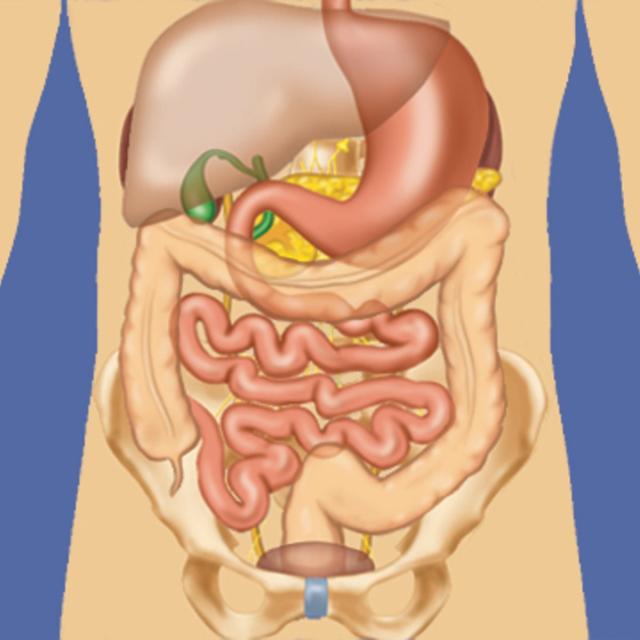
Épisode 1: La méditation de pleine conscience et le corps sensible
Episode 2: « Un soignant est un être humain », les challenges de la formation, la rencontre avec la méditation à l’université
Épisode 3: La méditation de pleine conscience et la recherche interdisciplinaire
Episode 4: La culture du care - « prendre soin »
Épisode 5: Prendre soin de soi, de l’autre et du monde - ressources et interdépendance

Go to Class
MOOC List is learner-supported. When you buy through links on our site, we may earn an affiliate commission.

Related Courses

Comprendre les addictions (FUN) FUN
Université Paris-Sud

Comprendre les addictions (FUN)

Responsables de 20% des causes de mortalité et de 50% des faits de délinquance, les addictions constituent un problème majeur de santé et de sécurité publique qui concerne de près ou de loin quasiment toutes les familles, comme l'ensemble de la société civile. Les addictions contemporaines comportent de multiples facettes : au-delà des problèmes liés à l'alcool, à l’héroïne ou la cocaïne il faut désormais y inclure : les consommations excessives chez les jeunes (cannabis, " binge drinking " ...), l'émergence des nouvelles drogues, les conduites addictives dans les entreprises et les addictions sans produit (jeux d'argent, internet, sexe, achats compulsifs ...). L'attention portée aux questions d'addictions et les données de la science ont considérablement progressé et ont permis l'émergence et l'essor de l’Addictologie.

No sessions available
5-12 Weeks
Diabetes - a Global Challenge (Coursera) Coursera
University of Copenhagen

Diabetes - a Global Challenge (Coursera)

Diabetes and obesity are growing health problems in rich and poor countries alike. With this course you will get updated on cutting-edge diabetes and obesity research including biological, genetic and clinical aspects as well as prevention and epidemiology of diabetes and obesity. All lectures are provided by high-profile scientists from one the world's leading universities in diabetes research.

Sep 14th 2026
5-12 Weeks
Epidemiology: The Basic Science of Public Health (Coursera) Coursera
University of North Carolina

Epidemiology: The Basic Science of Public Health (Coursera)

Often called “the cornerstone” of public health, epidemiology is the study of the distribution and determinants of diseases, health conditions, or events among populations and the application of that study to control health problems. By applying the concepts learned in this course to current public health problems and issues, students will understand the practice of epidemiology as it relates to real life and makes for a better appreciation of public health programs and policies. This course explores public health issues like cardiovascular and infectious diseases – both locally and globally – through the lens of epidemiology.

Sep 14th 2026
5-12 Weeks
"Care for carers" Aider une personne âgée : un rôle à part entière. Conseils et soutien (FUN) FUN
Université Fédérale Toulouse Midi-Pyrénées

"Care for carers" Aider une personne âgée : un rôle à part entière. Conseils et soutien (FUN)

This course is entended for anyone engaged in a care relationship with older people in disability or dependency situations, whether formal or informal caregivers. This module is part of Care Campus, a unique partner ship of academic institutions companies cities and governemental agencies that aim to improve the quality of care of older citizens in Europe.

No sessions available
5-12 Weeks
An Introduction to the U.S. Food System: Perspectives from Public Health (Coursera) Coursera
Johns Hopkins University

An Introduction to the U.S. Food System: Perspectives from Public Health (Coursera)

A food system encompasses the activities, people and resources involved in getting food from field to plate. Along the way, it intersects with aspects of public health, equity and the environment. In this course, we will provide a brief introduction to the U.S. food system and how food production practices and what we choose to eat impacts the world in which we live. Through several case studies, we will discuss some key historical and political factors that have helped shape the current food system and consider alternative approaches from farm to fork.

Sep 14th 2026
5-12 Weeks
Innate Immunity (FUN) FUN
Institut Pasteur

Innate Immunity (FUN)

More than a century ago, Elie Metchnikoff established the bases of cellular innate immunity when he discovered the mechanism of phagocytosis. However, during most of the XXth century, adaptive immunity (also known as specific immunity) focused most of the interest of the researchers, until Charles Janeway and Polly Matzinger revisited the definition of immunology. What was called “non-specific immunity” was renamed “innate immunity”, and the understanding of the sensing of the exogenous or endogenous dangers signals, and their identification revolutionized our understanding of the early mechanism aimed to defend the integrity of the host against any type of attacks including pathogens.

Jan 14th 2022
5-12 Weeks
Career 911: Your Future Job in Medicine and Healthcare (Coursera) Coursera
Northwestern University

Career 911: Your Future Job in Medicine and Healthcare (Coursera)

This course aims to help high school students, recent graduates, and those considering career transitions explore health care career options and learn strategies for entry into the health care workforce and health related fields. There are lots of amazing job opportunities in medicine and healthcare! Join us, as we share the strategies and secrets for getting those jobs.

Sep 14th 2026
5-12 Weeks
Training and Learning Programs for Volunteer Community Health Workers (Coursera) Coursera
Johns Hopkins University

Training and Learning Programs for Volunteer Community Health Workers (Coursera)

Volunteer community health workers (CHWs) are a major strategy for increasing access to and coverage of basic health interventions. Our village health worker training course reviews the process of training and continuing education of CHWs as an important component of involving communities in their own health service delivery. Participants will be guided through the steps of planning training and continuing education activities for village volunteers. The course draws on real-life examples from community-directed onchocerciasis control, village health worker programs, community case management efforts, peer educators programs and patent medicine vendor training programs, to name a few.

Sep 14th 2026
5-12 Weeks
HIV Science (FUN) FUN
Institut Pasteur

HIV Science (FUN)

Since the start of the epidemic HIV has infected over 75 million people and provoked more than 35 million deaths. Today, although HIV replication can be controlled by antiretroviral treatment, HIV infection remains an outstanding global health issue, with 36.7 million infected people and 1 million HIV-related deaths in 2016, according to WHO. Half of the infected population does not have access to antiretroviral treatment and 2 million new infections are registered every year. In addition there is currently no cure for HIV and antiretroviral treatment needs to be maintained for life. In this MOOC we will review different aspects of HIV infection: from its biological origin and its identification as the causative agent of AIDS to the perspectives of eradication.

No sessions available
5-12 Weeks
The Social Context of Mental Health and Illness (Coursera) Coursera
University of Toronto

The Social Context of Mental Health and Illness (Coursera)

Learn how social factors promote mental health, influence the onset and course of mental illness, and affect how mental illnesses are diagnosed and treated. This course explores how our understanding of mental health and illness has been influenced by social attitudes and social developments in North America and around the world. The course begins by situating our contemporary mental health practices in historical context, then looks at different aspects of mental health, mental illness and mental health services and their connections to what’s going on in our social environment.

Sep 14th 2026
5-12 Weeks
Tuberculosis (FUN) FUN
Institut Pasteur

Tuberculosis (FUN)

To provide an up-to-date overview of the disease, the Institut Pasteur has created a MOOC dedicated to Tuberculosis. This course will provide a knowledge base that goes from the basics of TB to the current state of knowledge on various aspects of tuberculosis: the clinical picture, epidemiology, pediatric TB, factors affecting susceptibility to the disease, including HIV, diabetes and human genetics, immunology, vaccines, diagnosis, current and future ways to detect drug resistance, and how to treat drug sensitive and multi-drug resistant strains.

Sep 7th 2021
5-12 Weeks