EdX

Self-Assembly for Functional Materials (edX)

Offered by Osaka University, OsakaUx,
Self-Assembly for Functional Materials (edX)

Learn design and structures of functional materials formed via self-assembly. Self-assembly is an important and useful method for creating functional materials. This course deals with the fundamentals and recent developments in functional materials formed through self-assembly of molecules and/or ions.

Class Deals by MOOC List - Click here and see EdX's Active Discounts, Deals, and Promo Codes.

Topics in this course includes design, structures and properties of the functional materials, and their applications in organic electronics, catalysis, and artificial photosynthesis.

What you'll learn
• Control of molecular assemblies and properties in solid-state
• Fundamentals and applications of clathrate crystals
• Fundamentals and applications of self-assembled organic electronic materials
• Assembly of metal ions for the development of molecular catalysts
• Assembly of molecular catalysts for artificial photosynthetic reactions
Go to Class
MOOC List is learner-supported. When you buy through links on our site, we may earn an affiliate commission.

Related Courses

Cellular Polymers: Structure, Properties, Processing, Applications (edX) EdX
University of Bayreuth,BayreuthX

Cellular Polymers: Structure, Properties, Processing, Applications (edX)

Take our MOOC and dive deep into Cellular Polymers. Understand what makes them superior to other materials, how they are processed and why they are used in countless applications in our everyday life. This MOOC is your first step in the pioneering field of Cellular Polymers that connects chemistry, physics, materials science, engineering, and technology. Get yourself ready and enroll now.

Self Paced
Self-Paced
Synchrotrons and X-Ray Free Electron Lasers (part 1) (edX) EdX
École Polytechnique Fédérale de Lausanne,EPFLx

Synchrotrons and X-Ray Free Electron Lasers (part 1) (edX)

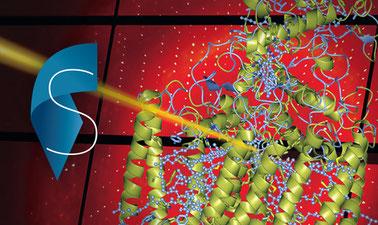
The first MOOC to provide an extensive introduction to synchrotron and XFEL facilities and associated techniques. Are you interested in investigating materials and their properties with unsurpassed accuracy and fidelity? Synchrotrons and XFELs count as Science’s premier microscopic tool in scientific endeavours as diverse as molecular biology, environmental science, cultural heritage, catalytical chemistry, and the electronic properties of novel materials, to name but a few examples.

Self Paced
Self-Paced
Science & Cooking: From Haute Cuisine to Soft Matter Science (chemistry) (edX) EdX
HarvardX,Harvard University

Science & Cooking: From Haute Cuisine to Soft Matter Science (chemistry) (edX)

Top chefs and Harvard researchers explore how everyday cooking and haute cuisine can illuminate basic principles in chemistry, physics, and engineering. Learn about food molecules and how chemical reactions can affect food texture and flavor. During each module of this course, chefs reveal the secrets behind some of their most famous culinary creations — often right in their own restaurants. Inspired by such cooking mastery, the Harvard team will then explain the science behind the recipe.

Self Paced
Self-Paced
Food Fermentation: The Science of Cooking with Microbes (edX) EdX
HarvardX,Harvard University

Food Fermentation: The Science of Cooking with Microbes (edX)

In Food Fermentation: The Science of Cooking with Microbes, explore the history of food and beverage fermentations and how tiny microbes change and enhance flavors, aromas, and tastes in our food. What’s living in your food? Many of the foods that we consume daily owe their distinct characteristics and flavors to microbes, specifically through a biochemical process of fermentation (using bacteria, fungi, and other microorganisms to produce diverse foods).

Self Paced
Self-Paced
Science in Art: The Chemistry of Art Materials and Conservation (edX) EdX
Trinity College, Hartford

Science in Art: The Chemistry of Art Materials and Conservation (edX)

Learn the chemistry behind the visual arts, and how an understanding of art’s material properties helps preserve our cultural heritage. How do artists create visual effects? In order to create an artistic impression, artists select materials that allow image formation, and that lend color, emphasis, shape, and size to the object created.

No sessions available
5-12 Weeks
DNA and Atoms: The Secret of Life (edX) EdX
Seoul National University,SNUx

DNA and Atoms: The Secret of Life (edX)

Learn about DNA structure, how atoms are bonded to make DNA molecules and the periodic table, through Nobel lectures and key scientific papers. In this chemistry course, you will learn about “Life in the Universe." We will explore DNA as genetic material and atoms as the building blocks of life. We will discuss the discovery and key features of the double helical structure of DNA and the chemical principles behind the sugar-phosphate backbone and hydrogen bonding in the base pairs will be emphasized.

This course is archived
4 Weeks
Solid State Devices 1 (edX) EdX
Purdue University,PurdueX

Solid State Devices 1 (edX)

Semiconductor are everywhere in human activities, from your credit card to space exploration. This graduate-level introduction brings aspects of physics, chemistry, and engineering together to understand, analyze, and design transistors and solar cells. This course provides the graduate-level introduction to understand, analyze, characterize and design the operation of semiconductor devices such as transistors, diodes, solar cells, light-emitting devices, and more.

Jan 9th 2023
13-24 Weeks
The Chemistry of Life (edX) EdX
Kyoto University,KyotoUx

The Chemistry of Life (edX)

Learn how to generate ideas at the interface between chemistry and biology. Chemistry and biology are traditionally taught as separate subjects at the high school level, where students memorize fundamental scientific principles that are universally accepted. However, at the university level and in industry, we learn that science is not as simple as we once thought. We are constantly confronted by questions about the unknown and required to use creative, integrated approaches to solve these problems.

Self Paced
Self-Paced
Energy and Thermodynamics (edX) EdX
HarvardX,Harvard University

Energy and Thermodynamics (edX)

Learn the fundamentals of chemistry and energy, from the types of energy to atomic mass and matter to enthalpy and thermodynamics. What is energy and why is it so important? How does chemistry inform energy efficiency and sustainability? Energy and Thermochemistry is an interdisciplinary, online course that introduces you to the concept of energy. Providing a foundational understanding of energy, this course shows you how energy at the molecular level forms the basis of nearly every scientific discussion of chemical, physical, and biological change.

Self Paced
Self-Paced
Chemical Thermodynamics I: Thermodynamics and Statistical Mechanics (edX) EdX
MIT,MITx

Chemical Thermodynamics I: Thermodynamics and Statistical Mechanics (edX)

Based on 5.601 Thermodynamics I, this course introduces learners to fundamental concepts in thermodynamics and statistical mechanics. Learners will develop an understanding of fundamental thermodynamic principles and how they arise from molecular scale system properties. This course is the first in a series of two thermodynamics courses that together, cover chemical thermodynamics, statistical mechanics, phase equilibria, and kinetics.

Apr 14th 2022
5-12 Weeks