EdX

Introduction to Solid State Chemistry (edX)

Offered by MIT, MITx,
Introduction to Solid State Chemistry (edX)

Learn chemical principles by examining materials with examples from energy generation and storage to emerging technologies. This first-year University chemistry course explores the basic principles of the chemical bond by studying the properties of solids. Properties such as stiffness, electrical conductivity, thermal expansion, strength, and optical properties are the vehicle by which you can learn a great deal of practical chemistry.

Class Deals by MOOC List - Click here and see EdX's Active Discounts, Deals, and Promo Codes.

You will see how experts use their knowledge of trends in the periodic table to predict the properties of materials. 3.091x is an engineering course so there is an emphasis on applications and how materials are used. The on-campus version of the course has been taught for over forty years and is one of the largest classes at MIT.

This course will cover the relationship between electronic structure, chemical bonding, and atomic order, and characterization of atomic arrangements in crystalline and amorphous solids: metals, ceramics, semiconductors, and polymers (including proteins). There will be topical coverage of organic chemistry, solution chemistry, acid-base equilibria, electrochemistry, biochemistry, chemical kinetics, diffusion, and phase diagrams. Examples will be drawn from industrial practice (including the environmental impact of chemical processes), from energy generation and storage (e.g., batteries and fuel cells), and from emerging technologies (e.g., photonic and biomedical devices).

What you'll learn:

  • You will develop your “chemical intuition”
  • A quantitative understanding of chemical principles
  • Understanding of crystal structure and its relationship to properties
  • Materials properties such as conductivity, optical transmission, stiffness, thermal expansion, and strength
  • An understanding of electronic structure, chemical bonding, and atomic order and arrangements

Go to Class
MOOC List is learner-supported. When you buy through links on our site, we may earn an affiliate commission.

Related Courses

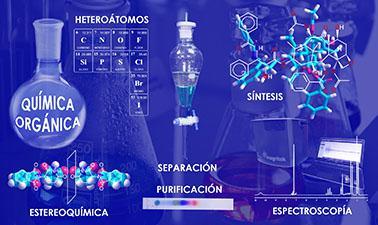
Pre-University Chemistry (edX) EdX
Delft University of Technology,DelftX

Pre-University Chemistry (edX)

Prepare for university by reviewing the science and technology of chemistry. Become familiar with the way chemistry and chemistry-related topics are taught at university level. Chemistry is the fundamental discipline that helps us explain properties, structure, and behavior of matter. A solid foundation in chemistry is of importance in addressing today’s challenges with innovative chemical technological solutions.

Self Paced
5-12 Weeks
Global Warming Science (edX) EdX
MIT,MITx

Global Warming Science (edX)

Learn about the physics, chemistry, biology, and geology of the earth’s climate system. Global Warming Science teaches you about the risks and uncertainties of future climate change by examining the science behind the earth’s climate. You will be able to answer such questions as, “What is the Greenhouse Effect?” and “How and why has earth’s climate changed through geologic history?”

No sessions available
13-24 Weeks
The Chemistry of Life (edX) EdX
Kyoto University,KyotoUx

The Chemistry of Life (edX)

Learn how to generate ideas at the interface between chemistry and biology. Chemistry and biology are traditionally taught as separate subjects at the high school level, where students memorize fundamental scientific principles that are universally accepted. However, at the university level and in industry, we learn that science is not as simple as we once thought. We are constantly confronted by questions about the unknown and required to use creative, integrated approaches to solve these problems.

Self Paced
Self-Paced
Entropy and Equilibria (edX) EdX
HarvardX,Harvard University

Entropy and Equilibria (edX)

Expand your learning of chemistry and thermodynamics by exploring entropy, free energy, and equilibrium. Nature is driven by spontaneity — processes that move forward without external intervention. In this course, Entropy and Equilibria , you will explore the Second Law of Thermodynamics and get an introduction to the concepts of entropy and equilibrium states.

Self Paced
Self-Paced
Food for Thought (edX) EdX
McGill,McGillX

Food for Thought (edX)

A course that offers a scientific framework for understanding food and its impact on health and society from past to present. Eating and understanding the nuances of food has become a complicated and often confusing experience. Virtually every day brings news about some “miracle food” that we should be consuming or some "poison" we should be avoiding.

No sessions available
5-12 Weeks
Thermodynamics (edX) EdX
IIT Bombay,IITBombayX

Thermodynamics (edX)

Introduction to basic concepts and applications of thermodynamics in mechanical engineering. ME209x is a basic course in thermodynamics, designed for students of mechanical engineering. We will study the terms and concepts used in thermodynamics, with precise definitions. The three laws of thermodynamics (zeroth, first, and second) will be explored in detail, and the properties of materials will be studied.

No sessions available
5-12 Weeks
Science & Cooking: From Haute Cuisine to Soft Matter Science (chemistry) (edX) EdX
HarvardX,Harvard University

Science & Cooking: From Haute Cuisine to Soft Matter Science (chemistry) (edX)

Top chefs and Harvard researchers explore how everyday cooking and haute cuisine can illuminate basic principles in chemistry, physics, and engineering. Learn about food molecules and how chemical reactions can affect food texture and flavor. During each module of this course, chefs reveal the secrets behind some of their most famous culinary creations — often right in their own restaurants. Inspired by such cooking mastery, the Harvard team will then explain the science behind the recipe.

Self Paced
Self-Paced
Electrochemistry (edX) EdX
HarvardX,Harvard University

Electrochemistry (edX)

Learn the significance of electrochemistry, understanding how electrical, chemical, and mechanical energy are linked. What is the chemistry and mechanics behind an electric car versus a gas-powered car — and why do you feel a difference driving them? The discipline of electrochemistry is not new, but it has regained prominence due to the emergence of energy production, energy storage, and technological innovations driven by both science and public policy. Given the rise of global energy demand, research and inventions aim to meet these challenges.

Self Paced
Self-Paced
Synchrotrons and X-Ray Free Electron Lasers (part 1) (edX) EdX
École Polytechnique Fédérale de Lausanne,EPFLx

Synchrotrons and X-Ray Free Electron Lasers (part 1) (edX)

The first MOOC to provide an extensive introduction to synchrotron and XFEL facilities and associated techniques. Are you interested in investigating materials and their properties with unsurpassed accuracy and fidelity? Synchrotrons and XFELs count as Science’s premier microscopic tool in scientific endeavours as diverse as molecular biology, environmental science, cultural heritage, catalytical chemistry, and the electronic properties of novel materials, to name but a few examples.

Self Paced
Self-Paced