EdX

Quantum Mechanics of Molecular Structures (edX)

Quantum Mechanics of Molecular Structures (edX)

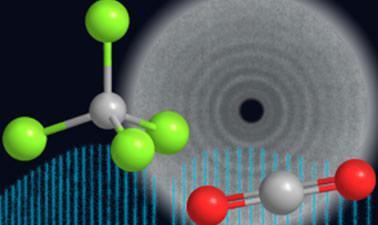
Learn two methods used to determine molecular structures and their properties in this introduction to Quantum Mechanics. Knowing the geometrical structure of the molecules around us is one of the most important and fundamental issues in the field of chemistry. This course introduces the two primary methods used to determine the geometrical structure of molecules: molecular spectroscopy and gas electron diffraction.

Class Deals by MOOC List - Click here and see EdX's Active Discounts, Deals, and Promo Codes.

In molecular spectroscopy, molecules are irradiated with light or electric waves to reveal rich information, including:

  • Motions of electrons within a molecule (Week 1),
  • Vibrational motions of the nuclei within a molecule (Week 2), and
  • Rotational motions of a molecule (Week 3).

In the gas electron diffraction method, molecules are irradiated with an accelerated electron beam. As the beam is scattered by the nuclei within the molecule, the scattered waves interfere with each other to generate a diffraction pattern. In week 4, we study the fundamental mechanism of electron scattering and how the resulting diffraction images reveal the geometrical structure of molecules.
By the end of the course, you will be able to understand molecular vibration plays an important role in determining the geometrical structure of molecules and gain a fuller understanding of molecular structure from the information obtained by the two methodologies.
What you'll learn:

  • Two major methods to determine the geometrical structure of molecules in the gas phase: molecular spectroscopy and gas electron diffraction
  • How to quantize various motions of molecules, extract the quantized energy levels, and determine the geometrical structure of molecules from the spectrum
  • The fundamental mechanism of electron scattering on the basis of quantum mechanics and how to determine the geometrical structure of molecules from gas electron diffraction images

Go to Class
MOOC List is learner-supported. When you buy through links on our site, we may earn an affiliate commission.

Related Courses

Global Warming Science (edX) EdX
MIT,MITx

Global Warming Science (edX)

Learn about the physics, chemistry, biology, and geology of the earth’s climate system. Global Warming Science teaches you about the risks and uncertainties of future climate change by examining the science behind the earth’s climate. You will be able to answer such questions as, “What is the Greenhouse Effect?” and “How and why has earth’s climate changed through geologic history?”

No sessions available
13-24 Weeks
Astrophysics: The Violent Universe (edX) EdX
Australian National University - ANU,ANUx

Astrophysics: The Violent Universe (edX)

Explore the deadliest places in the universe, from black holes to supernovae. Interested in exploring the deadliest and most mysterious parts of our universe? Or, investigating black holes, which warp the very fabric of space-time around them? We will look at what we know about these objects, and also at the many unsolved mysteries that surround them. We will also study white-dwarf stars and neutron stars, where the mind-bending laws of quantum mechanics collide with relativity. And, examine dwarf novae, classical novae, supernovae and even hypernovae: the most violent explosions in the cosmos.

Self Paced
Self-Paced
Quantum Mechanics for Everyone (edX) EdX
Georgetown University,GeorgetownX

Quantum Mechanics for Everyone (edX)

Learn the fundamental notions of quantum mechanics at a level that is accessible to everyone. Quantum Mechanics for Everyone is a six-week long MOOC that teaches the basic ideas of quantum mechanics with a method that requires no complicated math beyond taking square roots (and you can use a calculator for that).

Jun 8th 2023
5-12 Weeks
Quantum Mechanics for Scientists and Engineers 2 (edX) EdX
StanfordOnline

Quantum Mechanics for Scientists and Engineers 2 (edX)

This course covers key topics in the use of quantum mechanics in many modern applications in science and technology, introduces core advanced concepts such as spin, identical particles, the quantum mechanics of light, the basics of quantum information, and the interpretation of quantum mechanics, and covers the major ways in which quantum mechanics is written and used in modern practice.

Self Paced
Self-Paced
Fundamentos de Mecánica para Ingeniería (edX) EdX
Universitat Politècnica de València,UPValenciaX

Fundamentos de Mecánica para Ingeniería (edX)

Estudiaremos la cinemática y la dinámica del punto, los conceptos de trabajo y potencia y la energía mecánica. Se aborda el estudio del universo físico analizando objetos en movimiento. Se definen y analizan todas las magnitudes y leyes físicas que permiten describir geométrica y causalmente el movimiento de cuerpos representados por un punto.

Self Paced
Self-Paced
Hypersonics - from Shock Waves to Scramjets (edX) EdX
University of Queensland,UQx

Hypersonics - from Shock Waves to Scramjets (edX)

Understand flight at speeds greater than Mach 5 and discover how to analyse the performance of a scramjet. A flow is called hypersonic if the Mach number is greater than 5. This means that the flow speed is more than five times the speed of sound. In air at room temperature, the speed of sound is around 340 m/s, so a Mach 5 flow would have a flow speed of 1.7 km/s or just over 6,000 km/h. When a rocket launches a satellite into earth orbit, when a probe enters the atmosphere of another planet or when an aircraft is propelled by a supersonic combustion ramjet engine (a scramjet), hypersonic flows are encountered.

Self Paced
Self-Paced
Semiconductor Fundamentals (edX) EdX
Purdue University,PurdueX

Semiconductor Fundamentals (edX)

From smartphones to satellites, semiconductors are everywhere. Tying together physics, chemistry, and electrical engineering, this easy-to-follow introduction provides the background needed to understand devices such as transistors and solar cells. This course provides the essential foundations required to understand the operation of semiconductor devices such as transistors, diodes, solar cells, light-emitting devices, and more.

Jan 9th 2023
5-12 Weeks