The Science Behind Forensic Science (FutureLearn)

Offered by King's College London,
The Science Behind Forensic Science (FutureLearn)

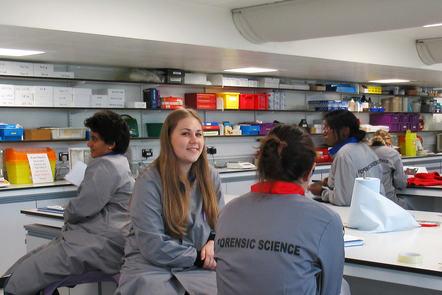
Get an introduction to the science of forensic science and discover how it's applied in the real world. Discover the biology and chemistry behind forensic science. How does forensic science really work? How are scientific principles applied in crime scenes? Answer these questions and more with this course from the team who teach the longest-running forensic science programme of its type in England.

Class Deals by MOOC List - Click here and see FutureLearn's Active Discounts, Deals, and Promo Codes.

On the course you will get an introduction to the chemistry and biology of forensic science. You will examine the methods used in forensic science and learn about how these technique are used in crime scenes and explained in the court room.

Syllabus

Week 1: Introduction to Forensic Science and The Crime Scene
Week 2: Forensic Biology
Week 3: Forensic Chemistry
Week 4: Evidence in the Court

What will you achieve?
By the end of the course, you'll be able to...

  • Demonstrate an understanding of how a crime scene is evaluated and some of the analytical techniques required for an analysis of the evidence.
  • Apply the chemistry knowledge acquired to approach the learning and understanding of more sophisticated techniques used in forensic science
  • Demonstrate an understanding of the genome that enables them to comprehend forensic DNA analysis
  • Demonstrate an appreciation of strengths and limitations of an adversarial judicial system in giving forensic evidence

Who is the course for?
This course is for anyone interested in discovering more about forensic science. It will be especially useful if you’re thinking of studying forensic science in the future or if you work in a field related to forensic science (for example law or the police force) and want to find out more.


Go to Class
MOOC List is learner-supported. When you buy through links on our site, we may earn an affiliate commission.

Related Courses

The Discovery of the Higgs Boson (FutureLearn) FutureLearn
University of Edinburgh

The Discovery of the Higgs Boson (FutureLearn)

Should we be excited about the Higgs boson? Find out more about particle physics and understanding the universe. The discovery of a new fundamental particle at the Large Hadron Collider (LHC), CERN is the latest step in a long quest seeking to answer one of physics’ most enduring questions: why do particles have mass? The experiments’ much anticipated success confirms predictions made decades earlier by Peter Higgs and others, and offers a glimpse into a universe of physics beyond the Standard Model.

Feb 13th 2023
5-12 Weeks
Forensic Psychology: Witness Investigation (FutureLearn) FutureLearn
The Open University

Forensic Psychology: Witness Investigation (FutureLearn)

How important are eyewitness testimonies in police investigations? Discover how forensic psychology prevents criminal injustice. Become a forensic psychologist and help solve crimes using eyewitness evidence. Have you ever questioned how reliable your own mind is? In this 8-week forensic psychology course, you’ll learn how the mind plays tricks on us and how this can impact criminal investigations. You’ll discover how cautious the police have to be during eyewitness investigation, and you’ll step into the shoes of a forensic psychologist.

Dec 19th 2022
5-12 Weeks
The Science of the Solar System (Coursera) Coursera
Caltech

The Science of the Solar System (Coursera)

Learn about the science behind the current exploration of the solar system in this free class. Use principles from physics, chemistry, biology, and geology to understand the latest from Mars, comprehend the outer solar system, ponder planets outside our solar system, and search for habitability in our neighborhood and beyond. This course is generally taught at an advanced level assuming a prior knowledge of undergraduate math and physics, but the majority of the concepts and lectures can be understood without these prerequisites.

Jun 22nd 2026
5-12 Weeks
The Brain and Space (Coursera) Coursera
Duke University

The Brain and Space (Coursera)

This course is about how the brain creates our sense of spatial location from a variety of sensory and motor sources, and how this spatial sense in turn shapes our cognitive abilities. Knowing where things are is effortless. But “under the hood,” your brain must figure out even the simplest of details about the world around you and your position in it.

Jun 22nd 2026
5-12 Weeks
Foundations of Science for Undergraduate Degrees (FutureLearn) FutureLearn
The University of Nottingham

Foundations of Science for Undergraduate Degrees (FutureLearn)

Develop the right skills for study and assessment in higher education while refreshing your core science knowledge.Give yourself an advantage for starting a university degree. With interruptions to education occurring all the time, many school students intending to go to university in the coming years may not feel prepared.

Aug 23rd 2021
5-12 Weeks
Understanding Ramon Llull: Philosophy, Arts and Science through the Ars Combinatoria (FutureLearn) FutureLearn
Universitat Pompeu Fabra,Centre de Cultura Contemporània de Barcelona - CCCB

Understanding Ramon Llull: Philosophy, Arts and Science through the Ars Combinatoria (FutureLearn)

Explore the fascinating work of philosopher Ramon Llull and its impact with this free online course. Ramon Llull, born in Majorca in the 13th Century, was an influential philosopher, writer and pioneering thinker. This controversial man was admired and scorned alike by some of the most enlightened minds in European culture. He was also one of the leading lights in the intellectual circles of the late 13th century, in which Arab, Jewish and Christian philosophers and scientists participated.

No sessions available
2 Weeks
Snow: What It Is and Why It Matters (FutureLearn) FutureLearn
Luleå University of Technology

Snow: What It Is and Why It Matters (FutureLearn)

Explore the science of snow – how it forms, its different types, and how it can best be used. Learn all about snow from cold weather experts in Sweden. Snow can affect every aspect of life, from transport systems to business operations; that’s why it’s crucial to understand what exactly snow is, how it forms, and how we can manage it.

Oct 25th 2021
2 Weeks
Introduction to Cognitive Psychology: An Experimental Science (FutureLearn) FutureLearn
University of York

Introduction to Cognitive Psychology: An Experimental Science (FutureLearn)

Learn how to use cognitive psychology experiments to explore the internal workings of the mind with this online psychology course. Learn how to conduct, analyse and understand cognitive psychology experiments. Cognitive psychology is the scientific study of internal mental processes. On this course, you will be introduced to two key areas of cognitive psychology: reasoning and thinking and mental imagery.

Available now
3 Weeks
UFOs: Scanning the Skies Teach-Out (FutureLearn) FutureLearn
University of Michigan

UFOs: Scanning the Skies Teach-Out (FutureLearn)

Explore possible explanations for UFO sightings as you delve into fascinating accounts of unidentified flying objects. Unpack the myths and facts surrounding UFOs. Following the release of the U.S. Pentagon UFO report, there has been a surge of interest in unidentified aerial phenomena (UAPs). People across the world are gripped by the history of UFOs and the stories told by those who have witnessed them.

Feb 7th 2022
2 Weeks
Science Communication and Public Engagement (FutureLearn) FutureLearn
Universidad Autonoma de Madrid,EIT Food,EIT,University of Turin

Science Communication and Public Engagement (FutureLearn)

Discover the importance of public engagement in science, and learn techniques to share and raise awareness of your research. Define your message and share your findings through social and traditional media. Good science communication ensures the public engage with and understand relevant scientific research. On this course, you will learn how best to share your science findings with your intended audience.

Jan 2nd 2023
3 Weeks
Humphry Davy: Laughing Gas, Literature, and the Lamp (FutureLearn) FutureLearn
Lancaster University,Royal Institution - RI

Humphry Davy: Laughing Gas, Literature, and the Lamp (FutureLearn)

Discover Humphry Davy and his contribution to science and the arts. Before culture was divided into the sciences and the arts there was a chemist who was also a poet. Sir Humphry Davy (1778-1829) is one of the best known men of science of the nineteenth century: he was the first person to inhale nitrous oxide; he isolated nine chemical elements; and he invented the miners’ safety lamp known as the Davy lamp. This course will consider Davy’s life and career using manuscript sources held at the Royal Institution of Great Britain.

Oct 9th 2023
4 Weeks