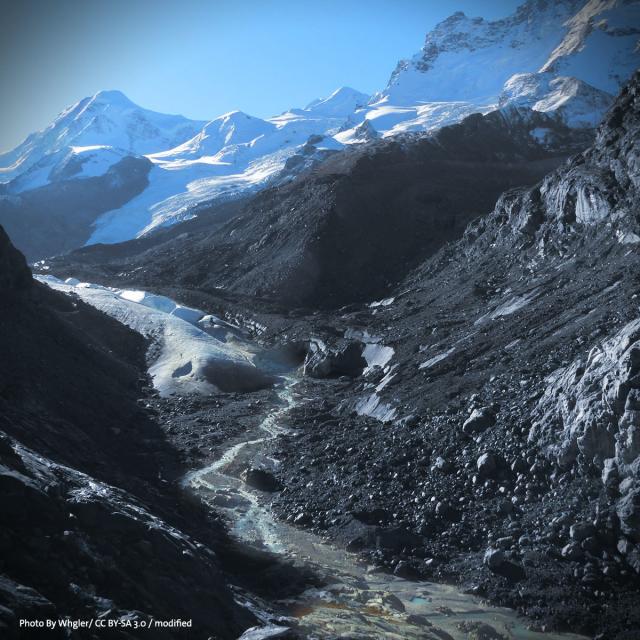
What is climate change? How are mountain regions affected by the evolution of water resources and their uses? What kind of risks need to be considered? Mountains are recognized as particularly sensitive physical environments where intense and rapid changes have in the past, and may increasingly in the future, place pressure on their resource base.
Class Deals by MOOC List - Click here and see Coursera's Active Discounts, Deals, and Promo Codes.
In this context, a team of roughly 100 experts worked from 2008 to 2013 for the European ACQWA project which was coordinated by the University of Geneva. The primary objectives of the project were to assess the impacts of a changing climate on the quantity and quality of water originating in mountain regions, particularly where snow- and ice melt represent a large, sometimes the largest, streamflow component. A further objective of the project was to determine the potential disruptions to water-dependent economic activities related to the climate impacts on hydrological systems, and to propose a portfolio of possible adaptation strategies.
This particular MOOC is inspired by the ACQWA Project and offers a better understanding of climate change, its impacts on the quality and quantity of water in mountain regions and the risks related to changing water resources. From an interdisciplinary perspective, the participation of twenty-five instructors from five different countries (Switzerland, England, South Korea, India and Nepal) and fourteen institutions (UNIGE, RTS, UNIFR, UZH, ETHZ, Meteodat GmbH, WGMS, Imperial College London, Agroscope, République et Canton de Genève, Yonsei University, IHCAP, ICIMOD, SDC, FOEN) highlights the diversity of both theoretical and practical viewpoints related to these issues.
By the end of this course, you will be able :
- to define the general concept of climate change in mountain regions
- to understand the concepts associated with climate change such as adaptation and water governance strategies
- to consider the impacts of climate change on water resources in mountain regions
- to identify the impacts of climate change on hydropower, agriculture, aquatic ecosystems and health
- to enumerate risks that can occur in mountain areas and lead to disruptions in water availability and use.
Your acquired knowledge will be evaluated through multiple-choice quizzes at the end of each unit of the course.
This MOOC on “Climate Change and Water in Mountain Regions: A Global Concern” was initiated and financed by the University of Geneva, through its Institute for Environmental Sciences.
We look forward to you joining us!
Syllabus
WEEK 1
Unit 0: Welcome Unit
View an introductory video on the ACQWA Project, read key introductory documents, say hello to your fellow classmates and express your interest in the topic.
WEEK 2
Unit 1: Introduction to climate change
In this module, you will learn about the functioning of the climate system, in particular the numerous interacting components such as the atmosphere, the oceans, the cryosphere and the biosphere. Physical mechanisms that can disrupt climate on different time and space scales will be outlined, and the concepts underlying anthropogenic climate change will be introduced. Following a brief overview of how climate simulation models function, you will be able to see what may be the evolution of climate over coming decades in response to increases in greenhouse-gases in the atmosphere, and what are the limits and uncertainties to these model projections.
WEEK 3
Unit 2: Impacts of Climate Change on Water Resources
In this unit, you will learn about observed trends in glacier retreat and changes in mass balance. Different methods of mass balance measurements are presented. Ongoing and projected climate change by the end of the century will have fundamental consequences on the cryosphere. In this module, you will realize what the consequences of glacier retreat are on glacial runoff regimes and on global scale runoff. You will become familiar with changes in snow cover in different mountain regions of the World. Further, the basic mechanics of glacier flow and an overview of processes leading to glacier instability will allow you to understand how climate variables, among other factors, may potentially modify the frequency of glacial lake drainage, glacier surge and the break-off of glaciers. Finally, this module discusses how the calving of ice sheets will impact sea level rise and where uncertainties persist in the projection of these changes.
WEEK 4
UNIT 3: Impacts of Climate Change on Water Uses
In this module, you will learn about the impacts of climate change on different sectors, such as the economy, the environment or the health. In mountain regions, glacier retreat, warmer waters or modified runoffs will for instance impact hydroelectric installations production, biodiversity and all kind of living organisms. In the lowlands, the agricultural sector will also have to deal with water scarcity to reduce yield vulnerability. You will also see that warmer temperatures can be beneficial to certain plants like grapevine but that it can also enhance the development of insect pest generating damages or favour disease transmissions to human being.
WEEK 5
Unit 4: Recommendations for Adaptation and Water Governance Strategies
In this module, you will learn about the concepts of social network analysis and adaptive capacities, and the central role they play in the implementation of adaptation strategies and in the reduction of ecosystems vulnerability to climate change. The ecosystems will illustrate the mutual benefits that can occur between actors and mechanisms. Concrete examples and case studies will emphasize the mutual benefits and the mechanisms that can occur in a network of actors and how those interactions can help in reducing natural risk disasters.
WEEK 6
Unit 5: Risk management
In this module, you will learn about the role ongoing climatic changes have on the occurrence of natural hazards in high mountain environments, and how their temporal frequency and magnitude is being influenced by the ongoing warming. Concrete examples and case studies will emphasize these changes in process behavior of glacier lake outburst floods (GLOFs), debris flows and rockfalls. In addition to the illustration of changes in the physical processes, this module will also illustrate how Switzerland is coping with these changes and how natural hazard risk is being addressed by the Federal Office for the Environment (FOEN) through an Integrated Risk Management.