Discovering Science: Global Challenges (FutureLearn)

Offered by University of Leeds,
Discovering Science: Global Challenges (FutureLearn)

Can chemistry help to feed a growing population, or overcome increasing bacterial resistance? Find out how the Penicillin class of antibiotics has been a major breakthrough in the treatment of patients. However, with bacteria developing efficient ways of resisting antibiotic treatment, discover how scientists are treating patients with infections resulting from resistant bacteria.

Class Deals by MOOC List - Click here and see FutureLearn's Active Discounts, Deals, and Promo Codes.

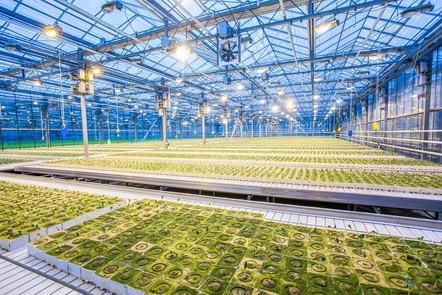
The world’s population is approaching eight billion people, putting increasing strain on our ability to feed everybody. Explore the strategies currently being developed, and the role that chemistry plays in finding solutions to food security.

Syllabus

Week 1: The fight against bacteria
Week 2: Feeding a growing global population

What will you achieve?
By the end of the course, you'll be able to...

  • Explore the origins of antibiotic development and how some bacteria are able to become resistant to antibiotics.
  • Explore the challenges behind educating people in the proper use of antibiotics.
  • Identify uses of chemistry in addressing the challenges of feeding a growing population.
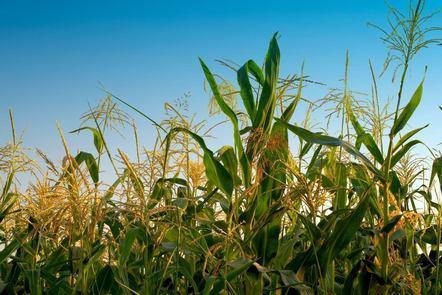
  • Explore the uses of natural crops and their genetically-modified alternatives.
Go to Class
MOOC List is learner-supported. When you buy through links on our site, we may earn an affiliate commission.

Related Courses

Introduction to Cognitive Psychology: An Experimental Science (FutureLearn) FutureLearn
University of York

Introduction to Cognitive Psychology: An Experimental Science (FutureLearn)

Learn how to use cognitive psychology experiments to explore the internal workings of the mind with this online psychology course. Learn how to conduct, analyse and understand cognitive psychology experiments. Cognitive psychology is the scientific study of internal mental processes. On this course, you will be introduced to two key areas of cognitive psychology: reasoning and thinking and mental imagery.

Self Paced
3 Weeks
The Science Behind Forensic Science (FutureLearn) FutureLearn
King's College London

The Science Behind Forensic Science (FutureLearn)

Get an introduction to the science of forensic science and discover how it's applied in the real world. Discover the biology and chemistry behind forensic science. How does forensic science really work? How are scientific principles applied in crime scenes? Answer these questions and more with this course from the team who teach the longest-running forensic science programme of its type in England.

Self Paced
4 Weeks
Discovering Science: Atmospheric Chemistry (FutureLearn) FutureLearn
University of Leeds

Discovering Science: Atmospheric Chemistry (FutureLearn)

What can we learn about Earth, and other planets in and beyond our solar system, by studying their atmospheres? Learn about the role that radiation and greenhouse gases play in our understanding of atmospheric chemistry. As levels of CO2 in the atmosphere increase, you will discover the solutions scientists are exploring to reduce levels. And discover how missions to other planets and moons in our solar system are revealing extraordinarily diverse atmospheres.

Self Paced
2 Weeks
The Discovery of the Higgs Boson (FutureLearn) FutureLearn
University of Edinburgh

The Discovery of the Higgs Boson (FutureLearn)

Should we be excited about the Higgs boson? Find out more about particle physics and understanding the universe. The discovery of a new fundamental particle at the Large Hadron Collider (LHC), CERN is the latest step in a long quest seeking to answer one of physics’ most enduring questions: why do particles have mass? The experiments’ much anticipated success confirms predictions made decades earlier by Peter Higgs and others, and offers a glimpse into a universe of physics beyond the Standard Model.

Self Paced
5-12 Weeks
The Scientific Revolution: Understanding the Roots of Modern Science (FutureLearn) FutureLearn
University of Groningen

The Scientific Revolution: Understanding the Roots of Modern Science (FutureLearn)

Learn about the seventeenth-century Scientific Revolution and its role in shaping the modern Western world. How did the science of today come about? What constitutes ‘modern’ science? How does science relate to religion? Answer these questions and more with this course that travels back in time to the seventeenth-century Scientific Revolution to explore the roots of modern science.

Self Paced
3 Weeks
Virtual Work Experience and Exploring the Veterinary Profession (FutureLearn) FutureLearn
The University of Nottingham

Virtual Work Experience and Exploring the Veterinary Profession (FutureLearn)

Learn what it takes to become a vet and explore the challenges of the vet profession to decide if it's the right career for you. Get virtual vet work experience before embarking on a veterinary degree. The COVID-19 pandemic means that many potential vet students cannot undertake animal handling work experience. On this course, you’ll get insight into the reality of life as a vet so that you can make an informed decision before embarking on a veterinary degree course.

Feb 1st 2021
2 Weeks
Atmospheric Chemistry: Planets and Life Beyond Earth (FutureLearn) FutureLearn
University of Leeds

Atmospheric Chemistry: Planets and Life Beyond Earth (FutureLearn)

Learn about the atmospheric chemistry of planets and celestial bodies and explore the possibility of finding life beyond Earth. Discover the extraordinary world of atmospheric chemistry. On this course you will learn about planetary atmospheres across our solar system and beyond. You will discover what an atmosphere is, how it’s formed, and how data collected from space missions is used to determine a planet’s atmosphere.

Self Paced
2 Weeks
The Great Sustainability Transition: Global Challenges, Local Actions (FutureLearn) FutureLearn
Leiden University

The Great Sustainability Transition: Global Challenges, Local Actions (FutureLearn)

Discover how global environmental crises are connected, their impacts, and how to take action in your local community. Learn from experts in environmental science at Leiden University. We are living in an era of unprecedented environmental change. As a result, we are experiencing biodiversity loss, climate change, and overuse of freshwater resources, to name just a few. All of these affect fundamental ecosystem processes, causing change on a local and global scale. On this four-week course from Leiden University, you’ll learn how these huge environmental crises are interconnected and how they impact our planet.

Jan 16th 2023
4 Weeks
Improving Food Production with Agricultural Technology and Plant Biotechnology (FutureLearn) FutureLearn
University of Cambridge,EIT Food,EIT

Improving Food Production with Agricultural Technology and Plant Biotechnology (FutureLearn)

Build your knowledge of food production challenges and technology with this online course for 16-19 year olds studying biology. Learn how to address challenges in growing, harvesting, and processing food. Are you inspired to join the next generation of scientists and tackle challenges in food security? On this course, you will get access to innovative research solutions that address some of the biggest issues in food, agriculture, and plant biotechnology.

Jan 2nd 2023
3 Weeks