Forensic Science and Criminal Justice (FutureLearn)

Forensic Science and Criminal Justice (FutureLearn)

Learn how police use science in criminal investigations and its role in the criminal justice system with this free online course.

Class Deals by MOOC List - Click here and see FutureLearn's Active Discounts, Deals, and Promo Codes.

Over the past two decades, the criminal justice system has been dramatically affected by technological advances in scientific contributions to the law. The most influential developments have been in the area of DNA profiling, and its forensic applications for both identifying perpetrators and exonerating the innocent.
Although there have been some extraordinary victories for the forensic science community in recent years, there has also been scepticism about the infallibility of some forensic science practices, and the interpretation of physical evidence in the courtroom.
This free online course begins by introducing you to the historical context of forensic science and how science is used by the police during criminal investigations.
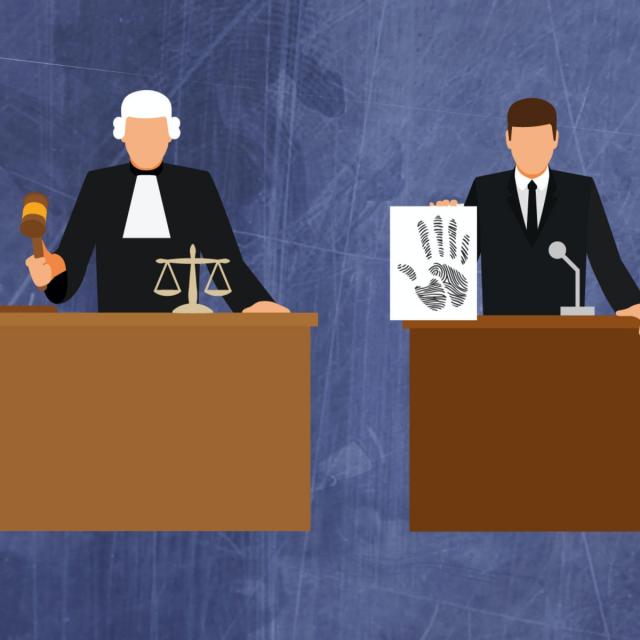
We will then explore some of the implications that these forensic techniques have on the criminal justice system, such as controversies surrounding biometric databases, the portrayal of forensic science in popular media (“the CSI effect”), and how forensic science is used in the courtroom.
Finally, we will consider what the future of forensic science looks like and where the discipline may be heading in the years to come.
Go to Class
MOOC List is learner-supported. When you buy through links on our site, we may earn an affiliate commission.

Related Courses

Bacterial Genomes: From DNA to Protein Function Using Bioinformatics (FutureLearn) FutureLearn
Wellcome Genome Campus Advanced Courses and Scientific Conferences

Bacterial Genomes: From DNA to Protein Function Using Bioinformatics (FutureLearn)

Use bioinformatics to explore DNA sequences and protein functions, to find the determinants of virulence in microbes. Join us in our quest to discover what makes microbes dangerous. Use bioinformatics to probe genomes, to explore and represent DNA and protein sequences. Then, use databases to find protein sequences’ conserved domains and investigate their functions.

No sessions available
2 Weeks
Finding Hidden Messages in DNA (Bioinformatics I) (Coursera) Coursera
University of California, San Diego

Finding Hidden Messages in DNA (Bioinformatics I) (Coursera)

This course begins a series of classes illustrating the power of computing in modern biology. Please join us on the frontier of bioinformatics to look for hidden messages in DNA without ever needing to put on a lab coat. In the first half of the course, we investigate DNA replication, and ask the question, where in the genome does DNA replication begin? We will see that we can answer this question for many bacteria using only some straightforward algorithms to look for hidden messages in the genome.

Jun 22nd 2026
5-12 Weeks
An Introduction to Forensic and Bio-archaeology: Reading Human Skeletal Remains (FutureLearn) FutureLearn
Griffith University

An Introduction to Forensic and Bio-archaeology: Reading Human Skeletal Remains (FutureLearn)

Learn to use ‘human skeletal analysis’ to uncover the story behind human remains. Explore three sites from around the world. Discover what’s written in the bones. A human skeleton is uncovered. Who was this person? What is their story? Through ‘human skeletal analysis’, we are able to read the story behind a skeleton and tell the sex, age and ethnicity of the person who passed away.

No sessions available
2 Weeks
Molecular Biology - Part 1: DNA Replication and Repair (edX) EdX
MIT,MITx

Molecular Biology - Part 1: DNA Replication and Repair (edX)

An in-depth adventure through DNA replication and repair to strengthen your scientific thinking and experimental design skills. You’re acquainted with your DNA, but did you know that your cells synthesize enough DNA during your lifetime to stretch a lightyear in length? How does the cellular machinery accomplish such a feat without making more mistakes than you can survive?

Apr 16th 2024
5-12 Weeks
Genome Sequencing (Bioinformatics II) (Coursera) Coursera
University of California, San Diego

Genome Sequencing (Bioinformatics II) (Coursera)

You may have heard a lot about genome sequencing and its potential to usher in an era of personalized medicine, but what does it mean to sequence a genome? Biologists still cannot read the nucleotides of an entire genome as you would read a book from beginning to end. However, they can read short pieces of DNA. In this course, we will see how graph theory can be used to assemble genomes from these short pieces. We will further learn about brute force algorithms and apply them to sequencing mini-proteins called antibiotics.

Jun 22nd 2026
5-12 Weeks
The Little Stuff: Energy, Cells, and Genetics (Coursera) Coursera
University of Colorado Boulder

The Little Stuff: Energy, Cells, and Genetics (Coursera)

In this course, we will explore the smaller side of biology: molecular biology. We’ll cover basic topics including cell biology and how cells can go “rogue” and turn into cancer, how energy from the sun is transferred to fuel our bodies, basics of genetics and inheritance, and genetic technologies. At the end of this course, we will discuss ethical and moral implications of several exciting and new genetic technologies.

Jun 15th 2026
4 Weeks
Evolution Today (Coursera) Coursera
Leiden University,Naturalis Biodiversity Center

Evolution Today (Coursera)

In this course you will learn how evolution works. You will develop an understanding of evolutionary processes and their formative power. You will see how evolution has shaped biodiversity, and continuously influences our daily life. Evolution impacts human endeavors as varied as medicine, agriculture, psychology, economy, and culture. It is the major unifying principle for biology and a fundamental natural law.

May 18th 2026
5-12 Weeks
DNA Decoded (Coursera) Coursera
McMaster University

DNA Decoded (Coursera)

Are you a living creature? Then, congratulations! You’ve got DNA. But how much do you really know about the microscopic molecules that make you unique? Why is DNA called the “blueprint of life”? What is a “DNA fingerprint”? How do scientists clone DNA? What can DNA teach you about your family history? Are Genetically Modified Organisms (GMOs) safe? Is it possible to revive dinosaurs by cloning their DNA?

Jun 15th 2026
4 Weeks