Basic Science: Understanding Numbers (FutureLearn)

Offered by The Open University,
Basic Science: Understanding Numbers (FutureLearn)

This course explains how you can use numbers to describe the natural world and make sense of everything from atoms to oceans. This practical, hands-on course will help you to start thinking like a scientist, by using numbers to describe and understand the natural world.

Class Deals by MOOC List - Click here and see FutureLearn's Active Discounts, Deals, and Promo Codes.

It might be the size of the Greenland ice sheet, the number of molecules in a raindrop, or the latest set of mind-boggling numbers about climate change presented in the media.
No longer will you be put off by averages or percentages, and you’ll even learn to love negative numbers. You will understand and manage numbers like a scientist. The course will introduce all the main skills you’ll need to understand and communicate scientific numbers, relate them to the real world, and share your discoveries with other learners.
You may also be interested in joining Basic Science: Understanding Experiments.

What topics will you cover?
The course is divided into 4 weeks:

  • Why science needs numbers including writing and presenting very large and very small numbers for science
  • Using numbers for science including calculating areas, volumes and density
  • Important concepts in numbers for science including rounding, fractions, percentages and negative numbers
  • Communicating numbers for science including averages, drawing and interpreting graphs, correlation, causation and coincidence

What will you achieve?
By the end of the course, you'll be able to...

  • Calculate and use a scientific calculator
  • Calculate volumes, areas and density
  • Apply numbers to understand how simple models help understand scientific problems, such as ice melting and climate change
  • Demonstrate and use numbers to test scientific hypotheses
  • Apply SI units to length, time, mass temperature used for science
  • Interpret numbers written in scientific notation to understand the natural world
  • Develop skills to round numbers written in scientific notation
  • Calculate and use fractions, percentages and averages for science
  • Evaluate positive and negative numbers
  • Apply, create and evaluate graphs to understand issues in science
Go to Class
MOOC List is learner-supported. When you buy through links on our site, we may earn an affiliate commission.

Related Courses

Bugs 101: Insect-Human Interactions (Coursera) Coursera
University of Alberta

Bugs 101: Insect-Human Interactions (Coursera)

Of all the animals on earth, which are the strongest for their size? What about the fastest? Who were the first animals to evolve flight? Insects take all of these titles and more! As the most abundant animals on the planet, insects and other arthropods affect our lives in so many ways. From beneficial interactions like pollination and biological pest control, to the transmission of life threatening diseases; this course will teach you about the big ways that these little arthropods impact our lives.

Aug 17th 2026
13-24 Weeks
Introduction to Forensic Science (Coursera) Coursera
Nanyang Technological University

Introduction to Forensic Science (Coursera)

We have all seen forensic scientists in TV shows, but how do they really work? What is the science behind their work? The course aims to explain the scientific principles and techniques behind the work of forensic scientists and will be illustrated with numerous case studies from Singapore and around the world.

Aug 24th 2026
5-12 Weeks
Invisible Worlds: Understanding the Natural Environment (FutureLearn) FutureLearn
University of Exeter,Eden Project

Invisible Worlds: Understanding the Natural Environment (FutureLearn)

Explore the connection between life and the Earth's invisible systems and gain new insights into the natural environment. Discover Earth's invisible systems and transform your understanding of the world. Given the current climate emergency, it’s increasingly important that we have a good understanding of Earth’s life support systems. We rely on these systems for fresh air, clean water, fertile soil, rich biodiversity and a stable climate. On this course, you’ll explore the natural systems we can’t see or feel, from microscopic creatures to gases.

Available Now
4 Weeks
Algorithms, Part II (Coursera) Coursera
Princeton University

Algorithms, Part II (Coursera)

This course covers the essential information that every serious programmer needs to know about algorithms and data structures, with emphasis on applications and scientific performance analysis of Java implementations. Part I covers elementary data structures, sorting, and searching algorithms. Part II focuses on graph- and string-processing algorithms.

Aug 17th 2026
5-12 Weeks
Virtual Work Experience and Exploring the Veterinary Profession (FutureLearn) FutureLearn
The University of Nottingham

Virtual Work Experience and Exploring the Veterinary Profession (FutureLearn)

Learn what it takes to become a vet and explore the challenges of the vet profession to decide if it's the right career for you. Get virtual vet work experience before embarking on a veterinary degree. The COVID-19 pandemic means that many potential vet students cannot undertake animal handling work experience. On this course, you’ll get insight into the reality of life as a vet so that you can make an informed decision before embarking on a veterinary degree course.

Feb 1st 2021
2 Weeks
Getting a Grip on Mathematical Symbolism (FutureLearn) FutureLearn
Loughborough University

Getting a Grip on Mathematical Symbolism (FutureLearn)

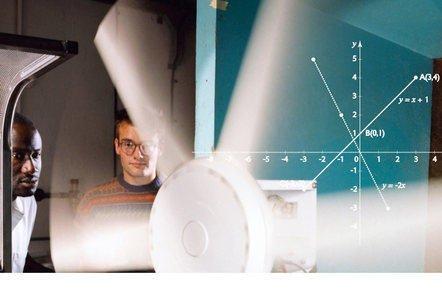
Want to be an engineer or scientist? Lack mathematical confidence? Learn to think mathematically and explore essential concepts. This course is aimed at those who aspire to study science or engineering foundation courses at university level. It draws upon the experience of staff from the Mathematics Education Centre at Loughborough University - a centre that has specialised for many years in mathematics teaching and mathematics support for science and engineering students who find the transition to university mathematics particularly challenging.

No sessions available
3 Weeks
Biosphere 2 Science for the Future of Our Planet (Coursera) Coursera
University of Arizona

Biosphere 2 Science for the Future of Our Planet (Coursera)

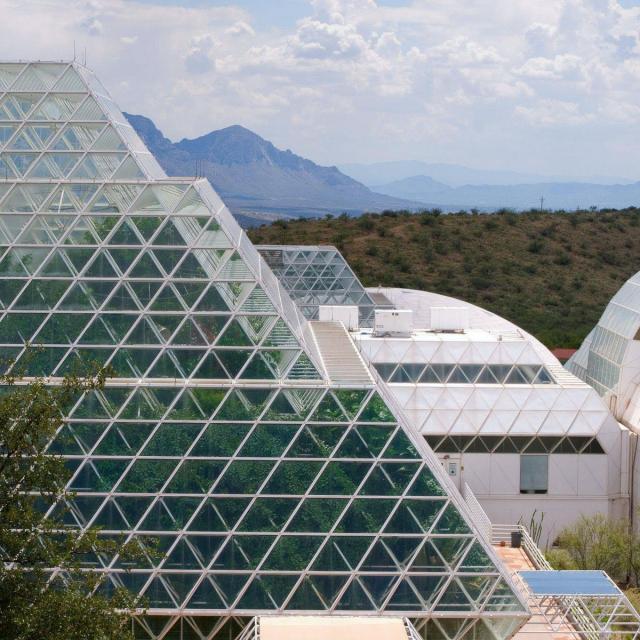
Are you ready to take an incredible journey around Planet Earth and beyond? In this course, you will delve into a world of innovative science and learn from a team of Biosphere 2 and University of Arizona researchers. From plants and soils, to oceans and rainforests, the Moon, Mars, and more, this course is an exciting opportunity for anyone interested in science and Earth stewardship.

Aug 17th 2026
5-12 Weeks
Teaching for Home Learning: Secondary Science (FutureLearn) FutureLearn
National STEM Learning Centre

Teaching for Home Learning: Secondary Science (FutureLearn)

Ease the transition to teaching science to secondary pupils during the COVID-19 pandemic with online and offline approaches. Overcome the challenges of teaching science remotely to your secondary students. Due to COVID-19 related school closures around the world, many teachers are having to adjust their teaching. Whilst teaching remotely may be new, this course will help you to develop new online and offline teaching strategies for supporting learning at home and at a distance.

No sessions available
2 Weeks
Precalculus: the Mathematics of Numbers, Functions and Equations (FutureLearn) FutureLearn
University of Padova

Precalculus: the Mathematics of Numbers, Functions and Equations (FutureLearn)

Get an introduction to the essential mathematical knowledge and skills required to take a first course in calculus. This course is the first of two precalculus courses from the University of Padova, providing you with an introduction to the fundamental mathematical skills required to complete a first course in calculus.

Self Paced
5-12 Weeks
Humphry Davy: Laughing Gas, Literature, and the Lamp (FutureLearn) FutureLearn
Lancaster University,Royal Institution - RI

Humphry Davy: Laughing Gas, Literature, and the Lamp (FutureLearn)

Discover Humphry Davy and his contribution to science and the arts. Before culture was divided into the sciences and the arts there was a chemist who was also a poet. Sir Humphry Davy (1778-1829) is one of the best known men of science of the nineteenth century: he was the first person to inhale nitrous oxide; he isolated nine chemical elements; and he invented the miners’ safety lamp known as the Davy lamp. This course will consider Davy’s life and career using manuscript sources held at the Royal Institution of Great Britain.

Oct 9th 2023
4 Weeks
The Scientific Revolution: Understanding the Roots of Modern Science (FutureLearn) FutureLearn
University of Groningen

The Scientific Revolution: Understanding the Roots of Modern Science (FutureLearn)

Learn about the seventeenth-century Scientific Revolution and its role in shaping the modern Western world. How did the science of today come about? What constitutes ‘modern’ science? How does science relate to religion? Answer these questions and more with this course that travels back in time to the seventeenth-century Scientific Revolution to explore the roots of modern science.

Self Paced
3 Weeks