Question Reality: Cosmos (Coursera)

Offered by Dartmouth College,
Question Reality: Cosmos (Coursera)

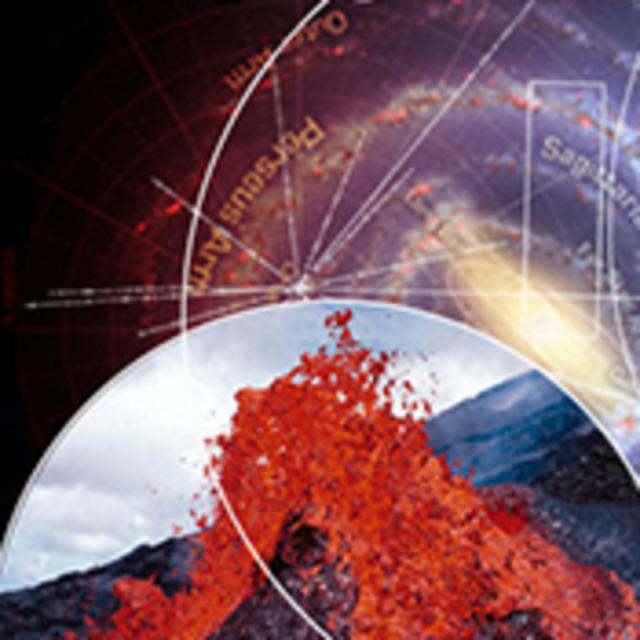
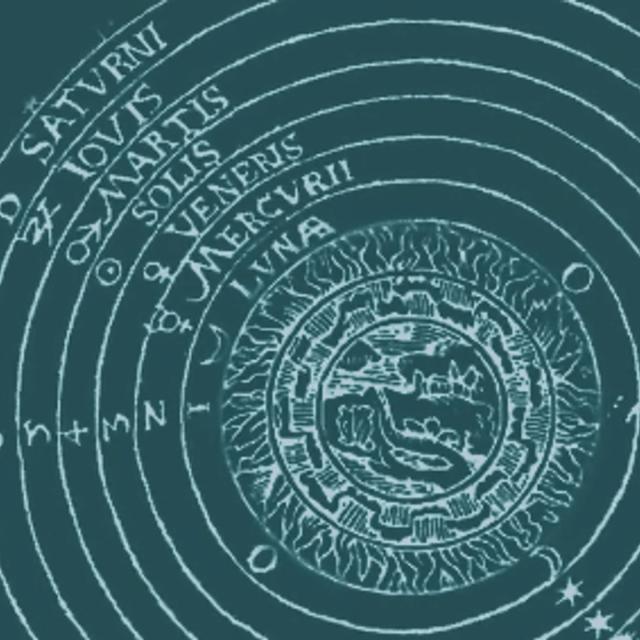
This course explores the concept of reality and the physics of the sky. You will travel through the philosophies and worldviews of early civilizations to the time of early scientists such as Plato, Aristotle, and Copernicus.

Class Deals by MOOC List - Click here and see Coursera's Active Discounts, Deals, and Promo Codes.

You will learn how Galileo's findings with the telescope challenged the Aristotelian interpretation of the cosmos, about Galileo’s revolutionary conclusions on gravity, and Newton's universal law of gravitation.
This course will also introduce you to the scientific methods and their limitations. You will also explore the properties and behaviors of homemade pendulums.
Next, you will explore modern ideas of cosmology, of the Big Bang, and even recent speculations that our universe is not all there is. Mysteries and properties of light and how they were discovered, questioned, and confirmed through experiments over the past few hundred years through the present will also be discussed.

Course 1 of 3 in the Question Reality! Science, philosophy, a search for meaning Specialization.

Syllabus

WEEK 1
Module 1: Cosmos: Part 1
This module explores the concept of reality and physics of the sky.

WEEK 2
Module 2: Cosmos: Part 2
This module will introduce you to the scientific methods. You will also explore the properties and behaviors of homemade pendulums.

WEEK 3
Module 3: Cosmos Part 3
This module explores modern ideas of cosmology, of the Big Bang, and even recent speculations that our universe is not all there is. It further examines various mysteries and properties of light and how they were discovered, questioned, and confirmed through experiments over the past few hundred years through the present.
Go to Class
MOOC List is learner-supported. When you buy through links on our site, we may earn an affiliate commission.

Related Courses

Physics 102 - Electric Charges and Fields (Coursera) Coursera
Rice University

Physics 102 - Electric Charges and Fields (Coursera)

This course serves as an introduction to the physics of electricity and magnetism. Upon completion, learners will have an understanding of how the forces between electric charges are described by fields, and how these fields are related to electrical circuits. They will gain experience in solving physics problems with tools such as graphical analysis, algebra, vector analysis, and calculus. The course follows the typical progression of topics of a first-semester university physics course: charges, electric forces, electric fields potential, magnetic fields, currents, magnetic moments, electromagnetic induction, and circuits.

Jun 22nd 2026
4 Weeks
Control of Nonlinear Spacecraft Attitude Motion (Coursera) Coursera
University of Colorado Boulder

Control of Nonlinear Spacecraft Attitude Motion (Coursera)

This course trains you in the skills needed to program specific orientation and achieve precise aiming goals for spacecraft moving through three dimensional space. First, we cover stability definitions of nonlinear dynamical systems, covering the difference between local and global stability. We then analyze and apply Lyapunov's Direct Method to prove these stability properties, and develop a nonlinear 3-axis attitude pointing control law using Lyapunov theory. Finally, we look at alternate feedback control laws and closed loop dynamics.

Jun 22nd 2026
4 Weeks
Physics 102 - AC Circuits and Maxwell's Equations (Coursera) Coursera
Rice University

Physics 102 - AC Circuits and Maxwell's Equations (Coursera)

This course serves as an introduction to the physics of electricity and magnetism. Upon completion, learners will have an understanding of how the forces between electric charges are described by fields, and how these fields are related to electrical circuits. They will gain experience in solving physics problems with tools such as graphical analysis, algebra, vector analysis, and calculus. The course follows the typical progression of topics of a first-semester university physics course: charges, electric forces, electric fields potential, magnetic fields, currents, magnetic moments, electromagnetic induction, and circuits.

Jun 22nd 2026
3 Weeks
Søren Kierkegaard - Subjectivity, Irony and the Crisis of Modernity (Coursera) Coursera
University of Copenhagen

Søren Kierkegaard - Subjectivity, Irony and the Crisis of Modernity (Coursera)

In this course created by former associate professor at the Søren Kierkegaard Research Centre, Jon Stewart, we will explore how Kierkegaard deals with the problems associated with relativism, the lack of meaning and the undermining of religious faith that are typical of modern life. His penetrating analyses are still highly relevant today and have been seen as insightful for the leading figures of Existentialism, Post-Structuralism and Post-Modernism.

Jun 22nd 2026
5-12 Weeks
Physics 102 - Magnetic Fields and Faraday's Law (Coursera) Coursera
Rice University

Physics 102 - Magnetic Fields and Faraday's Law (Coursera)

This course serves as an introduction to the physics of electricity and magnetism. Upon completion, learners will have an understanding of how the forces between electric charges are described by fields, and how these fields are related to electrical circuits. They will gain experience in solving physics problems with tools such as graphical analysis, algebra, vector analysis, and calculus. The course follows the typical progression of topics of a first-semester university physics course: charges, electric forces, electric fields potential, magnetic fields, currents, magnetic moments, electromagnetic induction, and circuits.

Jun 22nd 2026
4 Weeks
Physics 101 - Forces and Kinematics (Coursera) Coursera
Rice University

Physics 101 - Forces and Kinematics (Coursera)

This course serves as an introduction to the physics of force and motion. Upon completion, learners will have an understanding of how mathematical laws and conservation principles describe the motions and interactions of objects all around us. They will gain experience in solving physics problems with tools such as graphical analysis, algebra, vector analysis, and calculus.

Jun 15th 2026
4 Weeks
The Finite Element Method for Problems in Physics (Coursera) Coursera
University of Michigan

The Finite Element Method for Problems in Physics (Coursera)

This course is an introduction to the finite element method as applicable to a range of problems in physics and engineering sciences. The treatment is mathematical, but only for the purpose of clarifying the formulation. The emphasis is on coding up the formulations in a modern, open-source environment that can be expanded to other applications, subsequently.

Jun 15th 2026
13-24 Weeks
Geometrical and Physical Optics (Coursera) Coursera
Rice University

Geometrical and Physical Optics (Coursera)

This third course serves as an introduction to the physics of waves and light. Upon completion, learners will understand how mathematical laws and conservation principles describe wave propagation and light in the context of both geometrical and physical optics. Learners will gain experience in solving physics problems with tools such as graphical analysis, algebra, vector analysis, and calculus.

Jun 22nd 2026
4 Weeks
Physics 101 - Energy and Momentum (Coursera) Coursera
Rice University

Physics 101 - Energy and Momentum (Coursera)

This course serves as an introduction to the physics of energy and momentum. Upon completion, learners will have an understanding of how mathematical laws and conservation principles describe the motions and interactions of objects all around us. They will gain experience in solving physics problems with tools such as graphical analysis, algebra, vector analysis, and calculus.

Jun 15th 2026
4 Weeks
Kinetics: Studying Spacecraft Motion (Coursera) Coursera
University of Colorado Boulder

Kinetics: Studying Spacecraft Motion (Coursera)

As they tumble through space, objects like spacecraft move in dynamical ways. Understanding and predicting the equations that represent that motion is critical to the safety and efficacy of spacecraft mission development. Kinetics: Modeling the Motions of Spacecraft trains your skills in topics like rigid body angular momentum and kinetic energy expression shown in a coordinate frame agnostic manner, single and dual rigid body systems tumbling without the forces of external torque, how differential gravity across a rigid body is approximated to the first order to study disturbances in both the attitude and orbital motion, and how these systems change when general momentum exchange devices are introduced.

Jun 22nd 2026
4 Weeks