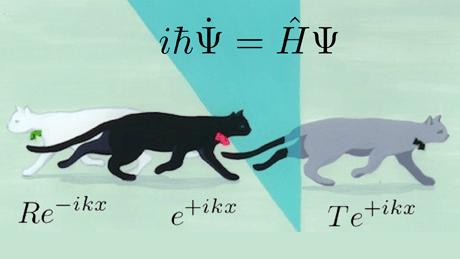
Exploring Quantum Physics (Coursera)

Exploring Quantum Physics (Coursera)

An introduction to quantum physics with emphasis on topics at the frontiers of research, and developing understanding through exercise.

Class Deals by MOOC List - Click here and see Coursera's Active Discounts, Deals, and Promo Codes.

Syllabus

Week 1 - Welcome, Lecture 1 and 2 - Conceptual Grounds
Week 2 - Lecture 3 and 4 - Path Integral
Week 3 - Lecture 5 and 6 - Quantum Wells to Cooper Pairs
Week 4 - Lecture 7 and 8 - Quantum Oscillators
Week 5 - Lecture 9 and 10 - The (Simplest) Atom
Week 6 - Lecture 11 and 12 - The Bouncing Ball
Week 7 - Lecture 13 and 14 - Rotation and Spin
Week 8 - Lecture 15 and 16 - Quantum Gas and Time Dependence
Final Exam
Week 9 - Bonus Lectures

Go to Class
MOOC List is learner-supported. When you buy through links on our site, we may earn an affiliate commission.
Related Courses

Archaeoastronomy (Coursera) Coursera
Politecnico di Milano

Archaeoastronomy (Coursera)

Archaeoastronomy is the “science of stars and stones”: it studies the relationships between the ancient monuments and the sky, in order to gain a better understanding of the ideas of the architects of the past and of their religious and symbolic world. The course provides the first complete, easy introduction to this fascinating discipline.

Sep 14th 2026
5-12 Weeks
Electrodynamics: An Introduction (Coursera) Coursera
Korea Advanced Institute of Science and Technology - KAIST

Electrodynamics: An Introduction (Coursera)

The depth and breadth of electromagnetism, the foundation for many fields including materials science, electrical engineering, and physical chemistry, requires a long, steep, and steady learning curve. This course aims to bridge the gap between the fundamental principles taught in electromagnetism and its practical application to specific fields such as materials, physics, and chemistry related to energy storage and harvesting.

Aug 31st 2026
5-12 Weeks
The Science of the Solar System (Coursera) Coursera
Caltech

The Science of the Solar System (Coursera)

Learn about the science behind the current exploration of the solar system in this free class. Use principles from physics, chemistry, biology, and geology to understand the latest from Mars, comprehend the outer solar system, ponder planets outside our solar system, and search for habitability in our neighborhood and beyond. This course is generally taught at an advanced level assuming a prior knowledge of undergraduate math and physics, but the majority of the concepts and lectures can be understood without these prerequisites.

Sep 21st 2026
5-12 Weeks
Physics 101 - Rotational Motion and Gravitation (Coursera) Coursera
Rice University

Physics 101 - Rotational Motion and Gravitation (Coursera)

This course serves as an introduction to the physics of rotational motion and gravitation. Upon completion, learners will have an understanding of how mathematical laws and conservation principles describe the motions and interactions of objects all around us. They will gain experience in solving physics problems with tools such as graphical analysis, algebra, vector analysis, and calculus.

Aug 31st 2026
4 Weeks
The Science of Gastronomy (Coursera) Coursera
The Hong Kong University of Science and Technology - HKUST

The Science of Gastronomy (Coursera)

This course introduces a number of basic scientific principles underpinning the methodology of cooking, food preparation and the enjoyment of food. All topics covered have a strong basis in biology, chemistry, and physics application. Among others, they include the consumption of cooked food, the physiological and evolutionary implication of the senses, geographic and cultural influences on food, and the rationale behind food preparation. We will also discuss issues such as coupling of senses to improve sense stimulation; altering flavor by chemical means; and modification of the coloration to improve the appearance of dishes. Following the video demonstrations of the scientific principles of cooking, you will learn to recognize the key ingredients and their combinations for preparing good healthy food.

Sep 1st 2026
5-12 Weeks
Control of Nonlinear Spacecraft Attitude Motion (Coursera) Coursera
University of Colorado Boulder

Control of Nonlinear Spacecraft Attitude Motion (Coursera)

This course trains you in the skills needed to program specific orientation and achieve precise aiming goals for spacecraft moving through three dimensional space. First, we cover stability definitions of nonlinear dynamical systems, covering the difference between local and global stability. We then analyze and apply Lyapunov's Direct Method to prove these stability properties, and develop a nonlinear 3-axis attitude pointing control law using Lyapunov theory. Finally, we look at alternate feedback control laws and closed loop dynamics.

Aug 31st 2026
4 Weeks
Kinematics: Describing the Motions of Spacecraft (Coursera) Coursera
University of Colorado Boulder

Kinematics: Describing the Motions of Spacecraft (Coursera)

The movement of bodies in space (like spacecraft, satellites, and space stations) must be predicted and controlled with precision in order to ensure safety and efficacy. Kinematics is a field that develops descriptions and predictions of the motion of these bodies in 3D space. This course in Kinematics covers four major topic areas: an introduction to particle kinematics, a deep dive into rigid body kinematics in two parts (starting with classic descriptions of motion using the directional cosine matrix and Euler angles, and concluding with a review of modern descriptors like quaternions and Classical and Modified Rodrigues parameters).

Sep 7th 2026
4 Weeks
Nanotechnology and Nanosensors, Part 1 (Coursera) Coursera
Technion - Israel Institute of Technology

Nanotechnology and Nanosensors, Part 1 (Coursera)

Nanotechnology and nanosensors are broad, interdisciplinary areas that encompass (bio)chemistry, physics, biology, materials science, electrical engineering and more. The present course will provide a survey on some of the fundamental principles behind nanotechnology and nanomaterials and their vital role in novel sensing properties and applications. The course will discuss interesting interdisciplinary scientific and engineering knowledge at the nanoscale to understand fundamental physical differences at the nanosensors.

Sep 7th 2026
5-12 Weeks
From the Big Bang to Dark Energy (Coursera) Coursera
The University of Tokyo

From the Big Bang to Dark Energy (Coursera)

We have learned a lot recently about how the Universe evolved in 13.7 billion years since the Big Bang. More than 80% of matter in the Universe is mysterious Dark Matter, which made stars and galaxies to form. The newly discovered Higgs-boson became frozen into the Universe a trillionth of a second after the Big Bang and brought order to the Universe.

Sep 7th 2026
4 Weeks
Understanding Modern Physics III: Simplicity and Complexity (Coursera) Coursera
The Hong Kong University of Science and Technology - HKUST

Understanding Modern Physics III: Simplicity and Complexity (Coursera)

The 20th century was known as the century of physics. In the past 120 years, concepts such as space, time, energy, entropy and particles were understood to much deeper levels. New paradigms of thinking such as relativity and quantum mechanics emerged. This course is the third course in the Understanding Modern Physics series, which covers an introduction to action principle, fundamental particle physics, entropy & information and complexity.

Sep 7th 2026
4 Weeks