Analyzing the Universe (Coursera)

Offered by Rutgers University,
Analyzing the Universe (Coursera)

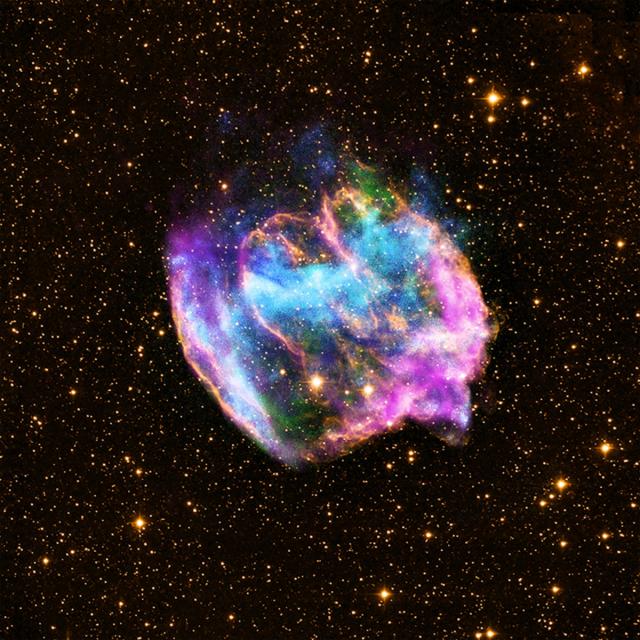
Using publicly available data from NASA of actual satellite observations of astronomical x-ray sources, we explore some of the mysteries of the cosmos, including neutron stars, black holes, quasars and supernovae. We will analyze energy spectra and time series data to understand how these incredible objects work. We utilize an imaging tool called DS9 to explore the amazing diversity of astronomical observations that have made x-ray astronomy one of the most active and exciting fields of scientific investigation in the past 50 years.

Class Deals by MOOC List - Click here and see Coursera's Active Discounts, Deals, and Promo Codes.

Each week we will explore a different facet of x-ray astronomy. Beginning with an introduction to the nature of image formation, we then move on to examples of how our imaging program, DS9, can aid our understanding of real satellite data. You will using the actual data that scientists use when doing their work. Nothing is "canned". You will be able to appreciate the excitement that astronomers felt when they made their important discoveries concerning periodic binary x-ray sources, supernovae and their remnants, and extragalactic sources that have shaped our understanding of cosmology.

Syllabus

WEEK 1
Light and the Nature of Images....Plus, an Introduction to DS9
Welcome to Week 1 of "Analyzing the Universe!" This week we explore the nature of light, and how we get astronomical information from the images we obtain. The lectures and "wiki" material address these themes: light, image formation, and DS9. Dive right in!

WEEK 2
Basic Astronomical Data and a DS9 Smorgasbord
Welcome to week two of "Analyzing the Universe". This week we will be exploring some of the means we have at our disposal to find out many things about the stars. It is really quite incredible that these tiny pinpoints of light can yield so much information about their nature and about the structure of the Universe as a whole. And if this is your first visit to the course, welcome and jump right in!

WEEK 3
Stellar Evolution and White Dwarfs
This week is our first in-depth look at an x-ray source, and it involves a white dwarf in a binary system. So sharpen up your detective skills, keep your copy of DS9 at the ready, and let's get down to business. It should be an exciting week.

WEEK 4
Orbits, Gravity, and Clocks in the Sky
This week we turn our attention to another fascinating cosmic source, discovered in the infancy of x-ray astronomy: Cen X-3. In so doing, we will see how binary stars can determine and influence many of the interesting and surprising features of our observations.

WEEK 5
Supernovae, Our Cosmic Recycling Centers
This week, we will be examining supernovae, and their remnants. These fascinating objects are the breeding grounds for future stars, and were the sources of virtually all the atoms that make up our solar neighborhood. Every atom of calcium in every bone in your body, for example, was once shot out of a supernova, billions of years ago.

WEEK 6
To the Ends of the Universe; Quasars, 3C273, and beyond
This week we wrap things up with trips to galaxies and exotic objects, seen long ago and far away. The mysterious quasars provide clues about the way our Universe is evolving in time. They are incredible objects (actually, come to think of it, what isn't incredible in the x-ray sky?) discovered almost exactly a half century ago, quite by accident. We will explore the astonishingly prodigious x-ray output of 3C 273, one of the nearest ones, at a mere 2.5 billion light years away.
Go to Class
MOOC List is learner-supported. When you buy through links on our site, we may earn an affiliate commission.

Related Courses

Physics 102 - AC Circuits and Maxwell's Equations (Coursera) Coursera
Rice University

Physics 102 - AC Circuits and Maxwell's Equations (Coursera)

This course serves as an introduction to the physics of electricity and magnetism. Upon completion, learners will have an understanding of how the forces between electric charges are described by fields, and how these fields are related to electrical circuits. They will gain experience in solving physics problems with tools such as graphical analysis, algebra, vector analysis, and calculus. The course follows the typical progression of topics of a first-semester university physics course: charges, electric forces, electric fields potential, magnetic fields, currents, magnetic moments, electromagnetic induction, and circuits.

Jun 22nd 2026
3 Weeks
Journey of the Universe: The Unfolding of Life (Coursera) Coursera
Yale University

Journey of the Universe: The Unfolding of Life (Coursera)

Journey of the Universe weaves together the discoveries of the evolutionary sciences together with humanities such as history, philosophy, art, and religion. The course draws on the Emmy-award winning film, Journey of the Universe, and the book from Yale University Press. Journey explores cosmic evolution as a creative process based on connection, interdependence, and emergence. It examines a range of dynamic interactions in the unfolding of galaxies, Earth, life, and human communities. It investigates ways in which we understand evolutionary processes and the implications for humans and our ecological future.

Jun 22nd 2026
5-12 Weeks
Geodesign: Change Your World (Coursera) Coursera
Pennsylvania State University

Geodesign: Change Your World (Coursera)

What happens when creativity and science come together? The power to design our world is unleashed, providing tools to inform choices about how we live! Geodesign is the glue—it’s a process that deploys creativity to connect information to people, using collaboration to better inform how we design our world.

Jun 22nd 2026
5-12 Weeks
The Worldview of Thomas Berry: The Flourishing of the Earth Community (Coursera) Coursera
Yale University

The Worldview of Thomas Berry: The Flourishing of the Earth Community (Coursera)

Thomas Berry (1914-2009) was a historian of world religions and an early voice awakening moral sensibilities to the environmental crisis. He is known for articulating a “new story” of the universe that explores the implications of the evolutionary sciences and cultural traditions for creating a flourishing future. This course investigates Berry’s life and thought in relation to the Journey of the Universe project.

Jun 22nd 2026
5-12 Weeks
Epidemics - the Dynamics of Infectious Diseases (Coursera) Coursera
Pennsylvania State University

Epidemics - the Dynamics of Infectious Diseases (Coursera)

Not so long ago, it was almost guaranteed that you would die of an infectious disease. In fact, had you been born just 150 years ago, your chances of dying of an infectious disease before you've reached the tender age of 5 would have been extremely high. Since then, science has come a long way in understanding infectious diseases - what they are, how they spread, and how they can be prevented. But diseases like HIV/AIDS, Malaria, Tuberculosis, or the flu are still major killers worldwide, and novel emerging diseases are a constant threat to public health. In addition, the bugs are evolving. Antibiotics, our most potent weapon against bacterial infections, are losing their power because the bacteria are becoming resistant. In this course, we'll explore the major themes of infectious diseases dynamics.

Jun 22nd 2026
5-12 Weeks
Structuring Values in Modern China (Coursera) Coursera
The Chinese University of Hong Kong

Structuring Values in Modern China (Coursera)

This sequence of four courses will propose a multi-disciplinary approach to the study of Chinese cultural history conceived of as a succession of modes of rationality (philosophical, bureaucratic, and economic). The focus will be on the moments of paradigm shift from one mode of rationality to another. For each of these moments, cultural facts and artifacts—thought, literature, ritual—will be examined in relationship to changing social, political, and economic systems.

Jun 22nd 2026
5-12 Weeks
Intellectual Humility: Science (Coursera) Coursera
University of Edinburgh

Intellectual Humility: Science (Coursera)

It’s clear that the world needs more intellectual humility. But how do we develop this virtue? And why do so many people still end up so arrogant? Do our own biases hold us back from becoming as intellectually humble as we could be—and are there some biases that actually make us more likely to be humble? Which cognitive dispositions and personality traits give people an edge at being more intellectually humble - and are they stable from birth, learned habits, or something in between? And what can contemporary research on the emotions tell us about encouraging intellectual humility in ourselves and others?

Jun 22nd 2026
4 Weeks
Magic in the Middle Ages (Coursera) Coursera
University of Barcelona

Magic in the Middle Ages (Coursera)

Magical thought has always attracted human imagination. In this course we will introduce you to the Middle Ages through a wide conception of magic. Students will have an approach to medieval culture, beliefs and practices from the perspective of History and History of Science. Popular magic, as well as learned magic (alchemy, geomancy and necromancy) will be addressed. Moreover, we will also deal with how eastern practices and texts influenced western culture. In July 2016, the course will contain a brand-new module devoted to astrology. Magic in the Middle Ages offers a captivating overview of medieval society and promotes reflection about certain stereotypes associated with this period.

Jun 22nd 2026
5-12 Weeks