Preparing for the AP Physics 1 Exam (Coursera)

Preparing for the AP Physics 1 Exam (Coursera)

This course is designed for high school students preparing to take the AP Physics 1 Exam. AP Physics 1 is a registered trademark of the College Board, which was not involved in the production of, and does not endorse, this product.

Class Deals by MOOC List - Click here and see Coursera's Active Discounts, Deals, and Promo Codes.

Syllabus

WEEK 1
Kinematics
Topics include velocity, acceleration, free fall, projectile problems and graphical analysis. You will watch 3 videos, complete 3 sets of practice problems and take 2 quizzes. Please click on the resources tab for each video to view the corresponding student handout.
WEEK 2
Forces
Topics include forces, Newton’s Laws of Motion, and applications of each. You will watch 3 videos, complete 3 sets of practice problems and take 2 quizzes. Please click on the resources tab for each video to view the corresponding student handout.
WEEK 3
Circular Motion and Gravitation
Topics include kinematics and dynamics of circular motion, Newton’s law of universal law of gravitation, and applications of topics. You will watch 2 videos, complete 2 sets of practice problems and take 2 quizzes. Please click on the resources tab for each video to view the corresponding student handout.
WEEK 4
Energy and Momentum
Topics include work, energy, conservation of energy, impulse, linear momentum, and conservation of linear momentum. You will watch 3 videos, complete 3 sets of practice problems and take 2 quizzes.Please click on the resources tab for each video to view the corresponding student handout.

WEEK 5
Rotational Mechanics
Topics include torque, rotational kinematics and energy, rotational dynamics, and conservation of angular momentum. You will watch 3 videos, complete 3 sets of practice problems and take 2 quizzes. Please click on the resources tab for each video to view the corresponding student handout.
WEEK 6
Waves and Sound
Topics include mechanical waves, sound, simple harmonic motion and applications of topics. You will watch 3 videos, complete 3 sets of practice problems and take 2 quizzes. Please click on the resources tab for each video to view the corresponding student handout.
WEEK 7
Introduction to Circuits
Topics include elective charge, electric force, and DC Circuits. You will watch 3 videos, complete 3 sets of practice problems and take 2 quizzes. Please click on the resources tab for each video to view the corresponding student handout.

Go to Class
MOOC List is learner-supported. When you buy through links on our site, we may earn an affiliate commission.

Related Courses

Mécanique de Newton (Coursera) Coursera
École Polytechnique Fédérale de Lausanne

Mécanique de Newton (Coursera)

À l’École Polytechnique Fédérale de Lausanne, un cours de mécanique fait partie de la formation de tous les futurs ingénieurs et scientifiques. Il a pour but de leur apprendre à transcrire sous forme mathématique un phénomène physique, afin de pouvoir en formuler une analyse raisonnée. Cette partie couvrira notamment la cinématique du point matériel, la balistique dans le champ de la pesanteur et l’oscillateur harmonique.

Nov 2nd 2026
5-12 Weeks
Fundamentals of Fluid-Solid Interactions (Coursera) Coursera
École Polytechnique

Fundamentals of Fluid-Solid Interactions (Coursera)

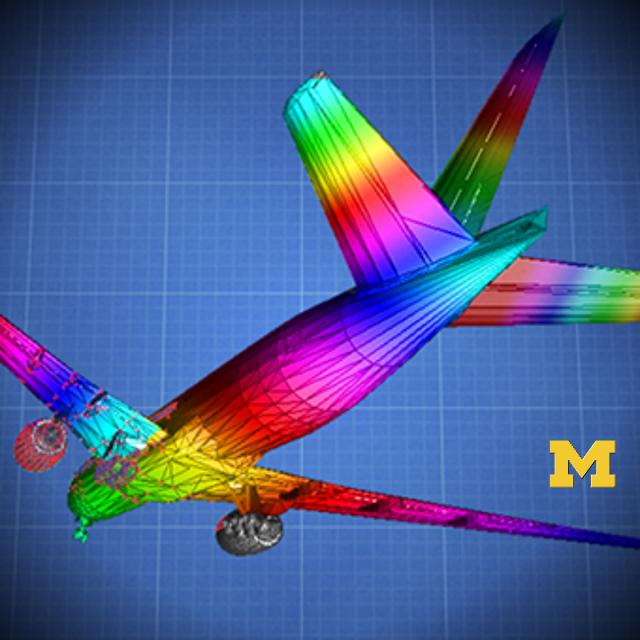
What is fluid-solid interactions ? It is what happens when the motions of a fluid and of a solid are somehow coupled. This happens all the time, around you when leaves flutter in the wind, inside you when your heart beats, above you when wings of a plane vibrate, under the sea... The idea behind this MOOC is to give you the basic tools to be able to predict and eventually mitigate things called flutter, galloping, sloshing, vortex-induced vibrations, added mass, to cite a few. We are going to consider any possible domains of applications such as civil engineering, aerospace engineering, nuclear engineering , ocean engineering, biomechanics and even food processing !

Nov 2nd 2026
5-12 Weeks
Nanotechnology and Nanosensors, Part 1 (Coursera) Coursera
Technion - Israel Institute of Technology

Nanotechnology and Nanosensors, Part 1 (Coursera)

Nanotechnology and nanosensors are broad, interdisciplinary areas that encompass (bio)chemistry, physics, biology, materials science, electrical engineering and more. The present course will provide a survey on some of the fundamental principles behind nanotechnology and nanomaterials and their vital role in novel sensing properties and applications. The course will discuss interesting interdisciplinary scientific and engineering knowledge at the nanoscale to understand fundamental physical differences at the nanosensors.

Nov 2nd 2026
5-12 Weeks
Physics of silicon solar cells (Coursera) Coursera
École Polytechnique

Physics of silicon solar cells (Coursera)

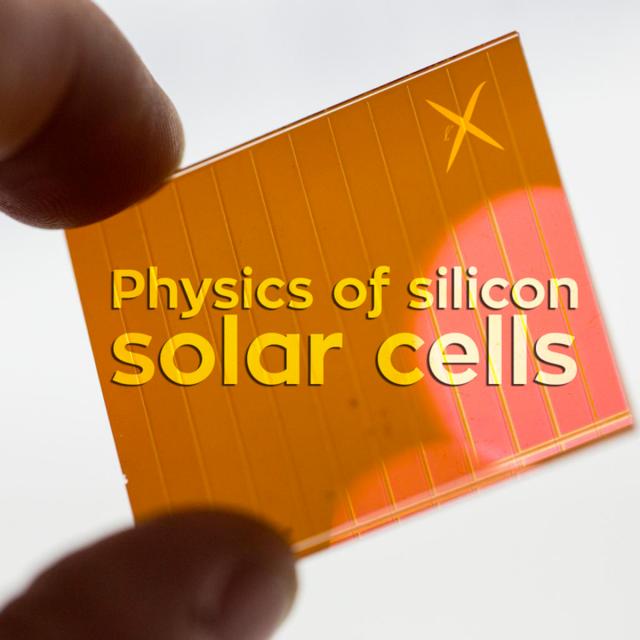
The first MOOC “Photovoltaic solar energy” is a general presentation of the solar photovoltaics technologies in the global energetic context, without extensive details. In particular the description of the solar cell operation is restricted to the ideal case. In contrast this second MOOC allows a deep understanding of the properties of solar cells based on crystalline semiconductors.

Oct 26th 2026
5-12 Weeks
Big History - From the Big Bang until Today (Coursera) Coursera
University of Amsterdam

Big History - From the Big Bang until Today (Coursera)

Welcome to this Big History course! In this course, renowned scientists and scholars from the University of Amsterdam and beyond will take you on a journey from the Big Bang until today while addressing key questions in their fields. After completing this journey you will have developed a better understanding of how you and everything around you became the way they are today.

Oct 26th 2026
4 Weeks
Particle Physics: an Introduction (Coursera) Coursera
University of Geneva

Particle Physics: an Introduction (Coursera)

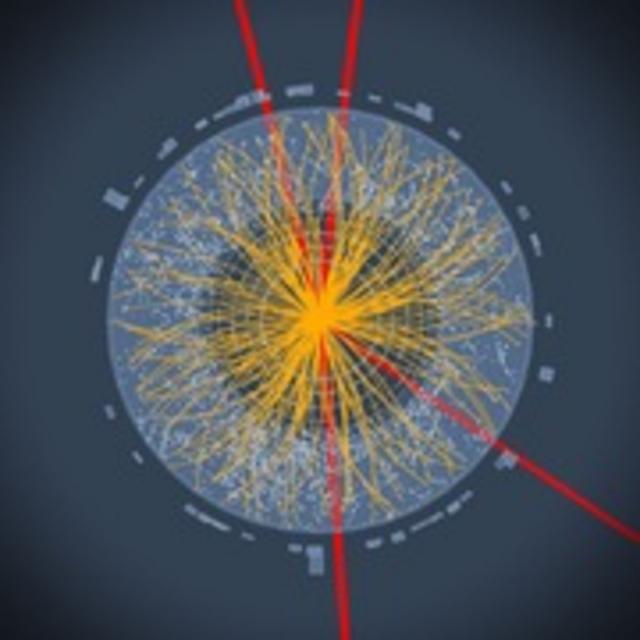
This course introduces you to subatomic physics, i.e. the physics of nuclei and particles. More specifically, the following questions are addressed: What are the concepts of particle physics and how are they implemented?; What are the properties of atomic nuclei and how can one use them?; How does one accelerate and detect particles and measure their properties?; What does one learn from particle reactions at high energies and particle decays?; How do electromagnetic interactions work and how can one use them?; How do strong interactions work and why are they difficult to understand?; How do weak interactions work and why are they so special?; What is the mass of objects at the subatomic level and how does the Higgs boson intervene?; How does one search for new phenomena beyond the known ones?; What can one learn from particle physics concerning astrophysics and the Universe as a whole?

Nov 2nd 2026
5-12 Weeks
Understanding Modern Physics III: Simplicity and Complexity (Coursera) Coursera
The Hong Kong University of Science and Technology - HKUST

Understanding Modern Physics III: Simplicity and Complexity (Coursera)

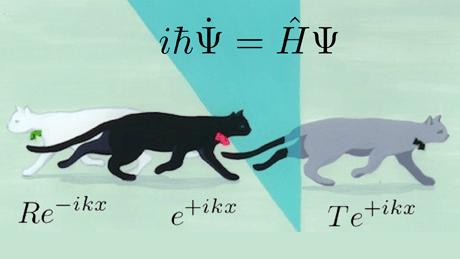
The 20th century was known as the century of physics. In the past 120 years, concepts such as space, time, energy, entropy and particles were understood to much deeper levels. New paradigms of thinking such as relativity and quantum mechanics emerged. This course is the third course in the Understanding Modern Physics series, which covers an introduction to action principle, fundamental particle physics, entropy & information and complexity.

Nov 2nd 2026
4 Weeks
The Finite Element Method for Problems in Physics (Coursera) Coursera
University of Michigan

The Finite Element Method for Problems in Physics (Coursera)

This course is an introduction to the finite element method as applicable to a range of problems in physics and engineering sciences. The treatment is mathematical, but only for the purpose of clarifying the formulation. The emphasis is on coding up the formulations in a modern, open-source environment that can be expanded to other applications, subsequently.

Nov 2nd 2026
13-24 Weeks
The Sun and the Total Eclipse of August 2017 (Coursera) Coursera
University of Colorado Boulder

The Sun and the Total Eclipse of August 2017 (Coursera)

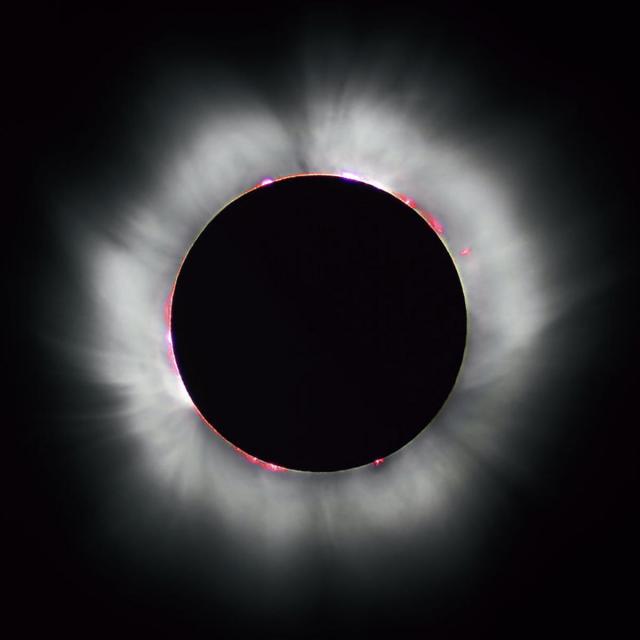
A total eclipse is one of the most spectacular sights you can ever see! It looks like the end of the world may be at hand. There is a black hole in the sky where the sun should be. Pink flames of solar prominences and long silver streamers of the sun's corona stretch across the sky. It gets cold, and animals do strange things. People scream and shout and cheer, and remember the experience their whole life. But total eclipses are important scientifically as well.

Oct 26th 2026
5-12 Weeks
The Diversity of Exoplanets (Coursera) Coursera
University of Geneva

The Diversity of Exoplanets (Coursera)

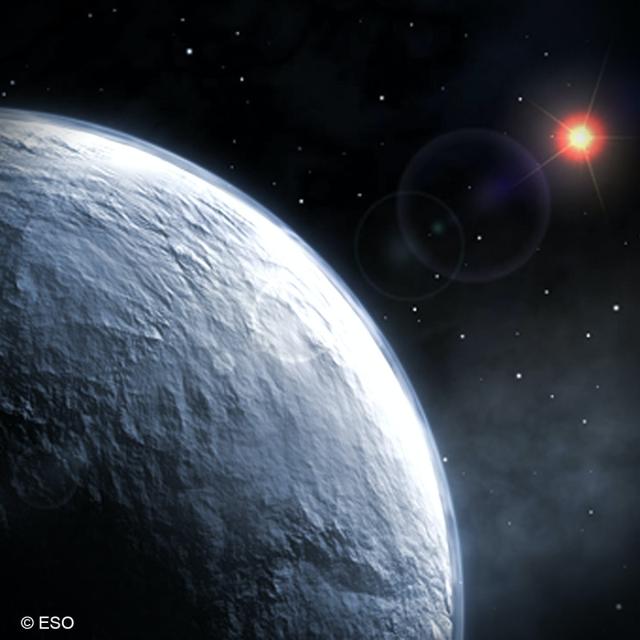
In this MOOC, you will have the opportunity to practice several methods of detection and characterisation of exoplanets. You will discover their statistical properties and the current state of knowledge we have in this very recent field of research. You will also understand the limitations and biases of the different detection techniques.

Oct 19th 2026
5-12 Weeks