EdX

Plasma Physics: Applications (edX)

Plasma Physics: Applications (edX)

Learn about plasma applications from nuclear fusion powering the sun, to making integrated circuits, to generating electricity. This physics course, taught by world-renowned experts in the field, will provide you with an overview of applications in plasma physics. From the study of far distant astrophysical objects over diverse applications in industry, to the ultimate goal of sustainable electricity generation from nuclear fusion.

Class Deals by MOOC List - Click here and see EdX's Active Discounts, Deals, and Promo Codes.

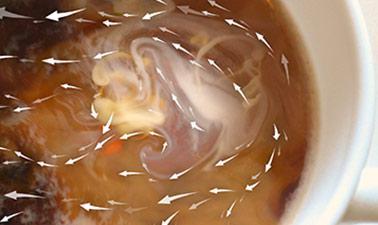
In the first part of this course, you will learn how nuclear fusion powers our Sun and the stars in the Universe. You will explore the cyclic variation of the Sun’s activity, how plasma flows can generate large-scale magnetic fields, and how these fields can reconnect to release large amounts of energy, manifested for instance by violent eruptions on the Sun.
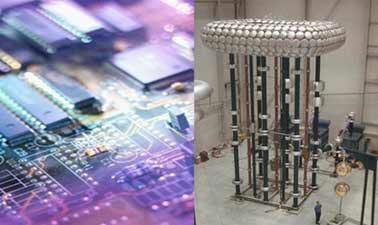
The second part of this course discusses the key role plasma applications play today in industry and medicine. After a brief survey of the field, you will study in detail how plasmas are generated and sustained in strong electric fields and how this knowledge can be used to avoid undesired occurrence of plasmas in the form of electrical arcs. You will then, in detail, study the transition region between plasma and material surface, called the sheath, and you will learn why its properties are indispensable for the manufacturing of today’s integrated circuits.
Finally, in the third and most extensive part of this course, you will familiarize yourself with the different approaches to fusion energy, the current status, and the necessary steps from present-day experimental devices towards a fusion reactor providing electricity to the grid.
After deriving the general conditions for net energy gain from fusion, we will focus on magnetic confinement fusion. You will learn about the key ingredients of a magnetic fusion reactor, how to confine, heat, and control fusion plasmas at temperatures of 100 million degrees Kelvin, explore the relevant transport mechanisms, and explore the challenges of plasma wall interactions and structural materials.
To enjoy this course on plasma applications, it is recommended to first familiarize yourself with the plasma physics basics taught in Plasma Physics: Introduction.
What you'll learn:

  • Different applications of plasmas
  • Understanding of the fusion energy challenge, and acquisition of the basis for developing an overall vision of the different R&D elements
  • Understanding of the main plasma societal applications and relevant tools
  • Vision and appreciation of the importance of plasmas in space and astrophysics
  • By solving problems in course content, you will acquire some basic knowledge of MATLAB programming

Go to Class
MOOC List is learner-supported. When you buy through links on our site, we may earn an affiliate commission.

Related Courses

Quantum Detectors (edX) EdX
Purdue University,PurdueX

Quantum Detectors (edX)

Learn about quantum sensors and devices that extract maximal information from the world around us. Classical detectors and sensors are ubiquitous around us from heat sensors in cars to light detectors in a camera cell phone. Leveraging advances in the theory of noise and measurement, an important paradigm of quantum metrology has emerged. Here, ultra-precision measurement devices collect maximal information from the world around us at the quantum limit.

Feb 12th 2024
5-12 Weeks
Designing Electronics for Recycling in a Circular Economy (edX) EdX
Delft University of Technology,DelftX

Designing Electronics for Recycling in a Circular Economy (edX)

Discover the latest developments in Design for Recycling (DfR) of electrical and electronic equipment (EEE) and the application of recycled plastics into new products. Electronic products bring countless benefits to society, but their production and waste treatment also lead to numerous negative environmental and economic impacts. Since E-waste is the world’s fastest growing waste stream, governments are setting ambitious targets to help this industry transition towards a circular economy.

Nov 15th 2023
4 Weeks
An Introduction to Evidence-Based Undergraduate STEM Teaching (edX) EdX
CornellX,Cornell University

An Introduction to Evidence-Based Undergraduate STEM Teaching (edX)

Learn how to implement evidence-based teaching strategies in your university classroom as well as effective methods for assessing teaching and learning. This course is designed to provide future STEM faculty, graduate students and post-doctoral fellows with an introduction to effective teaching strategies and the research that supports them.

Jun 17th 2024
5-12 Weeks
Model-based Systems Engineering: Advanced Approaches with OPM (edX) EdX
Technion - Israel Institute of Technology,IsraelX

Model-based Systems Engineering: Advanced Approaches with OPM (edX)

The course provides advanced knowledge and tools for Model-Based Systems Engineering with Object-Process Methodology, focusing on conceptual modeling of systems, giving learners a competitive advantage over their peers. This course is the continuation of the basic MBSE with OPM course.

Sep 6th 2023
5-12 Weeks
Manufacturing Process Control II (edX) EdX
MIT,MITx

Manufacturing Process Control II (edX)

Learn how to control process variation, including methods to design experiments that capture process behavior and understand means to control variability. As part of the Principles of Manufacturing MicroMasters program, this course will build on statistical process control foundations to add process modeling and optimization.Building on formal methods of designed experiments, the course develops highly applicable methods for creating robust processes with optimal quality.

Oct 17th 2023
5-12 Weeks
Manufacturing Systems II (edX) EdX
MIT,MITx

Manufacturing Systems II (edX)

Learn how to analyze manufacturing systems to optimize performance and control costs and better understand the flow of material and information. Manufacturing systems are complex systems that require analytical analysis. Managers and practitioners use a wide variety of methods to analyze and optimize the performance of manufacturing systems and control costs.

Mar 6th 2024
5-12 Weeks
Supply Chain Analytics (edX) EdX
MIT,MITx

Supply Chain Analytics (edX)

Master and apply the core methodologies used in supply chain analysis and modeling, including statistics, regression, optimization and probability – part of the MITx Supply Chain Management MicroMasters Credential. Supply chains are complex systems involving multiple businesses and organizations with different goals and objectives. Many different analytical methods and techniques are used by researchers and practitioners alike to better design and manage their supply chains.

Jan 10th 2024
13-24 Weeks
Railway Engineering: An Integral Approach (edX) EdX
Delft University of Technology,DelftX

Railway Engineering: An Integral Approach (edX)

Discover the science and complexity behind the exciting world of metro, tram and railway systems. Have you ever wondered what it takes to get your train on the right platform at the scheduled time every day? Understanding the complexity behind today’s sophisticated railway systems will give you a better insight into how this safe and reliable transportation system works. We will show you the many factors which are involved and how multiple people, behind the scenes, have a daily task that enables you to get from home to work. Journey with us into the world of rail - a complex system that connects people, cities and countries.

Apr 10th 2024
5-12 Weeks
Introduction to Analytics Modeling (edX) EdX
Georgia Institute of Technology,GTx

Introduction to Analytics Modeling (edX)

Learn essential analytics models and methods and how to appropriately apply them, using tools such as R, to retrieve desired insights. Analytical models are key to understanding data, generating predictions, and making business decisions. Without models it’s nearly impossible to gain insights from data.

May 13th 2024
13-24 Weeks