EdX

Energy Within Environmental Constraints (edX)

Energy Within Environmental Constraints (edX)

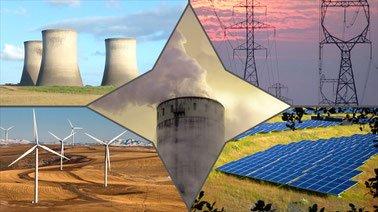
A quantitative introduction to the energy system and its environmental impacts. Humanity faces an immense challenge: providing abundant energy to everyone without wrecking the planet. If we want a high-energy future while protecting the natural world for our children, we must consider the environmental consequences of energy production and use. But money matters too: energy solutions that ignore economic costs are not realistic, particularly in a world where billions of people currently can’t afford access to basic energy services. How can we proceed?

Class Deals by MOOC List - Click here and see EdX's Active Discounts, Deals, and Promo Codes.

Energy Within Environmental Constraints won’t give you the answer. Instead, we will teach you how to ask the right questions and estimate the consequences of different choices.

This course is intended for a diverse audience. Whether you are a student, an activist, a policymaker, a business owner, or a concerned citizen, this course will help you start to think carefully about our current energy system and how we can improve its environmental performance.

What you'll learn

  • The basic engineering, environmental science, and economics of our energy system.
  • Aworking understanding of energy technologies.
  • Environmental impacts of the energy system, focusing on air pollution, climate change, and land use.
  • Techniques for estimating monetary costs and carbon impacts.

Syllabus

Week 1: Introduction
Meet the instructors and learn what the course is all about. Learn where you’re strongest and weakest, and if you have any commonly-held misconceptions.

Week 2: Energy Overview
Forms of energy and common units of measurement. How energy flows through modern and historical economies, including the composition of energy supply, common energy transformations, and which sources are used for which purposes. Prices for energy around the world.

Week 3: Estimating Costs
The quantitative techniques at the heart of the course: levelized cost and cost of mitigation. We’ll apply these techniques to energy systems and also to everyday life.

Week 4: Environmental Impacts
How severe are air pollution, climate change, and land use impact today, and how severe are they likely to be in the future? How do they affect human health, GDP, and the natural world?

Week 5: Fossil Fuels
An abbreviated section focused on the abundance of fossil fuels. Spoiler alert: we won’t run out any time soon.

Week 6: The Electric Grid
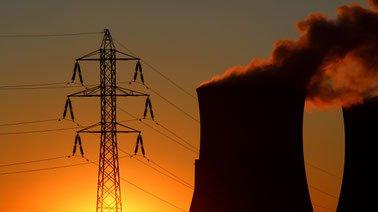
A brief overview of modern electric grids including major technologies they use, how remarkably reliable and efficient they are, how they’re planned and regulated, and how they’re starting to change.

Week 7: Solar Power
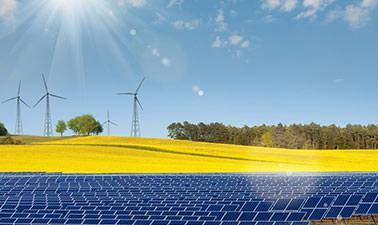
What solar power technologies dominate today and which have a chance to in the near future. How to estimate the cost of solar power in different regions, how it compares to other options, and the remarkable decline in its cost in the past 5 years. How we can cope with the intermittent nature of the solar resource. How solar power is regulated and subsidized today.

Week 8: Nuclear Power
How nuclear fission works and how it’s harnessed in modern nuclear plants. How much nuclear power costs and how much it’s used, including the stagnation in its use since the 1990’s and the prospects for its revival. Details on the hazards and costs of nuclear waste and power plant accidents. The connection between nuclear power and nuclear weapons.

Week 9: Demand Reduction and Efficiency
Reducing energy demand, by changing behavior or making devices more efficient, can reduce environmental harms – sometimes while saving money! But are there limits to this strategy? Can humanity reduce demand and aim towards a lower-energy future?

Week 10: Conclusion
Wrap-up and review.Wrap-up and review.

Go to Class
MOOC List is learner-supported. When you buy through links on our site, we may earn an affiliate commission.

Related Courses

Electric Cars: Policy (edX) EdX
Delft University of Technology,DelftX

Electric Cars: Policy (edX)

Learn about the role of public policy in steering technological innovation and infrastructural change toward zero-emission mobility. Electric cars are more than a novel means of mobility. They have been recognized as an essential building block of the energy transition. Fulfilling their promise will imply a significant change in the technical, digital and social dimensions of transport and energy infrastructure.

Self Paced
Self-Paced
Modeling and Simulation of Multibody Systems - Part II (edX) EdX
LouvainX,Université Catholique de Louvain - UCL

Modeling and Simulation of Multibody Systems - Part II (edX)

90% of daily life multibody systems contain loops of bodies, e.g. vehicle or bike suspensions, parallel manipulators or robots, and musculoskeletal systems. They can also include joint constraints. In this second course about multibody systems, learn how to model them and how to deal with more advanced numerical analyses.

Self Paced
Self-Paced
Energy Subsidy Reform (edX) EdX
International Monetary Fund - IMF,IMFx

Energy Subsidy Reform (edX)

A course on energy subsidies, their costs, and the design of a successful reform based on country case studies. In the first part of the course, economists from the IMF will introduce the definition and measurement of subsidies, and then describe the economic, social, and environmental implications of subsidies.

Self Paced
Self-Paced
Climate Change: Carbon Capture and Storage (edX) EdX
University of Edinburgh,EdinburghX

Climate Change: Carbon Capture and Storage (edX)

Explore the technology that can provide a long-term solution to protect our atmosphere from an excess of carbon dioxide, in the context of global energy, our use of fossil fuels, and climate change. The atmosphere is a shared resource and the amount of greenhouse gases it can absorb is a finite resource. This introductory course to the technology of Carbon Capture and Storage is designed for a wider audience with an interest in energy, sustainability and climate change.

Self Paced
Self-Paced
Introduction to Environmental Science (edX) EdX
DartmouthX,Dartmouth College

Introduction to Environmental Science (edX)

A scientific study of the natural world and how it is influenced by people. Major topics include: food, energy, human population, biodiversity and global change. Environmental science is the study of patterns and processes in the natural world and their modification by human activity. To understand current environmental problems, we need to consider physical, biological and chemical processes that are often the basis of those problems.

Self Paced
4 Weeks
Solar Energy: Integration of Photovoltaic Systems in Microgrids (edX) EdX
Delft University of Technology,DelftX

Solar Energy: Integration of Photovoltaic Systems in Microgrids (edX)

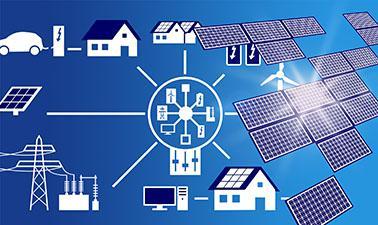
Learn how to integrate a photovoltaic system into a microgrid of your design. Photovoltaic systems are often placed into a microgrid, a local electricity distribution system that is operated in a controlled way and includes both electricity users and renewable electricity generation. This course deals with DC and AC microgrids and covers a wide range of topics, from basic definitions, through modelling and control of AC and DC microgrids to the application of adaptive protection in microgrids.

Self Paced
5-12 Weeks
Water and Wastewater Treatment Engineering: Physicochemical Technology (edX) EdX
Tsinghua University,TsinghuaX

Water and Wastewater Treatment Engineering: Physicochemical Technology (edX)

Learn the basic principles and characteristics of physicochemical technology in water and wastewater treatment engineering. This course mainly talks about the basic principles, process composition, operation characteristics, process calculation methods and some engineering examples of the main physicochemical treatment methods in water and wastewater treatment.

Self Paced
Self-Paced
Plasma Physics: Introduction (edX) EdX
École Polytechnique Fédérale de Lausanne,EPFLx

Plasma Physics: Introduction (edX)

Learn the basics of plasma, one of the fundamental states of matter, and the different types of models used to describe it, including fluid and kinetic. Plasma, the fourth state of matter, is by far the most abundant form of known matter in the universe. Its behavior is very different from the other states of matter we are usually familiar with.

Self Paced
Self-Paced
Project Management of Engineering Projects: Preparing for Success (edX) EdX
Delft University of Technology,DelftX

Project Management of Engineering Projects: Preparing for Success (edX)

Create your own project plan and learn the importance of the early project phases in achieving project success. People are key! Are you a (project) engineer with a technical background but lack management knowledge? Are you eager to improve project performance and want to expand your knowledge? This business and management course will focus on the necessary project management skills to successfully manage projects.

Sep 24th 2026
5-12 Weeks
The Engineering of Structures Around Us (edX) EdX
DartmouthX,Dartmouth College

The Engineering of Structures Around Us (edX)

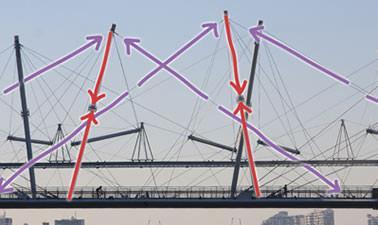
Explore how engineers design bridges and buildings in our communities and iconic structures around the world. In this introductory course, you’ll learn some engineering principles that can be applied to structural systems everywhere: in nature, in furniture, in mechanical and aerospace systems, and in any solid object that resists a load. Together we’ll explore how structures work, why they were designed the way they were designed, how they support loads, and where forces flow through them.

Self Paced
Self-Paced
Solar Resource Assessment in Desert Climates (edX) EdX
Hamad Bin Khalifa University - HBKU,HBKUx

Solar Resource Assessment in Desert Climates (edX)

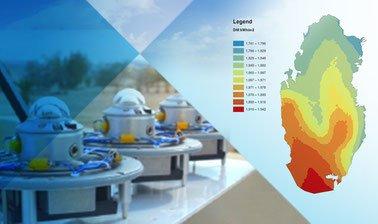
Learn how to use the components of solar radiation, solar spectrum, forecasting and meteorology to advocate and plan for deploying PV in desert climates. Desert regions may seem optimal for solar energy and the deployment of photovoltaic (PV) applications. However, the heat and dust experienced in the region poses a challenge for the optimal performance of PV modules and reliability of the applications.

Self Paced
Self-Paced