Photography Techniques: Light, Content, and Sharing (Coursera)

Photography Techniques: Light, Content, and Sharing (Coursera)

Welcome to Course FOUR! In Modules 1-4 you will cover the final elements of the Specialization necessary to round out this introduction to the fundamentals of Photography, and prepare you for creating your own exciting project in the Capstone! You have come a long way since the beginning of this journey from Smartphone Basics to DSLR and Beyond. Just think of all the information you have absorbed and put to use in your assignments and quizzes, and the confidence you have gained that you CAN control the camera to make pictures you are proud to share.

Class Deals by MOOC List - Click here and see Coursera's Active Discounts, Deals, and Promo Codes.

Here in Course Four you will start by gaining knowledge related to content in photography, from fact to fiction, documentary to purely expressive. Next you will learn principles, tips, and techniques for using the essential element of Light in Ambient/Natural settings.
The flash/strobe unit, whether it is built-in to your camera or an add-on "hotshoe" model, will finally be something you, not the camera, controls! You will prove to yourself that those former mysteries of Controlled Continuous and Strobe lighting will no longer be mysterious, as you apply your knowledge to creation of assignment photographs in various situations. Sharing those pictures in Peer Review will give you the opportunity to learn from your fellow photographers' solutions to lighting challenges, and to gain insight into your own work and creative approaches too.
There is an important word to share about Peer Review assignments for this course. As photographers who have accomplished the quiz and photography requirements of Courses One through Three, you have the knowledge and capability to create quality photographs at a much higher rate of success, and in a much shorter time, than when you began. You have also proven that you are a dedicated Learner, someone who has a passion for photography and is willing to put forth the extra effort necessary to accomplish your goals. This Course is the last before the Capstone Course, in which you will be tasked with creating a project over a 2-month period of dedicated photography. The Peer Review photography assignments have been structured with both your advanced capabilities and dedication in mind...in other words, they will require both! Be prepared to allocate more time than you have in previous Courses for the assignments, because they will take more time and because you will really enjoy them!
Course Four ends with an overview of methods for finalizing your pictures in print form, including simple but effective matting techniques, and in web page designs as well. The pleasures and perils of sharing in social media sites are also yours to discover. Protecting your copyrights by understanding that concept and the ways that you can assert them, being careful about blogs and other outlets, and recognizing you are part of a community that respects the individual's creative effort, well that is important knowledge to have in preparation for the Capstone too! Let's get started with Module One!

Course 4 of 5 in the Photography Basics and Beyond: From Smartphone to DSLR Specialization

Syllabus

WEEK 1
The Content of a Photograph
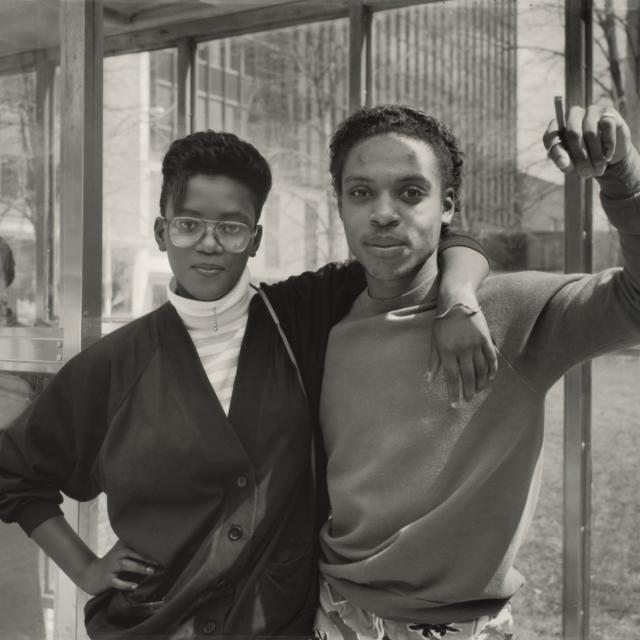
What are the broad areas of content that are most closely associated with photography? Why is photography well suited to image-making in these areas, and where do your interests synchronize with those of photographers past and present? You will gain a greater understanding of those and other questions, and knowledge of a range of typical pictures in a variety of categories too, in this set of lessons. Understanding these broad categories will help you to form your own projects, including the Capstone Project in Course 5, with confidence that you are part of a stream of tradition, building on a foundation that you as a photographer are a part of!

WEEK 2
Light Fundamentals 1.0: People, Places, Things under Ambient Light
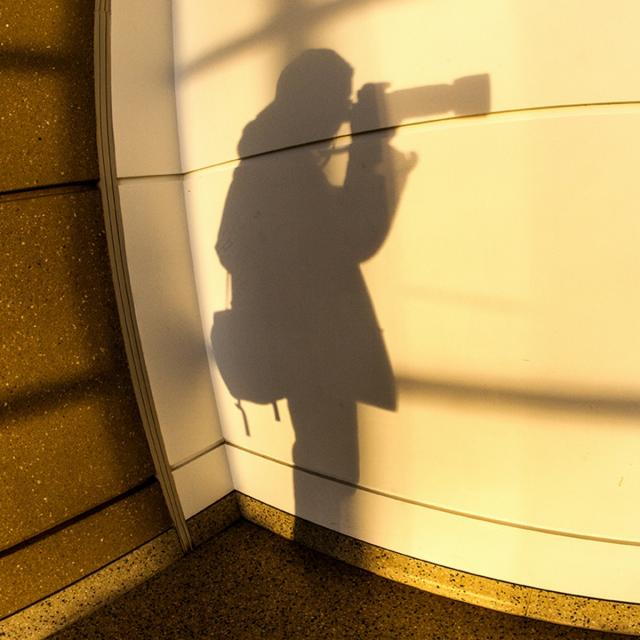
In this Module you will begin with an overview of light itself, and learn to recognize the characteristics of typical "ambient," aka continuous light natural to the environment. From photographing early in the morning, through midday to evening, in exterior and interior environments, you will learn to recognize typical light/subject situations and be able to use new tips and techniques on how to get the best results. People, places, and things each require nuanced approaches, even under similar lighting, and you will learn to recognize opportunities in each category.

WEEK 3
Light Fundamentals 2.0: People, Places, Things under Controlled Light
In this Module you will learn about essential light and exposure principles that are critical to your success in photography that is made with lights that you can control. From continuous-light to built-in-camera flash to auxiliary "hotshoe" strobes, you will establish a solid foundation of light and lighting principles and practices, especially related to the flash. With a built-in flash in most digital cameras, it is essential to have a full understanding of that important device. You will have much better control of the flash with the information you gain in this Module. Rounding out this module are lessons on practical photography activities that you will be able to apply to addressing your own individual needs for specialized picture situations, even with a Smart phone!

WEEK 4
Finishing Pictures: Options for Showing and Sharing
In this Module you will survey the ways that you can bring your digital images out of the world of zeros and ones that are stored in your computer, and bring them into the world through various means of sharing. Whether your interests are in producing prints of your photographs or quality web-based displays, you will have the knowledge to control their appearance through calibration that is essential for a professional presentation. You will also learn about the pitfalls and dangers of sharing in social media and other sites, and how to take precautions to protect yourself, your family and friends, and your photographs. You will also gain an understanding of standard options for dissemination of your photos in print form, on sharing sites, and even in your very own website.

Go to Class
MOOC List is learner-supported. When you buy through links on our site, we may earn an affiliate commission.

Related Courses

Global Diplomacy – Diplomacy in the Modern World (Coursera) Coursera
University of London,SOAS University of London

Global Diplomacy – Diplomacy in the Modern World (Coursera)

The Global Diplomacy course is a unique offering to the MOOC environment. Bringing together cutting edge research in the broad fields of Diplomatic and International Studies, award winning distance learning delivery and the instructors previous experience of delivering a successful MOOC. Please see the volume Global Diplomacy: Theories, Types and Models authored with Dr Alison Holmes, (Westview, 2016), and the Understanding Research Methods MOOC from Coursera.

Jun 15th 2026
5-12 Weeks
Light and Materials (Coursera) Coursera
Rice University

Light and Materials (Coursera)

This second course serves as an introduction to the physics of waves and light. Upon completion, learners will understand how mathematical laws and conservation principles describe wave propagation and light in the context of both geometrical and physical optics. Learners will gain experience in solving physics problems with tools such as graphical analysis, algebra, vector analysis, and calculus.

Jun 8th 2026
3 Weeks
Introduction to Typography (Coursera) Coursera
California Institute of the Arts

Introduction to Typography (Coursera)

Typography is the art of manipulating the visual form of language to enrich and control its meaning. It’s an essential area of skill and knowledge for graphic designers. Typography predates modern graphic design by around 500 years; it is rich in rules, conventions, and esoteric terminology—but it remains an exciting space for invention and expression.

Jun 15th 2026
4 Weeks
Writing and Disseminating Grey Literature (Coursera) Coursera
Indian Institute for Human Settlements

Writing and Disseminating Grey Literature (Coursera)

If you are a researcher, academic, student, development sector professional or a practitioner who is keen to reach the research-based knowledge you have created to a wider audience, this course is for you. Vast amounts of knowledge are produced by educational and research institutions through rigorous research and fieldwork. Yet, there is a dearth of access to this knowledge among non-academic communities (which includes practitioners, policymakers, and citizens) due to the language used. Researchers can bring visibility to grey literature if they engage with alternate public writing forms.

Jun 15th 2026
5-12 Weeks
The Beauty of Kunqu Opera (Coursera) Coursera
The Chinese University of Hong Kong

The Beauty of Kunqu Opera (Coursera)

This course will focus on the historical and cultural background, literary aesthetics, music, and performance of Kunqu, China’s classical opera. After viewing the lecture videos presented by scholars and renowned maestros in the field of Kunqu, students’ understanding and appreciation of Chinese performing arts, classical literature and traditional culture will be enhanced.

Jun 8th 2026
5-12 Weeks
The Blues: Understanding and Performing an American Art Form (Coursera) Coursera
University of Rochester

The Blues: Understanding and Performing an American Art Form (Coursera)

The blues is an American art form and the most important musical form in jazz. Although there are other formal paradigms of the blues, such as 8-bar or 16-bar, this course focuses on different incarnations of the 12-bar blues. There are considerable differences between Early Jazz blues, Swing blues, Bebop blues, Modal blues, and Post Bop blues.

Jun 15th 2026
5-12 Weeks
Camera Control (Coursera) Coursera
Michigan State University

Camera Control (Coursera)

Welcome to Course Two of Photography Basics and Beyond: From Smartphone to DSLR! Now that you have a broad understanding of the various types of cameras, the importance of seeing up Menus and Functions to gain control in your photography, and the difference between Auto and Program exposure modes, you are ready to move into even greater Camera Control!

Jun 15th 2026
4 Weeks
Introduction to Game Design (Coursera) Coursera
California Institute of the Arts

Introduction to Game Design (Coursera)

Welcome! This course is an introduction to the primary concepts of gaming, and an exploration of how these basic concepts affect the way gamers interact with our games. In this course you will understand what defines a “game” and the mechanics and rules behind different types of games. Through four linked assignments you'll learn ways to create and describe a game concept, and specifically what makes a compelling game. This course focuses on the conceptual underpinnings of games, and all assignments can be completed with a pencil and paper – no previous programming knowledge is required.

Jun 15th 2026
4 Weeks
Exploring Light: Hands-on Activities and Strategies for Teachers (Coursera) Coursera
Exploratorium

Exploring Light: Hands-on Activities and Strategies for Teachers (Coursera)

This is an Exploratorium teacher professional development course taught by Teacher Institute staff, open to any science teacher (particularly middle or high school level) and science enthusiast. This is a hands-on workshop that explores topics and strategies teachers can use to help their students become active investigators of light.

Jun 14th 2026
4 Weeks
World Design for Video Games (Coursera) Coursera
California Institute of the Arts

World Design for Video Games (Coursera)

Start creating your world. A game world is not just a backdrop for your game—be it minimal or detailed, contained or part of a much bigger universe, it provides the context for your player. Ultimately, a game world should feel alive and wholly unique to any player who will experience it. In this course, we will explore game worlds in existing games and study the art and influences that inform their themes and styles. We will also investigate key components of environment and level design as well as strategies designers use to define gameplay or advance it. We’ll also look at navigation and the elements that make your world as real (or unreal) as you want it to be.

Jun 15th 2026
4 Weeks
Art and the Digital Transformation (Coursera) Coursera
Copenhagen Business School

Art and the Digital Transformation (Coursera)

More than two decades into the new millennium, it is difficult to envision a future in which digital technologies do not play a significant role. Digital technologies frequently make a lot of promises. However, in recent years, we have seen an increasing number of artists address fundamental issues of the Digital Transformation, such as surveillance, lack of representation, and digital illiteracy. Artists have demonstrated that, while digital technologies have the potential to support processes leading to greater equality, they are frequently viewed as perpetuating and even exacerbating inequalities.

Jun 15th 2026
5-12 Weeks