The Beauty of Kunqu Opera (Coursera)

The Beauty of Kunqu Opera (Coursera)

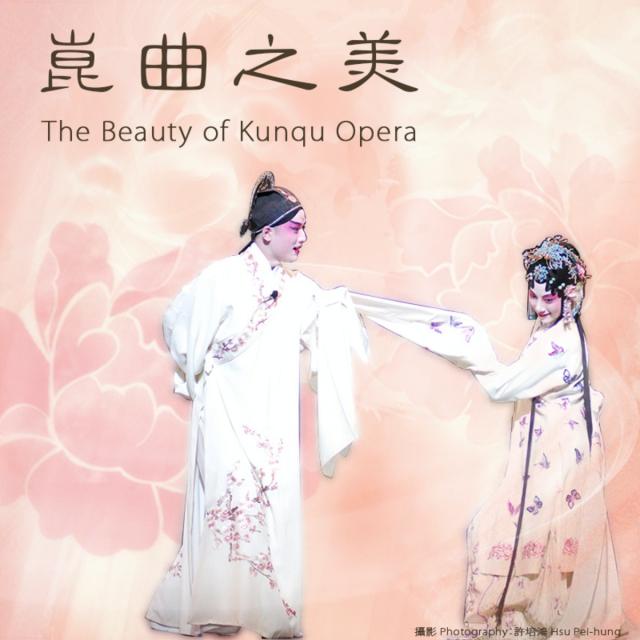
This course will focus on the historical and cultural background, literary aesthetics, music, and performance of Kunqu, China’s classical opera. After viewing the lecture videos presented by scholars and renowned maestros in the field of Kunqu, students’ understanding and appreciation of Chinese performing arts, classical literature and traditional culture will be enhanced.

Class Deals by MOOC List - Click here and see Coursera's Active Discounts, Deals, and Promo Codes.

Syllabus

Week 1
An Introduction to the Beauty of Kunqu Opera
Welcome to The Beauty of Kunqu Opera! The following lecture videos will give you some ideas of the historical background and characteristics of Kunqu, China’s classical opera that originated more than 600 years ago and blossomed during the late Ming and early Qing dynasties (around 16th – 17th centuries). The introduction is followed by excerpts and analysis of The Peony Pavilion, Kunqu’s masterpiece. The poetic artistry shown in the arias, dialogues and dance movement of the characters exemplifies the aesthetic achievement of Kunqu.

Week 2
The Beauty of Kunqu Music
Kunqu means music/song (qu) that originated from the district of Kunshan, Jiangsu province. The word itself shows the fundamental role played by music in this Chinese classical opera. This week, Prof. Lindy Li Mark from the California State University, East Bay will talk about the musical aspect of Kunqu. What are the musical features of Kunqu melodies? What is tune-type and what does a traditional score of Kunqu look like? How is the music of Kunqu different from that of the Western operas? What instruments are used in a Kunqu ensemble? Answers to these questions can be found in the lecture videos.

Week 3
The Art of Kunqu Performance: the Male Role-Types
Just like other genres of Chinese opera, Kunqu has a broad range of role-types, such as male (sheng), female (dan), painted face (jing) and comic (chou). From this week on, legendary performing artists who have devoted their whole lives to Kunqu will talk about the role-types they specialize in and their facial makeup, costume, singing, speaking and movements. In addition, they will demonstrate some of the very important repertoires in Kunqu and share with us the characteristics of each of them. This week, Maestros Yue Meiti and Cai Zhengren will talk about one of the most important role-types of Kunqu, the male role-type. Classical plays such as The Jade Hairpin, The Shepherd, and The Palace of Eternal Life will be introduced as well.

Week 4
The Art of Kunqu Performance: the Female Role-Type
The female role-type is another prominent role-type of Kunqu and can be divided into a number of subtypes. In this week lively lectures and demonstration by Maestros Zhang Jingxian (mature female), Zhang Jiqing (young noble lady), Liang Guyin (vivacious young female) and Wang Zhiquan (martial female) will show us the charisma of the diversified female characters on the Kunqu stage from Chinese classics such as The Lute, The Peony Pavilion and Journey to the West.

Week 5
The Art of Kunqu Performance: Integration of the Painted Face and Warrior Role-Types
The colorful and complex facial makeup of the painted face role-type is probably the most noticeable feature in the eyes of the audience. But what does facial makeup mean and how is it done? This week, Maestro Hou Shaokui will unfold the mysteries for us. He will also share with us his portrayal of Lord Guan, a well-known household character based on the most famous Chinese historical novel Romance of the Three Kingdoms. What is more, this unique character combines the essence of both the painted face and warrior role-types.

Week 6
The Art of Kunqu Performance: the Comic Role-Type
When appreciating the well written script and the beautiful melody of Kunqu, sometimes audiences just want a good laugh in the theatre. This cannot be done without the contribution of the comic role-type. This week, Maestro Zhang Mingrong will explain the characteristics of the different subtypes of the comic role-type, namely young chou, fu chou and martial/acrobatic chou. From Maestro Zhang’s demonstration we will also see that mastering the comic role-type requires much more skill than just natural talent.

Week 7
The New Aesthetics of Kunqu: Tradition and Modernity
Drawing examples from the production of The Peony Pavilion (Young Lover’s Edition) and The Jade Hairpin (New Edition), Prof. Kenneth Hsien-yung Pai will illustrate how Kunqu today can attract the younger generation by adding modern elements in stagecraft while preserving the basic aesthetics of Kunqu.
Go to Class
MOOC List is learner-supported. When you buy through links on our site, we may earn an affiliate commission.

Related Courses

Richard Schechner's Introduction to Performance Studies (Coursera) Coursera
New York University

Richard Schechner's Introduction to Performance Studies (Coursera)

Performance Studies: An Introduction explores the wide world of performance--from theatre, dance, and music to ritual, play, political campaigns, social media, and the performances of everyday life. Performance studies also ranges across cultures--Asia, Africa, the Caribbean, Europe, the Americas. And it spans historical periods from the art of the paleolithic caves to YouTube and the avantgarde. This course is devised by Richard Schechner, one of the pioneers of performance studies, in dialogue with more than a dozen expert scholars and artists.

Aug 31st 2026
13-24 Weeks
Introduction to German Opera (Coursera) Coursera
Dartmouth College

Introduction to German Opera (Coursera)

This course gives us an introduction to German Opera and the evolution of opera as well. It explores the concept of how music conveys the drama throughout the course. You will understand how Wagner conveys the meaning of the opera through motives. It further explores musical gestures and how it helped various composers develop their style in opera as well. You will understand in detail the importance of orchestra in German Opera.

Aug 24th 2026
4 Weeks
Teaching the Violin and Viola: Creating a Healthy Foundation (Coursera) Coursera
Northwestern University

Teaching the Violin and Viola: Creating a Healthy Foundation (Coursera)

Join us as we explore the fundamental principles and early stages of teaching violin and viola through a series of engaging video lectures and lesson demonstrations, including: 1) Master classes with some of the world’s top string pedagogues, 2) Individual lesson demos of teaching violin/viola set up, left and right hand technique and pieces from the early violin/viola repertoire, 3) Group lesson demos of teaching music theory, ear training and fun activities that encourage good playing habits, and 4) A “field trip” to the violin shop, where we will outfit a new beginning student with a proper instrument and bow.

Aug 31st 2026
5-12 Weeks
Art & Activity: Interactive Strategies for Engaging with Art (Coursera) Coursera
The Museum of Modern Art

Art & Activity: Interactive Strategies for Engaging with Art (Coursera)

Art can be a powerful catalyst for building skills and understanding a range of subjects. Intended for primary and secondary teachers of all disciplines, Art & Activity builds upon the inquiry-based approaches of Art and Inquiry: Museum Teaching Strategies for Your Classroom, while delving into activity-based strategies that will make your students empowered participants.

Aug 31st 2026
4 Weeks
The Blues: Understanding and Performing an American Art Form (Coursera) Coursera
University of Rochester

The Blues: Understanding and Performing an American Art Form (Coursera)

The blues is an American art form and the most important musical form in jazz. Although there are other formal paradigms of the blues, such as 8-bar or 16-bar, this course focuses on different incarnations of the 12-bar blues. There are considerable differences between Early Jazz blues, Swing blues, Bebop blues, Modal blues, and Post Bop blues.

Sep 7th 2026
5-12 Weeks
Android Architecture/Multimedia Framework (Coursera) Coursera
Board Infinity

Android Architecture/Multimedia Framework (Coursera)

This is an Intermediate Course intended for learners passionate about Android Development and have basic knowledge of Android Development. Embark on a comprehensive exploration of Android's architectural components, complemented by an in-depth study of its multimedia frameworks. Designed for software developers, mobile app enthusiasts, and tech professionals, this course offers profound insights into the Android operating system's inner mechanics.

Sep 7th 2026
4 Weeks
Leading Innovation in Arts and Culture (Coursera) Coursera
Vanderbilt University,National Arts Strategies - NAS

Leading Innovation in Arts and Culture (Coursera)

Developed by David Owens at Vanderbilt University and customized for the cultural sector with National Arts Strategies, this course will help arts and culture leaders create an environment where new ideas are constantly created, shared, evaluated and the best ones are successfully put to work. One of the toughest challenges for any leader is getting traction for new ideas. Winning support can be a struggle. As a result, powerful new ideas often get stuck. This is especially true in the cultural sector. People involved in arts and culture often have little time and even less money for experimentation and risks. This course will help those in the performing arts, museums, zoos, libraries and other cultural organizations build environments where new management and program ideas flourish.

Aug 24th 2026
5-12 Weeks
Arts and Culture Strategy (Coursera) Coursera
University of Pennsylvania,National Arts Strategies - NAS

Arts and Culture Strategy (Coursera)

Arts and culture leaders have a rewarding but tough task: creating sustainable organizations that deliver real social value. There is a lot of competition out there. Being an effective leader means constantly adapting, cleverly using the best tools to reach as many people as possible. This course is designed to help leaders at any level do just that.

Aug 24th 2026
5-12 Weeks
Religious Transformation in Early China: the Period of Division (Coursera) Coursera
The Chinese University of Hong Kong

Religious Transformation in Early China: the Period of Division (Coursera)

This sequence of four courses will propose a multi-disciplinary approach to the study of Chinese cultural history conceived of as a succession of modes of rationality (philosophical, bureaucratic, and economic). The focus will be on the moments of paradigm shift from one mode of rationality to another. For each of these moments, cultural facts and artifacts—thought, literature, ritual—will be examined in relationship to changing social, political, and economic systems.

Sep 7th 2026
5-12 Weeks
Chinese Culture and Contemporary China (Coursera) Coursera
Nanjing University

Chinese Culture and Contemporary China (Coursera)

This course of Chinese Culture and Contemporary China will explore the foundations of Chinese civilization and the dimensions of Chinese culture. It will pay particular attention to the relationship between Chinese culture and the present-day life of the Chinese people and to the different elements of the culture which are under the present social structures, belief systems, literature, arts, customs, etc. The course aims at providing students with a deeper knowledge of Chinese culture, thus enabling them to better understand China.

Aug 24th 2026
5-12 Weeks
Seeing Through Photographs (Coursera) Coursera
The Museum of Modern Art

Seeing Through Photographs (Coursera)

Although taking, sharing, and viewing photographs has become second nature for many of us, our regular engagement with images does not necessarily make us visually literate. This course aims to address the gap between seeing and truly understanding photographs by introducing a diversity of ideas, approaches, and technologies that inform their making. In this course you will look closely at 100 photographs from the collection of The Museum of Modern Art, going behind the scenes of the Museum and into artist studios through original films and audio interviews.

Aug 24th 2026
5-12 Weeks