Videojuegos: ¿de qué hablamos? (Coursera)

Videojuegos: ¿de qué hablamos? (Coursera)

Probablemente, todos hemos jugado a algún videojuego, pero ¿qué hay detrás de él? Podemos decir que - con independencia del videojuego - hay un árduo trabajo multidisciplinar que incluye desde aspectos de diseño hasta la programación como tal del videojuego. Este curso pretende ser un curso introductorio que muestre qué aspectos hay que considerar en el videojuego, y que permita con posterioridad abordar individualmente los temas que se consideran nucleares: diseño, arte, motor del videojuego y 'game play'.

Class Deals by MOOC List - Click here and see Coursera's Active Discounts, Deals, and Promo Codes.

Al completar este curso introductorio, podrás identificar, nombrar y explicar la importancia de los diferentes aspectos que hay que considerar al diseñar un videojuego. Pretendemos también que puedas evaluar qué partes del videojuego te interesan más, de cara a que puedas seguir un curso específico sobre esa temática, o bien, si deseas el conocimiento global, puedas abordar todo el programa especializado. Estarás listo para abordar más en profundidad estos temas nucleares (diseño, arte, motor del videojuego y 'gameplay') que se cubren de forma individualizada y en detalle en el resto de cursos del programa especializado.
IMPORTANTE
Puedes seguir el curso también en Inglés (subtítulos y cuestionarios).

Course 1 of 6 in the Diseño y Creación de videojuegos Specialization.

Syllabus

WEEK 1
Presentación e introducción
«De las industrias audiovisuales, la de los videojuegos es una de las más importantes. Incluso ha llegado a sobrepasar al cine en volumen de negocio». Pero, ¿qué es un videojuego? ¿quiénes están detrás de los videojuegos? ¿qué aplicaciones tienen?

WEEK 2
Géneros de los videojuegos
La obra del holandés Maurits Cornelius Escher, litografías en las que se mezclan arquitecturas y perspectivas imposibles sirvió de base e inspiración para un juego de ambientación fantástica perteneciente al género puzle, el videojuego Monument Valley. En este módulo aprenderás qué tipo de géneros se utilizan para clasificar los videojuegos y te mostraremos algunos ejemplos de cada uno de ellos.

WEEK 3
Historia de los videojuegos
Sabías que... ¿la historia de los videojuegos es de tan solo unos 60 años? ¿el juego OXO (Tres en raya) surgió en 1952? ¿Space invaders es de 1978 y tuvo mucho éxito en Japón? ¿el juego Pacman está basado en un cuento japonés? En este módulo harás un pequeño viaje a través de la historia de los videojuegos.

WEEK 4
Componentes de un videojuego y roles
Conocer lo que hay detrás de un videojuego y los actores que intervienen requiere conocer dos aspectos importantes, como son los componentes de un videojuego (qué hay que realizar) y los roles (quiénes intervienen en el proceso de creación, desarrollo y distribución del videojuego). Crear y desarrollar un videojuego no es un trabajo de uno solo...

WEEK 5
Diseño de videojuegos
«En el desarrollo de un videojuego se generan partes específicas; no se diseña el juego completo». Pero, ¿qué es diseñar? ¿Cuál o cuáles son las finalidades principales del diseño?

WEEK 6
El arte en el videojuego
«El acabado artístico es el principal elemento seductor del videojuego. [...] Cada vez más se encarga la composición de bandas sonoras específicas a compositores de renombre». Pero, ¿qué aspectos hay que tener en cuenta cuando hablamos de arte en un videojuego?

WEEK 7
Tecnología
Detrás de un videojuego existen múltiples capas de cierta complejidad que interactúan entre ellas para confluir en el videojuego como tal. En este módulo verás una breve introducción a diferentes componentes usados en videojuegos, como las API's gráficas o las librerías físicas o de audio.

WEEK 8
Gameplay
Componentes de un videojuego, roles, diseño, arte... ¿Cómo unir todo ello con el usuario? La interacción del usuario con el videojuego se realiza gracias a la programación del gameplay, que tendrá aspectos a tener en cuenta como la inteligencia artificial de los enemigos, o la lógica del juego. En este módulo aprenderás más sobre el Gameplay.


Go to Class
MOOC List is learner-supported. When you buy through links on our site, we may earn an affiliate commission.

Related Courses

The Blues: Understanding and Performing an American Art Form (Coursera) Coursera
University of Rochester

The Blues: Understanding and Performing an American Art Form (Coursera)

The blues is an American art form and the most important musical form in jazz. Although there are other formal paradigms of the blues, such as 8-bar or 16-bar, this course focuses on different incarnations of the 12-bar blues. There are considerable differences between Early Jazz blues, Swing blues, Bebop blues, Modal blues, and Post Bop blues.

Oct 5th 2026
5-12 Weeks
Introdução ao Desenvolvimento de Aplicativos Android (Coursera) Coursera
Universidade Estadual de Campinas - UNICAMP

Introdução ao Desenvolvimento de Aplicativos Android (Coursera)

Este curso tem como objetivo propiciar um primeiro contato com a Programação para Dispositivos Móveis que operam na plataforma Android. O Android Studio será utilizado como ambiente de desenvolvimento desde o início do curso e você receberá dicas de como obter ajuda quando alguma tarefa estiver consumindo mais tempo do que o necessário. Ao solucionar problemas por conta própria, você irá adquirir a autonomia necessária para concluir projetos de programação.

Oct 5th 2026
5-12 Weeks
Functional Program Design in Scala (Scala 2 version) (Coursera) Coursera
École Polytechnique Fédérale de Lausanne

Functional Program Design in Scala (Scala 2 version) (Coursera)

In this course you will learn how to apply the functional programming style in the design of larger Scala applications. You'll get to know important new functional programming concepts, from lazy evaluation to structuring your libraries using monads. We'll work on larger and more involved examples, from state space exploration to random testing to discrete circuit simulators. You’ll also learn some best practices on how to write good Scala code in the real world. Finally, you will learn how to leverage the ability of the compiler to infer values from types.

Oct 5th 2026
5-12 Weeks
Reimagining Blackness and Architecture (Coursera) Coursera
The Museum of Modern Art

Reimagining Blackness and Architecture (Coursera)

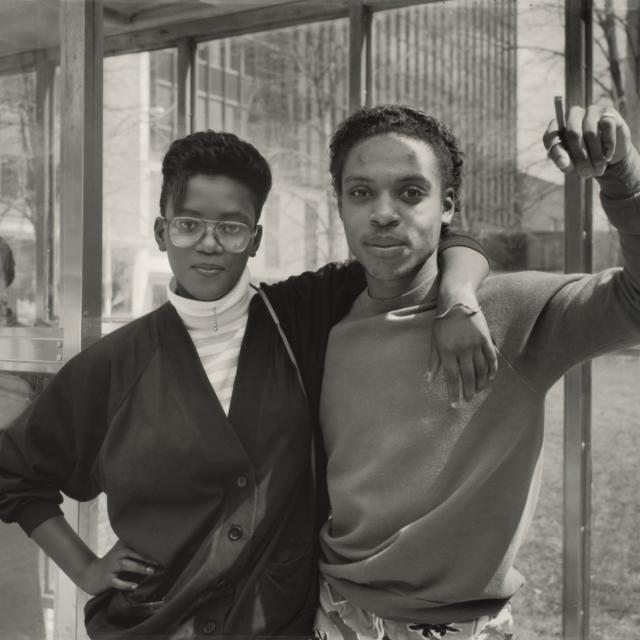
Architecture structures our daily lives. It shapes our homes, streets, neighborhoods, cities and more. But who gets to create and occupy these spaces? In the United States, a long history of anti-Black racism has created spatial inequalities that are built into the physical environment and erased the stories of Black architects and communities. Reimagining Blackness and Architecture explores the relationship between architecture and Blackness as an identity and a lived experience.

Oct 5th 2026
5-12 Weeks
The Cycle: Management of Successful Arts and Cultural Organizations (Coursera) Coursera
University of Maryland, College Park

The Cycle: Management of Successful Arts and Cultural Organizations (Coursera)

What makes a successful arts and cultural organization? Led by DeVos Institute Chairman Michael M. Kaiser and President Brett Egan, this course will introduce you to a management theory called the Cycle which supports thriving arts and cultural organizations. Learning from our work with managers from over 80 countries around the world, the DeVos Institute developed the Cycle as a simple, but powerful tool to assist managers in their effort to respond to an increasingly complex environment and propel their institutions to excellence.

Oct 5th 2026
5-12 Weeks
Programming for Everybody (Getting Started with Python) (Coursera) Coursera
University of Michigan

Programming for Everybody (Getting Started with Python) (Coursera)

This course aims to teach everyone the basics of programming computers using Python. We cover the basics of how one constructs a program from a series of simple instructions in Python. The course has no pre-requisites and avoids all but the simplest mathematics. Anyone with moderate computer experience should be able to master the materials in this course.

Sep 28th 2026
5-12 Weeks
An Introduction to Interactive Programming in Python (Part 2) (Coursera) Coursera
Rice University

An Introduction to Interactive Programming in Python (Part 2) (Coursera)

This two-part course is designed to help students with very little or no computing background learn the basics of building simple interactive applications. Our language of choice, Python, is an easy-to learn, high-level computer language that is used in many of the computational courses offered on Coursera. To make learning Python easy, we have developed a new browser-based programming environment that makes developing interactive applications in Python simple.

Oct 5th 2026
4 Weeks
Pixel Art for Video Games (Coursera) Coursera
Michigan State University

Pixel Art for Video Games (Coursera)

This course is aimed to give you the tools and knowledge you need to start creating simple art for video games made in the Unity game engine. Through the aesthetic of pixel art we will explore artistic principals like shape language, color theory, and composition as well as show you a step by step workflow for creating assets that you can use to make your own games.

Oct 5th 2026
5-12 Weeks
Computer Science: Algorithms, Theory, and Machines (Coursera) Coursera
Princeton University

Computer Science: Algorithms, Theory, and Machines (Coursera)

This course introduces the broader discipline of computer science to people having basic familiarity with Java programming. It covers the second half of our book Computer Science: An Interdisciplinary Approach (the first half is covered in our Coursera course Computer Science: Programming with a Purpose, to be released in the fall of 2018). Our intent is to demystify computation and to build awareness about the substantial intellectual underpinnings and rich history of the field of computer science.

Oct 5th 2026
5-12 Weeks