活用希臘哲學 (Understanding the Greek Philosophy) (Coursera)

活用希臘哲學 (Understanding the Greek Philosophy) (Coursera)

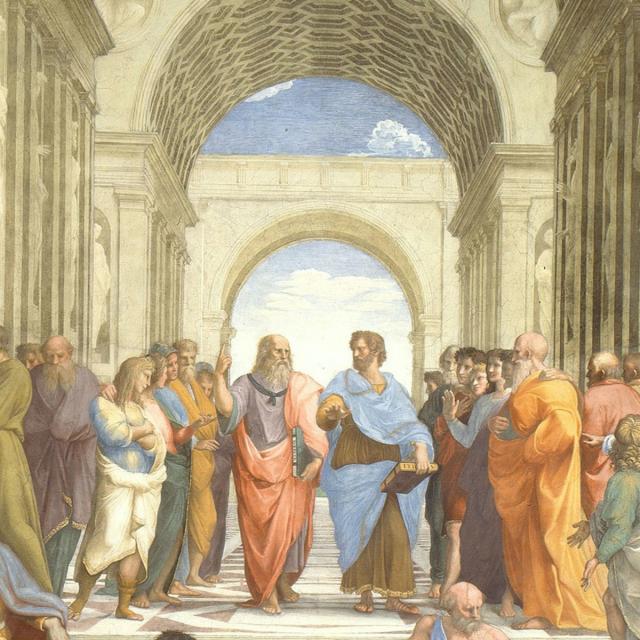
本課程之教學內容以希臘哲學之發展為主,並輔以哲學對人生意義之說明。希臘哲學是西洋哲學的骨幹,呈現西方人思維的核心理念,不但足以解釋今日之西方世界,甚至可以說明全世界的發展趨勢。本課程以希臘哲學為教學之主幹,分為先蘇哲學、詭辯學派、蘇格拉底、柏拉圖、亞理斯多德五個階段。教學的方式以強調他們之間的不同與相同的部分。課程將以演講的方式進行,揉合日常經驗作說明,並不時地會以整體的角度回頭看希臘哲學在今日哲學與社會所扮演的角色。

Class Deals by MOOC List - Click here and see Coursera's Active Discounts, Deals, and Promo Codes.

本課程企圖達到下列三項目標:
第一,西學中講。所有的哲學思想有其核心結構可以沿用到世界各個角落。在應用哲學的過程中,最重要的事情是用自己的語言「重新脈絡化」哲學思想的源起、發展以及展望。本課程第一目標即「西學中講」,讓希臘哲學的精意能夠顯現在我們日常生活之中。
第二,挑戰主題。希臘哲學有其深沉脈絡,因此自然有它所特別著重的議題。在這些議題中,例如對政治的批判、對性向的寬容、對社會不平等的理解,甚至對經濟特權的強調,都是存在於當今社會中忌諱議題。希臘哲學的講述中,連帶地會說明這些議題會生成的條件,有助於我們從哲學的觀點理解平日社會中比較少觸及的議題。
第三,本課程最重要的目標,就是掌握希臘哲學的發展脈絡,使課程內容成為我們生活導引的價值。這些價值的體會與應用有助於我們看清社會發展的動態,能夠應用於生活之中。

Suggested Readings:

Go to Class
MOOC List is learner-supported. When you buy through links on our site, we may earn an affiliate commission.

Related Courses

Introduction to Philosophy (Coursera) Coursera
University of Edinburgh

Introduction to Philosophy (Coursera)

This course will introduce you to some of the main areas of research in contemporary philosophy. Each module a different philosopher will talk you through some of the most important questions and issues in their area of expertise. We’ll begin by trying to understand what philosophy is – what are its characteristic aims and methods, and how does it differ from other subjects? Then we’ll spend the rest of the course gaining an introductory overview of several different areas of philosophy.

May 18th 2026
5-12 Weeks
Intellectual Humility: Theory (Coursera) Coursera
University of Edinburgh

Intellectual Humility: Theory (Coursera)

Faced with difficult questions people often tend to dismiss and marginalize dissent. Political and moral disagreements can be incredibly polarizing, and sometimes even dangerous. And whether it’s Christian fundamentalism, Islamic extremism, or militant atheism, religious dialogue remains tinted by arrogance, dogma, and ignorance. The world needs more people who are sensitive to reasons both for and against their beliefs, and are willing to consider the possibility that their political, religious and moral beliefs might be mistaken. The world needs more intellectual humility.

Jun 8th 2026
3 Weeks
Thought Experiments: An introduction to philosophy (Coursera) Coursera
Erasmus University Rotterdam

Thought Experiments: An introduction to philosophy (Coursera)

Doing philosophy is like seeing a movie and wondering what will happen next, or what you would do in the same situation, or what’s real and what’s merely make-believe. You’re probably not aware of it, but since you already know how to see movies and use your imagination, you’re well on your way to becoming a good philosopher. The only thing you still need and want to develop though, is the ability to use your imagination in the philosophical way, and that’s exactly what you’ll learn in this MOOC.

Jun 1st 2026
5-12 Weeks
Luther and the West (Coursera) Coursera
Northwestern University

Luther and the West (Coursera)

In this course we will discuss the history of some ideas that have been hugely influential in the modern west and that were taken out to the rest of the world. The discussion centers on an extraordinary and historically important figure, a sixteenth century German man named Martin Luther. Luther is recognized today as the originator of many of the most significant ideas that continue to affect and shape who we as modern people are and how we see the world and ourselves for better and for worse.

Jun 1st 2026
5-12 Weeks
On Strategy : What Managers Can Learn from Philosophy - PART 1 (Coursera) Coursera
CentraleSupélec

On Strategy : What Managers Can Learn from Philosophy - PART 1 (Coursera)

In the expression “creative thinking”, the keyword is not creativity; the keyword is thinking. With the help of great philosophers, you will rediscover the art of thinking. To help leaders to be rigorous even without figures, great philosophers have lots of ideas. Managers are invited to rediscover the art of thinking. They should understand the role of mental models, realize the importance of cognitive bias, agree on clear definitions and efficient criteria etc. Creativity demands the ability to unshackle ourselves from conventional ways of thinking, to "think outside the box".

Jun 1st 2026
5-12 Weeks
Foundations of Teaching for Learning: Being a Professional (Coursera) Coursera
Commonwealth Education Trust

Foundations of Teaching for Learning: Being a Professional (Coursera)

The Foundations of Teaching for Learning programme is for anyone who is teaching, or who would like to teach, in any subject and any context - be it at school, at home or in the workplace. With dynamic lessons taught by established and respected professionals from across the Commonwealth, this eight course programme will see you develop and strengthen your skills in teaching, professionalism, assessment, and more. As you carry on through the programme, you will find yourself strengthening not only your skills, but your connection with colleagues across the globe. A professional development opportunity not to be missed.

Jun 1st 2026
5-12 Weeks
Christianity & Ecology (Coursera) Coursera
Yale University

Christianity & Ecology (Coursera)

There is a need for broader literacy and deeper knowledge of the world’s religions and their ecological contributions. This course is designed as a gateway to the rich ecological dimensions of the Christian religious tradition. We delve into unique contributions from Orthodox, Catholic, and Protestant Christianity, exploring views on and relationship with the natural world.

May 25th 2026
5-12 Weeks
Philosophy and the Sciences: Introduction to the Philosophy of Cognitive Sciences (Coursera) Coursera
University of Edinburgh

Philosophy and the Sciences: Introduction to the Philosophy of Cognitive Sciences (Coursera)

What is our role in the universe as human agents capable of knowledge? What makes us intelligent cognitive agents seemingly endowed with consciousness? This is the second part of the course 'Philosophy and the Sciences', dedicated to Philosophy of the Cognitive Sciences. Scientific research across the cognitive sciences has raised pressing questions for philosophers. The goal of this course is to introduce you to some of the main areas and topics at the key juncture between philosophy and the cognitive sciences. Each week we will introduce you to some of these important questions at the forefront of scientific research. We will explain the science behind each topic in a simple, non-technical way, while also addressing the philosophical and conceptual questions arising from it.

Jun 1st 2026
4 Weeks
Principles of Secure Coding (Coursera) Coursera
University of California, Davis

Principles of Secure Coding (Coursera)

This course introduces you to the principles of secure programming. It begins by discussing the philosophy and principles of secure programming, and then presenting robust programming and the relationship between it and secure programming. We'll go through a detailed example of writing robust code and we'll see many common programming problems and show their connection to writing robust, secure programs in general.

Jun 1st 2026
4 Weeks
De-Mystifying Mindfulness (Coursera) Coursera
Leiden University

De-Mystifying Mindfulness (Coursera)

Interest in meditation, mindfulness, and contemplation has grown exponentially in recent years. Rather than being seen as mystical practices from ancient Buddhism or esoteric philosophy, they are increasingly seen as technologies rooted in evidence from psychology and neuroscience. Mindfulness has become the basis for numerous therapeutic interventions, both as a treatment in healthcare and as a means of enhancing well-being and happiness. For millions around the world, mindfulness has become a life-style choice, enhancing and enriching everyday experience. Mindfulness is big business.

Jun 1st 2026
5-12 Weeks
Re-imaging God in Korean Context (Coursera) Coursera
Yonsei University

Re-imaging God in Korean Context (Coursera)

This course will be an overview of a development of the theological methods in relation to Korea’s cultural context. Completing the course, the learners can understand cultural influences on the dynamic development of Korean churches and indigenous theology; they can also gain an insight into their own image of God and theological imagination in their own cultural context.

May 25th 2026
5-12 Weeks