Introduction to Genetics and Evolution (Coursera)

Offered by Duke University,
Introduction to Genetics and Evolution (Coursera)

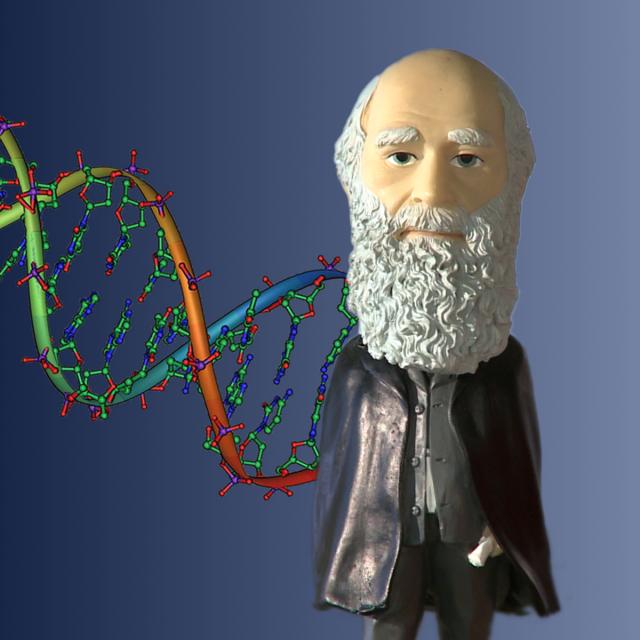
Introduction to Genetics and Evolution is a college-level class being offered simultaneously to new students at Duke University. The course gives interested people a very basic overview of some principles behind these very fundamental areas of biology. We often hear about new "genome sequences," commercial kits that can tell you about your ancestry (including pre-human) from your DNA or disease predispositions, debates about the truth of evolution, why animals behave the way they do, and how people found "genetic evidence for natural selection." This course provides the basic biology you need to understand all of these issues better, tries to clarify some misconceptions, and tries to prepare students for future, more advanced coursework in Biology (and especially evolutionary genetics). No prior coursework is assumed.

Class Deals by MOOC List - Click here and see Coursera's Active Discounts, Deals, and Promo Codes.

Syllabus

WEEK 1
Welcome to Genetics and Evolution
General introduction to this MOOC, including coverage and expectations.
Evidence for Evolution
This module discusses the definition of the word "evolution" in a biological context, evidence for the truth of evolution and common ancestry of species, and public thoughts and misconceptions about biological evolution. This module is optional and will not be included in the course assessments. There are not class discussion forums for this section, as we feel such discussion can happen on other, non-course-related, sites on this topic (of which there are a great many on the internet).

WEEK 2
Genetics I
An introduction to basic transmission genetics and inheritance. This module reflects what is often covered in high school biology courses in the USA.

WEEK 3
Genetics II
This module delves somewhat more deeply into genetics and specifically the concept of "recombination." It begins to discuss how recombination is leveraged in classic genetic works as well as mapping simple genetic traits using crosses or data from natural populations.

WEEK 4
Genetics III
This module delves even more deeply into the complexities of the genetics underlying traits,the origin of genetic variation, and how "complex" traits (ones controlled by multiple genes) are studied genetically.

WEEK 5
Heritability and Population Growth
This module begins the transition to evolutionary genetics by looking at the relative contributions of genetics and environment to traits, and also introduces how population growth is studied.

WEEK 6
Population Genetics I
Rather than looking at individuals, this module discusses how multiple individuals from natural populations can be studied genetically to begin to understand the evolutionary forces acting upon the populations.

WEEK 7
Population Genetics II
This module extends the previous one to specifically examine the effects of natural selection and genetic drift on genetic variation in natural populations.

WEEK 8
Molecular Evolution
This advanced module explains why sexual reproduction (involving recombination) is evolutionarily advantageous, and discusses how the analysis of DNA sequences can be used to understand the evolutionary forces acting on populations or species, either in general or at specific genes.

WEEK 9
Adaptive Behaviors and Sexual Selection
This module changes gears a bit to look at the exciting field of animal behavior-- specifically, how particular behaviors are or may be adaptive, and why individuals choose particular others as mates.

WEEK 10
Speciation and Phylogenetics
This module gets into the nitty gritty of what causes the formation of new species, and how evolutionary relationships between species are inferred.

WEEK 11
Applied Evolution
This final module talks about applications and misapplications of many of the concepts discussed in the course to human health, understanding, and well-being. This module is optional and not included in the assessments.

Go to Class
MOOC List is learner-supported. When you buy through links on our site, we may earn an affiliate commission.

Related Courses

Emergence of Life (Coursera) Coursera
University of Illinois at Urbana-Champaign

Emergence of Life (Coursera)

How did life emerge on Earth? How have life and Earth co-evolved through geological time? Is life elsewhere in the universe? Take a look through the 4-billion-year history of life on Earth through the lens of the modern Tree of Life. This course will evaluate the entire history of life on Earth within the context of our cutting-edge understanding of the Tree of Life. This includes the pioneering work of Professor Carl Woese on the University of Illinois Urbana-Champaign campus which revolutionized our understanding with a new "Tree of Life."

Sep 7th 2026
5-12 Weeks
Chemicals and Health (Coursera) Coursera
Johns Hopkins University

Chemicals and Health (Coursera)

This course covers chemicals in our environment and in our bodies and how they impact our health. It addresses policies and practices related to chemicals, particularly related to how they get into our bodies (exposures), what they do when they get there (toxicology), how we measure them (biomonitoring) and their impact on our health. Most examples are drawn from the US.

Sep 14th 2026
5-12 Weeks
Emergent Phenomena in Science and Everyday Life (Coursera) Coursera
University of California, Irvine

Emergent Phenomena in Science and Everyday Life (Coursera)

Before the advent of quantum mechanics in the early 20th century, most scientists believed that it should be possible to predict the behavior of any object in the universe simply by understanding the behavior of its constituent parts. For instance, if one could write down the equations of motion for every atom in a system, it should be possible to solve those equations (with the aid of a sufficiently large computing device) and make accurate predictions about that system’s future.

Sep 14th 2026
5-12 Weeks
Structuring Values in Modern China (Coursera) Coursera
The Chinese University of Hong Kong

Structuring Values in Modern China (Coursera)

This sequence of four courses will propose a multi-disciplinary approach to the study of Chinese cultural history conceived of as a succession of modes of rationality (philosophical, bureaucratic, and economic). The focus will be on the moments of paradigm shift from one mode of rationality to another. For each of these moments, cultural facts and artifacts—thought, literature, ritual—will be examined in relationship to changing social, political, and economic systems.

Sep 14th 2026
5-12 Weeks
Nanotechnology and Nanosensors, Part 1 (Coursera) Coursera
Technion - Israel Institute of Technology

Nanotechnology and Nanosensors, Part 1 (Coursera)

Nanotechnology and nanosensors are broad, interdisciplinary areas that encompass (bio)chemistry, physics, biology, materials science, electrical engineering and more. The present course will provide a survey on some of the fundamental principles behind nanotechnology and nanomaterials and their vital role in novel sensing properties and applications. The course will discuss interesting interdisciplinary scientific and engineering knowledge at the nanoscale to understand fundamental physical differences at the nanosensors.

Sep 7th 2026
5-12 Weeks
Contemporary Biology (Coursera) Coursera
University of North Texas

Contemporary Biology (Coursera)

This course is an introduction to biology as it applies to our everyday life. Learners will explore the interplay between science and self through a personalized case study of themselves and their environment. By the end of the course, learners will be able to recognize the interactions among natural phenomena and the implications of the scientific principles behind the physical world and their experiences living in it.

Sep 14th 2026
4 Weeks
Everyday Chinese Medicine (Coursera) Coursera
The Chinese University of Hong Kong

Everyday Chinese Medicine (Coursera)

This course aims to serve as an education platform on Chinese medicine (CM) for the general public. Our primary goal is to empower healthcare choices by promoting awareness and practical application on CM diagnostic and therapeutic approaches, as well as regulation on CM services and herbal products using international examples.

Sep 14th 2026
5-12 Weeks
Journey Conversations: Weaving Knowledge and Action (Coursera) Coursera
Yale University

Journey Conversations: Weaving Knowledge and Action (Coursera)

Journey of the Universe weaves together the discoveries of the evolutionary sciences together with humanities such as history, philosophy, art, and religion. This course draws on the Journey of the Universe Conversations, a series of 20 interviews with scientists and environmentalists. The first 10 interviews are with scientists and historians who deepen our understanding of the evolutionary process of universe, Earth, and humans.

Sep 14th 2026
5-12 Weeks
Introduction to Systems Biology (Coursera) Coursera
Icahn School of Medicine at Mount Sinai

Introduction to Systems Biology (Coursera)

This course will introduce the student to contemporary Systems Biology focused on mammalian cells, their constituents and their functions. Biology is moving from molecular to modular. As our knowledge of our genome and gene expression deepens and we develop lists of molecules (proteins, lipids, ions) involved in cellular processes, we need to understand how these molecules interact with each other to form modules that act as discrete functional systems.

Sep 7th 2026
5-12 Weeks