Toxicology 21: Scientific Applications (Coursera)

Toxicology 21: Scientific Applications (Coursera)

This course familiarizes students with the novel concepts being used to revamp regulatory toxicology in response to a breakthrough National Research Council Report “Toxicity Testing in the 21st Century: A Vision and a Strategy.” We present the latest developments in the field of toxicology—the shift from animal testing toward human relevant, high content, high-throughput integrative testing strategies. Active programs from EPA, NIH, and the global scientific community illustrate the dynamics of safety sciences.

Class Deals by MOOC List - Click here and see Coursera's Active Discounts, Deals, and Promo Codes.

Syllabus

WEEK 1
Module 1
This model will give you a broad introduction to the Toxicology 21st century (Tox21c) field and familiarize you with the main document, which summarize the main ideas and principles of Tox21c.

WEEK 2
Module 2
This module will discuss how ToxCast and Tox21 technologies can be used in practice. The US EPA Endocrine Disruptor Screening Program will be discussed in detail and we will demonstrate how the ToxCast platform replaced in vivo tiered approaches in EDSP and, thus, acelerate the process of . In the second lesson of this module, the development of in silico models for toxicity testing will be discussed.

WEEK 3
Module 3
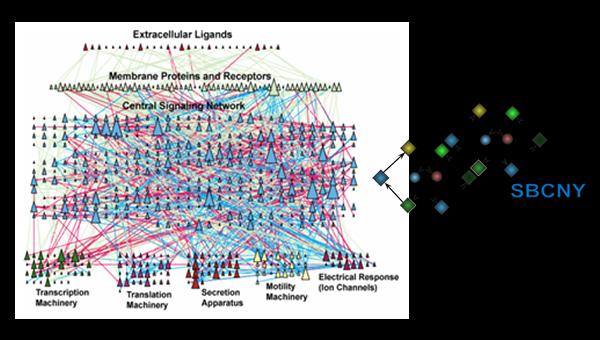
This module will familiarize you with the Human Toxome Project run by Johns Hopkins University in collaboration with several university, industry, and research agencies. Omics technologies, their advantages and disadvantages, as well as concepts of Adverse Outcome Pathways (AOP) and Pathways of Toxicity (PoT) will be discussed.

WEEK 4
Module 4
The first lesson in this module will explain the concept of read-across, why it is important for regulatory risk assessment, and how it can be implemented by industry in response to REACH legislation. The organotypic cultures lesson will teach you about existing in vitro cell-based models starting from simple monolayer cultures of cell lines and ending with complex combined organ-on-a-chip and human-on-a-chip approaches.
Module 5
This module will teach you the role of miRNA and epigenetics in toxicology and environmental health.

WEEK 5
Module 6
In this module you will learn about important component of in vitro toxicology such as in vitro to in vivo extrapolation (IVIVE) and physiologically based biokinetic modeling. You will learn why it is important to consider biokinetics in vitro and see some example of biokinetics modeling in vitro. This lesson will also give you a biometry prospective of in vitro toxicology. You will learn which methods can be used to analyze big data.

WEEK 6
Module 7
In this lesson you will learn about integrated testing strategies and how they differ from individual tests or test batteries. Also a wrap-up lesson "beyond chemical" will summaries your knowledge from this course and give a out-look for further directions in the field of alternatives to animal testing.
Go to Class
MOOC List is learner-supported. When you buy through links on our site, we may earn an affiliate commission.

Related Courses

Training and Learning Programs for Volunteer Community Health Workers (Coursera) Coursera
Johns Hopkins University

Training and Learning Programs for Volunteer Community Health Workers (Coursera)

Volunteer community health workers (CHWs) are a major strategy for increasing access to and coverage of basic health interventions. Our village health worker training course reviews the process of training and continuing education of CHWs as an important component of involving communities in their own health service delivery. Participants will be guided through the steps of planning training and continuing education activities for village volunteers. The course draws on real-life examples from community-directed onchocerciasis control, village health worker programs, community case management efforts, peer educators programs and patent medicine vendor training programs, to name a few.

Aug 17th 2026
5-12 Weeks
How Music Can Change Your Life (Coursera) Coursera
University of Melbourne

How Music Can Change Your Life (Coursera)

Did you ever wonder how music works? This course provides free video, audio and journal resources that explain six basic principles about how music can influence individual and community health and wellbeing. From biology and neuroscience, to psychotherapy and politics, the ways we engage with music can make all the difference. Music has always played an integral role in the lives of individuals and communities all around the globe.

Aug 17th 2026
5-12 Weeks
Biochemical Principles of Energy Metabolism (Coursera) Coursera
Korea Advanced Institute of Science and Technology - KAIST

Biochemical Principles of Energy Metabolism (Coursera)

Everyone knows that energy is essential for sustaining life. How can you define energy in life? Have ever thought about ways of how carbohydrates like glucose from your diet can be used for extracting energy? A scientific field that focuses on energy production and flow though living cells and organisms is called bioenergetics. Energy metabolism covers various biochemical ways of energy transformation and regulatory mechanisms of over thousands chemical reactions. Without fine control of those metabolic processes, cells and organisms cannot maintain activities linked to life.

Aug 17th 2026
5-12 Weeks
Introduction to Forensic Science (Coursera) Coursera
Nanyang Technological University

Introduction to Forensic Science (Coursera)

We have all seen forensic scientists in TV shows, but how do they really work? What is the science behind their work? The course aims to explain the scientific principles and techniques behind the work of forensic scientists and will be illustrated with numerous case studies from Singapore and around the world.

Aug 24th 2026
5-12 Weeks
Schizophrenia (Coursera) Coursera
Wesleyan University

Schizophrenia (Coursera)

The main goal of this class are to gain an introductory exposure to the nature of the psychiatric disorder known as schizophrenia as revealed by the scientific method. We will discuss a broad range of findings from the scientific investigation of biological and psychological factors related to schizophrenia and its treatment.

Aug 17th 2026
5-12 Weeks
Philosophy, Science and Religion: Philosophy and Religion (Coursera) Coursera
University of Edinburgh

Philosophy, Science and Religion: Philosophy and Religion (Coursera)

Philosophy, Science and Religion mark three of the most fundamental modes of thinking about the world and our place in it. Are these modes incompatible? Put another way: is the intellectually responsible thing to do to ‘pick sides’ and identify with one of these approaches at the exclusion of others? Or, are they complementary or mutually supportive? As is typical of questions of such magnitude, the devil is in the details. For example, it is important to work out what is really distinctive about each of these ways of inquiring about the world. In order to gain some clarity here, we’ll be investigating what some of the current leading thinkers in philosophy, science and religion are actually doing.

Aug 17th 2026
5-12 Weeks
The Social Context of Mental Health and Illness (Coursera) Coursera
University of Toronto

The Social Context of Mental Health and Illness (Coursera)

Learn how social factors promote mental health, influence the onset and course of mental illness, and affect how mental illnesses are diagnosed and treated. This course explores how our understanding of mental health and illness has been influenced by social attitudes and social developments in North America and around the world. The course begins by situating our contemporary mental health practices in historical context, then looks at different aspects of mental health, mental illness and mental health services and their connections to what’s going on in our social environment.

Aug 17th 2026
5-12 Weeks
Preventing Chronic Pain: A Human Systems Approach (Coursera) Coursera
University of Minnesota

Preventing Chronic Pain: A Human Systems Approach (Coursera)

Chronic pain is at epidemic levels and has become the highest-cost condition in health care. This course uses both creative and experiential learning to better understand chronic pain conditions and how they can be prevented through self-management in our cognitive, behavioral, physical, emotional, spiritual, social, and environmental realms.

Aug 17th 2026
5-12 Weeks
Case Studies in Personalized Medicine (Coursera) Coursera
Vanderbilt University

Case Studies in Personalized Medicine (Coursera)

Learn how advances in biomedicine hold the potential to revolutionize drug development, drug treatments, and disease prevention: where are we now, and what does the future hold? This course will present short primers in genetics and mechanisms underlying variability in drug responses. A series of case studies will be used to illustrate principles of how genetics are being brought to bear on refining diagnoses and on personalizing treatment in rare and common diseases. The ethical and operational issues around how to implement large scale genomic sequencing in clinical practice will be addressed.

Aug 17th 2026
5-12 Weeks
Intellectual Humility: Science (Coursera) Coursera
University of Edinburgh

Intellectual Humility: Science (Coursera)

It’s clear that the world needs more intellectual humility. But how do we develop this virtue? And why do so many people still end up so arrogant? Do our own biases hold us back from becoming as intellectually humble as we could be—and are there some biases that actually make us more likely to be humble? Which cognitive dispositions and personality traits give people an edge at being more intellectually humble - and are they stable from birth, learned habits, or something in between? And what can contemporary research on the emotions tell us about encouraging intellectual humility in ourselves and others?

Aug 17th 2026
4 Weeks
Bugs 101: Insect-Human Interactions (Coursera) Coursera
University of Alberta

Bugs 101: Insect-Human Interactions (Coursera)

Of all the animals on earth, which are the strongest for their size? What about the fastest? Who were the first animals to evolve flight? Insects take all of these titles and more! As the most abundant animals on the planet, insects and other arthropods affect our lives in so many ways. From beneficial interactions like pollination and biological pest control, to the transmission of life threatening diseases; this course will teach you about the big ways that these little arthropods impact our lives.

Aug 17th 2026
13-24 Weeks
Bioinformatics: Introduction and Methods 生物信息学: 导论与方法 (Coursera) Coursera
Peking University

Bioinformatics: Introduction and Methods 生物信息学: 导论与方法 (Coursera)

A big welcome to “Bioinformatics: Introduction and Methods” from Peking University! In this MOOC you will become familiar with the concepts and computational methods in the exciting interdisciplinary field of bioinformatics and their applications in biology, the knowledge and skills in bioinformatics you acquired will help you in your future study and research.

Aug 17th 2026
13-24 Weeks