Philosophy and the Sciences: Introduction to the Philosophy of Physical Sciences (Coursera)

Philosophy and the Sciences: Introduction to the Philosophy of Physical Sciences (Coursera)

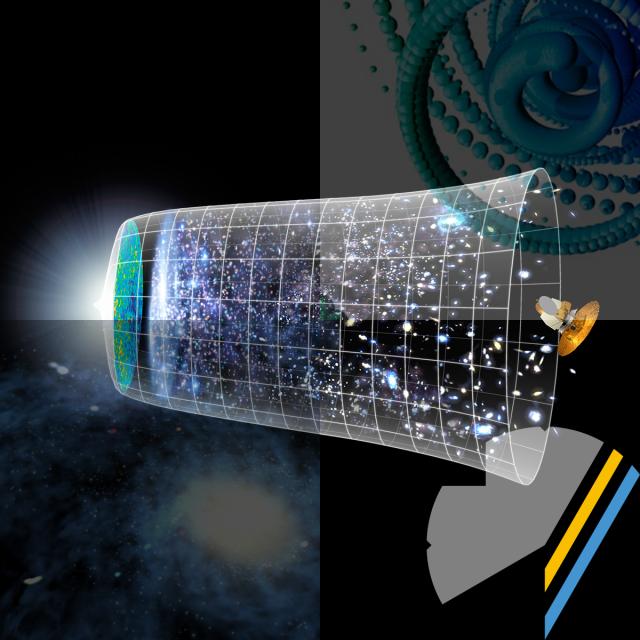
What is the origin of our universe? What are dark matter and dark energy? This is the first part of the course 'Philosophy and the Sciences', dedicated to Philosophy of the Physical Sciences. Scientific research across the physical sciences has raised pressing questions for philosophers. The goal of this course is to introduce you to some of the main areas and topics at the key juncture between philosophy and the physical sciences.

Class Deals by MOOC List - Click here and see Coursera's Active Discounts, Deals, and Promo Codes.

Each week we will introduce you to some of these important questions at the forefront of scientific research. We will explain the science behind each topic in a simple, non-technical way, while also addressing the philosophical and conceptual questions arising from it. We’ll consider questions about the origin and evolution of our universe, the nature of dark energy and dark matter and the role of anthropic reasoning in the explanation of our universe.
Learning Objectives

  • Gain a fairly well-rounded view on selected areas and topics at the intersection of philosophy and the sciences
  • Understand some key questions, and conceptual problems arising in the natural sciences.
  • Develop critical skills to evaluate and assess these problems.

Suggested Readings:
To accompany 'Philosophy and the Sciences', we are pleased to announce a tie-in book from Routledge entitled 'Philosophy and the Sciences for Everyone'. This course companion to the 'Philosophy and the Sciences' course was written by the Edinburgh Philosophy and the Sciences team expressly with the needs of MOOC students in mind. 'Philosophy and the Sciences for Everyone' contains clear and user-friendly chapters, chapter summaries, glossary, study questions, suggestions for further reading and guides to online resources. Please note, this companion book is optional - all the resources needed to complete the course are available freely and listed on the course site.

Syllabus

WEEK 1
What is this thing called science? (Michela Massimi and Duncan Pritchard)
Introduction to philosophy of science: the nature of scientific knowledge, the debates about the scientific method and the problem of underdetermination.

WEEK 2
The origins of our universe (Michela Massimi and John Peacock)
How did our universe form and evolve? Was there really a Big Bang, and what came before it?

WEEK 3
Dark Matter and Dark Energy (Michela Massimi and John Peacock)
According to the currently accepted model in cosmology, our universe is made up of 5% of ordinary matter, 25% cold dark matter, and 70% dark energy. But what kind of entities are dark matter and dark energy?

WEEK 4
The anthropic principle and multiverse cosmology (Alasdair Richmond and John Peacock)
Anthropic reasoning attempts to understand peculiarities of the physical universe via context-sensitive observers in a multiverse of different distinct universes. What are the problems and prospects of this view?
Philosophy and the Sciences Part 2


Go to Class
MOOC List is learner-supported. When you buy through links on our site, we may earn an affiliate commission.

Related Courses

Philosophy and the Sciences: Introduction to the Philosophy of Cognitive Sciences (Coursera) Coursera
University of Edinburgh

Philosophy and the Sciences: Introduction to the Philosophy of Cognitive Sciences (Coursera)

What is our role in the universe as human agents capable of knowledge? What makes us intelligent cognitive agents seemingly endowed with consciousness? This is the second part of the course 'Philosophy and the Sciences', dedicated to Philosophy of the Cognitive Sciences. Scientific research across the cognitive sciences has raised pressing questions for philosophers. The goal of this course is to introduce you to some of the main areas and topics at the key juncture between philosophy and the cognitive sciences. Each week we will introduce you to some of these important questions at the forefront of scientific research. We will explain the science behind each topic in a simple, non-technical way, while also addressing the philosophical and conceptual questions arising from it.

Jun 1st 2026
4 Weeks
Biology Everywhere Foundations (Coursera) Coursera
University of Colorado Boulder

Biology Everywhere Foundations (Coursera)

In this course, we will explore the nature of science and biology. We will discuss what the “biology everywhere” philosophy means and the history of the “biology everywhere” project. We will also discuss what science (and biology) are as a discipline of inquiry and how chemistry is foundational to understanding biology.

Jun 1st 2026
4 Weeks
Understanding Research Methods (Coursera) Coursera
University of London,SOAS University of London

Understanding Research Methods (Coursera)

This MOOC is about demystifying research and research methods. It will outline the fundamentals of doing research, aimed primarily, but not exclusively, at the postgraduate level. It places the student experience at the centre of our endeavours by engaging learners in a range of robust and challenging discussions and exercises befitting SOAS, University of London's status as a research-intensive university and its rich research heritage.

Jun 1st 2026
4 Weeks
Vers l'infiniment petit (Coursera) Coursera
École Polytechnique

Vers l'infiniment petit (Coursera)

Partez à la découverte de l'infiniment petit, en compagnie de physiciens et de physiciennes qui vont vous faire découvrir les secrets de la matière quand on l'étudie aux distances les plus courtes, aux énergies les plus élevées. Vous vous initierez aux progrès les plus récents de la recherche en physique nucléaire et de la physique des particules, et vous découvrirez les principes des accélérateurs et des détecteurs avec lesquels on a pu étudier la matière à ces échelles, pour arriver jusqu'à la découverte du boson de Higgs en 2012 auprès du collisionneur de particules du CERN, le LHC.

Jun 1st 2026
4 Weeks
De-Mystifying Mindfulness (Coursera) Coursera
Leiden University

De-Mystifying Mindfulness (Coursera)

Interest in meditation, mindfulness, and contemplation has grown exponentially in recent years. Rather than being seen as mystical practices from ancient Buddhism or esoteric philosophy, they are increasingly seen as technologies rooted in evidence from psychology and neuroscience. Mindfulness has become the basis for numerous therapeutic interventions, both as a treatment in healthcare and as a means of enhancing well-being and happiness. For millions around the world, mindfulness has become a life-style choice, enhancing and enriching everyday experience. Mindfulness is big business.

Jun 1st 2026
5-12 Weeks
活用希臘哲學 (Understanding the Greek Philosophy) (Coursera) Coursera
National Taiwan University

活用希臘哲學 (Understanding the Greek Philosophy) (Coursera)

本課程之教學內容以希臘哲學之發展為主,並輔以哲學對人生意義之說明。希臘哲學是西洋哲學的骨幹,呈現西方人思維的核心理念,不但足以解釋今日之西方世界,甚至可以說明全世界的發展趨勢。本課程以希臘哲學為教學之主幹,分為先蘇哲學、詭辯學派、蘇格拉底、柏拉圖、亞理斯多德五個階段。教學的方式以強調他們之間的不同與相同的部分。課程將以演講的方式進行,揉合日常經驗作說明,並不時地會以整體的角度回頭看希臘哲學在今日哲學與社會所扮演的角色。

Jun 1st 2026
5-12 Weeks
Philosophy, Science and Religion: Science and Philosophy (Coursera) Coursera
University of Edinburgh

Philosophy, Science and Religion: Science and Philosophy (Coursera)

Philosophy, Science and Religion mark three of the most fundamental modes of thinking about the world and our place in it. Are these modes incompatible? Put another way: is the intellectually responsible thing to do to ‘pick sides’ and identify with one of these approaches at the exclusion of others? Or, are they complementary or mutually supportive? As is typical of questions of such magnitude, the devil is in the details. For example, it is important to work out what is really distinctive about each of these ways of inquiring about the world. In order to gain some clarity here, we’ll be investigating what some of the current leading thinkers in philosophy, science and religion are actually doing.

Jun 1st 2026
5-12 Weeks
Vers l'infiniment grand (Coursera) Coursera
École Polytechnique

Vers l'infiniment grand (Coursera)

Partez à la découverte de l'infiniment grand, en compagnie de physiciens et de physiciennes qui vont vous faire découvrir l'Univers aux distances les plus grandes connues à ce jour et les outils scientifiques utilisés pour l'étudier. Vous comprendrez ce que les scientifiques ont pu apprendre sur l'histoire et la structure de l'Univers, ses composantes, et comment ils ont pu accumuler ces observations sur les étoiles, les galaxies, les amas de galaxies, et l'Univers dans son ensemble.

Jun 1st 2026
4 Weeks
The Neuroscience of Personal Excellence (Coursera) Coursera
University of Colorado Boulder

The Neuroscience of Personal Excellence (Coursera)

Many of us struggle to understand our actions and behavior in any given situation. Especially when pressure and stress are highest. What if we could make better decisions, create healthy habits more easily, regulate our emotions, become more mentally tough and perform well under pressure? There are certain defining moments in your life, in this course you'll learn to tap into your personal excellence when it matters. The reason we struggle often comes down to the fact that we are unaware how our engine works. The engine, in this metaphor, is our brain. It is the driving force behind our actions and behavior. Understanding how it works best is crucial to perform at your best.

Jun 1st 2026
5-12 Weeks
Foundations of Teaching for Learning: Being a Professional (Coursera) Coursera
Commonwealth Education Trust

Foundations of Teaching for Learning: Being a Professional (Coursera)

The Foundations of Teaching for Learning programme is for anyone who is teaching, or who would like to teach, in any subject and any context - be it at school, at home or in the workplace. With dynamic lessons taught by established and respected professionals from across the Commonwealth, this eight course programme will see you develop and strengthen your skills in teaching, professionalism, assessment, and more. As you carry on through the programme, you will find yourself strengthening not only your skills, but your connection with colleagues across the globe. A professional development opportunity not to be missed.

Jun 1st 2026
5-12 Weeks
An Introduction to Consumer Neuroscience & Neuromarketing (Coursera) Coursera
Copenhagen Business School

An Introduction to Consumer Neuroscience & Neuromarketing (Coursera)

How do we make decisions as consumers? What do we pay attention to, and how do our initial responses predict our final choices? To what extent are these processes unconscious and cannot be reflected in overt reports? This course will provide you with an introduction to some of the most basic methods in the emerging fields of consumer neuroscience and neuromarketing. You will learn about the methods employed and what they mean. You will learn about the basic brain mechanisms in consumer choice, and how to stay updated on these topics. The course will give an overview of the current and future uses of neuroscience in business.

Jun 1st 2026
5-12 Weeks
Organic Solar Cells - Theory and Practice (Coursera) Coursera
Technical University of Denmark - DTU

Organic Solar Cells - Theory and Practice (Coursera)

The goal of the course is to give students awareness of the largest alternative form of energy and how organic / polymer solar cells can harvest this energy. The course provides an insight into the theory behind organic solar cells and describes the three main research areas within the field i.e. materials, stability and processing.

Jun 1st 2026
5-12 Weeks