Christianity & Ecology (Coursera)

Offered by Yale University,
Christianity & Ecology (Coursera)

There is a need for broader literacy and deeper knowledge of the world’s religions and their ecological contributions. This course is designed as a gateway to the rich ecological dimensions of the Christian religious tradition. We delve into unique contributions from Orthodox, Catholic, and Protestant Christianity, exploring views on and relationship with the natural world.

Class Deals by MOOC List - Click here and see Coursera's Active Discounts, Deals, and Promo Codes.

We additionally highlight the relationship between Christianity and environmental justice, evangelical approaches to “creation care”, and Christian teachings on biodiversity, climate change, and the relationship between Human, Earth, and Cosmos.
This course is for lifelong learners curious to know more about world religions and ecology, environmental professionals eager to deepen the discourse of environmental protection and conservation, those working with non-profit organizations and NGOs on issues of ecological justice, and religious leaders and laity who want to know how they can contribute to interreligious dialogue on environmental projects.

Syllabus

WEEK 1
Module 1: Course Introduction

WEEK 2
Module 2: Introduction to Religion and Ecology
We begin by situating Christianity within the study of Religion and Ecology. We explore topics such as creation, incarnation, and sacraments as an entry into Christianity and Ecology. We introduce the emergence of eco-theology as a shift in theological thinking that relates the teachings of Christianity to our contemporary ecological and climate related challenges.

WEEK 3
Module 3: Overview of Christianity and Ecological Responses
We reflect on historical questions embedded in the study of Christianity and Ecology. How do our contemporary environmental challenges and questions relate to the earlier formation and development of Christianity? Foremost among these questions are ideas of stewardship and care for the Earth along with doctrinal issues regarding incarnation, especially as this theme relates to the historical figure of Christ, and the Cosmic Christ prominent in John’s Gospel and several of Paul’s Epistles.

WEEK 4
Module 4: Sacramental Christianity: Earth as Sacred Icon
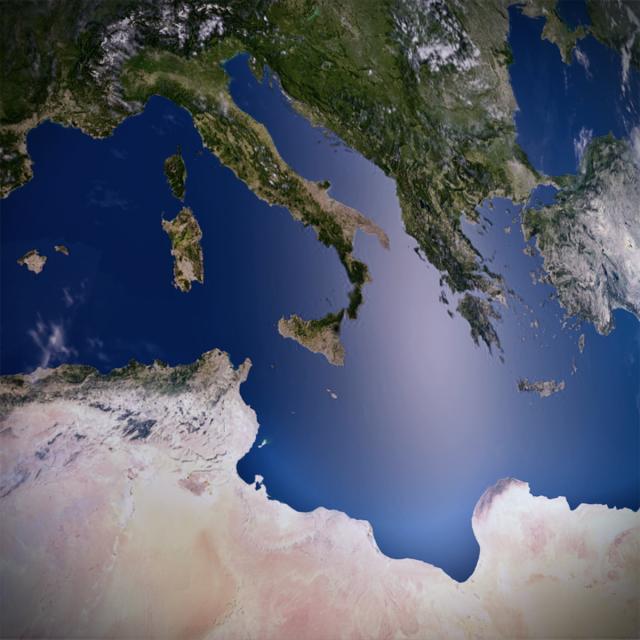
We focus on Orthodox Christianity and ecology under the leadership of the Ecumenical Patriarch Bartholomew, first among the religious leaders of the Greek Orthodox Church. We follow the symposium he organized on the Adriatic Sea, which like all of his eight symposia focused on water issues. This conference brought together scientists, civil servants, journalists, and religious spokespersons to consider ecology, politics, and spirituality as a basis for more integrated environmental solutions.

WEEK 5
Module 5: Christian Integral Ecology: “Cry of the Earth; Cry of the Poor”
We focus on Catholic theology and ecojustice under the leadership of Pope Francis, especially with attention to his encyclical letter, Laudato Si’: On Care for our Common Home (2015). The influence of this encyclical is widespread, including responses from other religions and transformative action led by the Laudato Si’ Movement. Through the lens of “integral ecology,” this document expands understandings of social justice to incorporate ecosystems and all forms of life.

WEEK 6
Module 6: Embodied Christianity: Ecotheology in Practice
We focus on the impact of the Protestant Reformation movements in Christianity, especially with regard to their positions on the natural world as God’s creation. In the 16th Century, the Reformation opened new theological directions and institutional formations that have shaped human-Earth relations into the present. Christianity began to be guided by a broader community-church leadership as reformers engaged scripture and the natural world.

WEEK 7
Module 7: “Integral Liberation”: Christian Ecojustice Engagement
We explore topics of significance for contemporary Christianity, namely environmental justice and the roles of women in Christianity and ecology. Building on Christian concepts of social justice, ecojustice has emerged in response to disproportionate environmental harms faced by marginalized communities. This integration of environmental and social issues affirms the writings, practices, and experiences of women in Christianity worldwide.

WEEK 8
Module 8: Food, Animals, Biodiversity, and Climate Change
We explore emerging Christian perspectives regarding food, agriculture, animals, and biodiversity. We place this in the context of a “communion of subjects” affirming the profound interconnection of all life. We highlight emerging theological ethics and engaged religious action in response to the climate emergency.

WEEK 9
Module 9: Christianity and Cosmology
How might Christianity flourish in relation to scientific insights about evolution? In this module, the first section focuses on the influence of Thomas Berry and a New Story. This evolutionary story is a context for human flourishing, an orientation for Christianity, and an inspiration for other religious traditions in a planetary era. The second section focuses on forms of worship that emphasize the sacred relationship between Human, Earth, and Cosmos.

WEEK 10
Module 10: Course Conclusion

Go to Class
MOOC List is learner-supported. When you buy through links on our site, we may earn an affiliate commission.

Related Courses

Skepticism (Coursera) Coursera
University of California, Irvine

Skepticism (Coursera)

Skepticism is about doubt, and doubt is everywhere in the world around us today. There are doubts about whether man-made climate change is real, whether vaccinations are harmful, whether we can trust our politicians or our media, and so on. When is such skepticism warranted, and when does it stray into unreasonable territory? How widespread can such skepticism get while still being coherent? How might a radical skepticism have pernicious social consequences, such as by leading to relativism (and just what is relativism, and what is problematic about it)?

Jun 15th 2026
4 Weeks
Aeroecology: Exploring Biodiversity with Radar (Coursera) Coursera
University of Leeds

Aeroecology: Exploring Biodiversity with Radar (Coursera)

Learn how aeroecology, a discipline that studies airborne life forms, has been revolutionised with the use of radar with this unique course. This course is designed to help scientists, researchers as well as ecology enthusiasts to develop skills in using radar to explore biodiversity. You will explore the origins and evolution of radar from a military technology to a powerful tool with multiple scientific applications, including aeroecology. You will then be introduced to studying global biodiversity trends and learn how to evaluate traditional methods and emerging technologies used by scientists to monitor the natural world.

Jun 15th 2026
2 Weeks
Arch of Titus: Rome and the Menorah (Coursera) Coursera
Yeshiva University

Arch of Titus: Rome and the Menorah (Coursera)

The Arch of Titus: Rome and the Menorah explores one of the most significant Roman monuments to survive from antiquity, from the perspectives of Roman, Jewish and later Christian history and art. The Arch of Titus commemorates the destruction of Jerusalem by the emperor Titus in 70 CE, an event of pivotal importance for the history of the Roman Empire, of Judaism, of Christianity and of modern nationalism. Together with your guide, Professor Steven Fine, you will examine ancient texts and artifacts, gaining skills as a historian as you explore the continuing significance of the Arch of Titus from antiquity to the very present.

Jun 8th 2026
5-12 Weeks
e-Learning Ecologies: Innovative Approaches to Teaching and Learning for the Digital Age (Coursera) Coursera
University of Illinois at Urbana-Champaign

e-Learning Ecologies: Innovative Approaches to Teaching and Learning for the Digital Age (Coursera)

For three decades and longer we have heard educators and technologists making a case for the transformative power of technology in learning. However, despite the rhetoric, in many ways and at most institutional sites, education is still relatively untouched by technology. Even when technologies are introduced, the changes sometimes seem insignificant and the results seem disappointing. If the print textbook is replaced by an e-book, do the social relations of knowledge and learning necessarily change at all or for the better?

Jun 15th 2026
4 Weeks
Re-imaging God in Korean Context (Coursera) Coursera
Yonsei University

Re-imaging God in Korean Context (Coursera)

This course will be an overview of a development of the theological methods in relation to Korea’s cultural context. Completing the course, the learners can understand cultural influences on the dynamic development of Korean churches and indigenous theology; they can also gain an insight into their own image of God and theological imagination in their own cultural context.

Jun 22nd 2026
5-12 Weeks
Agroforestry I: Principles and Practices (Coursera) Coursera
University of Florida

Agroforestry I: Principles and Practices (Coursera)

Agroforestry – the practice of growing trees and crops in interacting combinations – is recognized the world over as an integrated approach to sustainable land-use. Agroforestry systems, being multifunctional, facilitate not only the production of food and wood products but also provide a variety of ecosystem services such as climate-change mitigation, biodiversity conservation, and soil quality improvement. This course teaches a broad overview of the most current research and best practices in global agroforestry.

Jun 15th 2026
5-12 Weeks
Western Religions & Ecology (Coursera) Coursera
Yale University

Western Religions & Ecology (Coursera)

At first glance the fields of religion and ecology may seem and unlikely pairing, but a deeper consideration reveals the two have a great deal to contribute to one another and are indeed inextricably linked. Religions recognize the unity and interdependence of humans with nature. Ecological sciences affirm this deep interconnection with the natural world. This partnership can inspire work for the wellbeing of the Earth community

Jun 22nd 2026
5-12 Weeks
Philosophy, Science and Religion: Religion and Science (Coursera) Coursera
University of Edinburgh

Philosophy, Science and Religion: Religion and Science (Coursera)

Philosophy, Science and Religion mark three of the most fundamental modes of thinking about the world and our place in it. Are these modes incompatible? Put another way: is the intellectually responsible thing to do to ‘pick sides’ and identify with one of these approaches at the exclusion of others? Or, are they complementary or mutually supportive? As is typical of questions of such magnitude, the devil is in the details. For example, it is important to work out what is really distinctive about each of these ways of inquiring about the world. In order to gain some clarity here, we’ll be investigating what some of the current leading thinkers in philosophy, science and religion are actually doing.

Jun 16th 2026
5-12 Weeks
The Worldview of Thomas Berry: The Flourishing of the Earth Community (Coursera) Coursera
Yale University

The Worldview of Thomas Berry: The Flourishing of the Earth Community (Coursera)

Thomas Berry (1914-2009) was a historian of world religions and an early voice awakening moral sensibilities to the environmental crisis. He is known for articulating a “new story” of the universe that explores the implications of the evolutionary sciences and cultural traditions for creating a flourishing future. This course investigates Berry’s life and thought in relation to the Journey of the Universe project.

Jun 22nd 2026
5-12 Weeks
Les transitions énergétique-écologiques dans les pays du Sud (Coursera) Coursera
École normale supérieure

Les transitions énergétique-écologiques dans les pays du Sud (Coursera)

Ce MOOC co-produit par l'Agence Française de Développement et l'ENS se situe à la confluence du développement des pays du Sud et le développement durable. Il a : une dimension macroéconomique et financière portée notamment par Gael Giraud et Alain Grandjean en tant qu’intervenants; une dimension écologique et climatique portée notamment par David Claessen et les intervenants de l’ENS, et une dimension de focus sur les pays du Sud portée notamment par les intervenants de l’AFD.

Jun 22nd 2026
5-12 Weeks
Agroforestry II: Major Systems of the World (Coursera) Coursera
University of Florida

Agroforestry II: Major Systems of the World (Coursera)

Welcome to Agroforestry II: Major Systems of the World. A focused exploration of agroforestry practices from around the world. This is the second module of the five-module course covering the various aspects of agroforestry including the global distribution of the practices, their underlying principles, and major scientific advances during the past nearly five decades, presented by leading experts in the field.

Jun 22nd 2026
2 Weeks
Relativism (Coursera) Coursera
University of California, Irvine

Relativism (Coursera)

Relativism is an ancient philosophical doctrine which has recurred time and again in the history of philosophy. It has also transcended the boundaries of that discipline, for it has shaped much of the methodology in anthropology and sociology, as well as in critical theory and literary studies. While often advocated for its supposed tolerance of differences, relativism has profound consequences for how we think of reality, for the possibility of knowledge, both in the factual and in the moral domain, and may engender the practice of double standard.

Jun 22nd 2026
4 Weeks