Oceanografía: una clave para entender mejor nuestro mundo (Coursera)

Oceanografía: una clave para entender mejor nuestro mundo (Coursera)

En este curso, el estudiante aprenderá las bases de la ciencia oceanográfica. Cómo se clasifica y se ha formado el fondo marino, cómo funcionan los actuales sistemas de análisis del mar por satélite, la química del océano y los procesos que han llevado a su formación.

Class Deals by MOOC List - Click here and see Coursera's Active Discounts, Deals, and Promo Codes.

Este curso enfoca la meteorología y climatología oceánicas desde la perspectiva de los conocimientos básicos que necesitan los navegantes para participar en una regata como la Barcelona World Race, la única una vuelta al mundo sin escalas con dos tripulantes.

Syllabus

WEEK 1
1A. El Mediterráneo: un modelo de océano - Temperatura, salinidad, presión y densidad.
El módulo 1 aborda algunos de los conceptos fundamentales de la oceanografía descriptiva relacionados con las características físicas del agua: la distribución vertical de la temperatura y la salinidad, el diagrama TS, la estabilidad y la desestabilización de la columna de agua, la formación de aguas densas y profundas, las masas de agua y su circulación. Se introduce también a los conceptos necesarios para comprender la relación entre la distribución de la masa de agua, la topografía de su superficie a escala regional o más grande, y la circulación llamada geostrófica, donde juega un papel fundamental la fuerza de Coriolis. Si bien los conceptos expuestos tienen una aplicabilidad general, los ejemplos son del Mediterráneo, empezando por las características de las aguas más cercanas a Barcelona, donde empieza y termina la Barcelona World Race, y terminando con la circulación general de las masas de agua de todo el Mediterráneo.

WEEK 2
1B. El Mediterráneo: un modelo de océano - Masas de agua y circulación
En este módulo aprenderás como se forman las aguas densas y las masas de agua. Donde se utilizará el Mediterráneo como un modelo de océano. Así como también algunos de los conceptos fundamentales de la dinámica marina, qué es Coriolis y cómo se forma la fuerza del gradiente de presión. Además la importancia de la topografía dinámica y circulación geostrófica. Esperamos sea de tu agrado.

WEEK 3

  1. El Océano global

En el presente módulo entraremos de lleno en el Océano Global, repasaremos y generalizaremos los aspectos contemplados en el módulo anterior. Veremos el papel del océano a escala planetaria, y cómo nos puede afectar a los que vivimos más cerca o más lejos de la costa. Intentaremos entender por qué todavía es bastante desconocido y asomaremos la nariz en el medio ambiente marino. Es decir, en cómo se comporta para aquellos seres vivos, la mayoría, que viven en el seno del océano o en contacto directo con él.

WEEK 4
3A. Oceanografía per satélite: Todos los ojos sobre el planeta
En este modulo aprenderás la importancia de la observación oceánica mediante los satélites, hablaremos de la teledetección, la radiación electromagnética emitida y reflejada, y la importancia de su estudio para la navegación.

WEEK 5
3B. Oceanografía por satélite: Todos los ojos sobre el planeta
En este nuevo módulo ampliaremos el estudio de la oceanografía por satélite, y como se utilizan las microondas para la obtención de información. Qué son y cual es la importancia de los sensores activos. Y por último, otras aplicaciones de los satélites y su importancia.

WEEK 6

  1. Química oceánica: una industria química con tuberías sin paredes.

En esta sección aprenderás la química oceánica ¿en qué consiste? ¿cómo funciona? ¿qué es el eje vertical de la biosfera y la segregació vertical de los elementos y cómo funciona? ¿qué es el sistema carbónico carbonato y cuál es su relación con la cinta transportadora oceánica?. Las respuestas a todos estos interrogantes nos ayudarán a entender como funcionan los océanos, la importancia para la navegación y su relación con el clima del planeta.

WEEK 7

  1. Las cuencas oceánicas: una memoria continua de millones de años.

El resultado de la evolución de la corteza de la Tierra: un conjunto de masas continentales y de cuencas oceánicas en movimiento continuo encima de la corteza. Con un poco de historia lograremos entender el resultado de la evolución de la corteza de la Tierra y la diversidad de los dominios oceánicos: de los márgenes continentales a las grandes fosas. Las grandes cuencas oceánicas
Go to Class
MOOC List is learner-supported. When you buy through links on our site, we may earn an affiliate commission.

Related Courses

Our Energy Future (Coursera) Coursera
University of California, San Diego

Our Energy Future (Coursera)

This course is designed to introduce students to the issues of energy in the 21st century – including food and fuels – which are inseparably linked – and will discuss energy production and utilization from the biology, engineering, economics, climate science, and social science perspectives. This course will cover the current production and utilization of energy, as well as the consequences of this use, examining finite fossil energy reserves, how food and energy are linked, impacts on the environment and climate, and the social and economic impacts of our present energy and food production and use.

Nov 16th 2026
5-12 Weeks
Éducation par la recherche : climatologie à l'École (FUN) FUN
Université Sorbonne Paris Cité

Éducation par la recherche : climatologie à l'École (FUN)

Les Savanturiers – L’école de la Recherche est un programme éducatif qui vise à introduire les méthodes et l’éthique de la recherche dans les écoles et dans les ateliers périscolaires. Les élèves mènent des projets de recherche scientifique, guidés par leurs enseignants ou animateurs et par des chercheurs engagés pour l’innovation pédagogique. L’objectif de ce MOOC Éducation par la recherche : climatologie à l'École est de diffuser et de sensibiliser les enseignants, animateurs, formateurs au modèle de l’éducation par la recherche dans le domaine de la climatologie. Il s’agit notamment pour chaque participant de concevoir, mettre en oeuvre et consolider son projet Savanturiers.

No sessions available
5-12 Weeks
Exploring Our Oceans (FutureLearn) FutureLearn
University of Southampton

Exploring Our Oceans (FutureLearn)

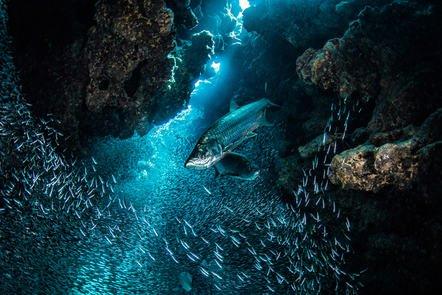
Explore the half of our world covered by deep ocean, and how our lives affect the hidden face of our planet. Discover how you can play a part in the safe keeping of the future of our ocean. What lies in the half of our world covered by water more than two miles deep? How are our everyday lives connected to the ocean depths, and what challenges and opportunities does this previously hidden realm hold for our future?

Nov 21st 2022
4 Weeks
Sustainable Development Goal 14: Life Below Water (CanopyLAB) CanopyLAB
SDG LAB

Sustainable Development Goal 14: Life Below Water (CanopyLAB)

You might not constantly think about it, but oceans are a crucial part of the ecosystem that makes Earth habitable for humans. More than half of the oxygen we breathe comes from algae, and the oceans absorb a large amount of the carbon dioxide released by human activities, thus mitigating the impact of climate change. The oceans are also a crucial source of food and livelihood for humans. Yet today, the oceans face multiple threats including climate change, environmental degradation, pollution, and overfishing. In this course, you will learn about the important role oceans play, their current state of deterioration, and what you can do to improve it.

Self Paced
Self-Paced
One Planet, One Ocean (edX) EdX
SDGAcademyX,SDG Academy

One Planet, One Ocean (edX)

A holistic view of how the ocean functions, how human interactions with the ocean can be understood, and what solutions are available to support both sustainable use and stewardship of our blue planet. Is the ocean the real final frontier? Humans have a greater understanding of the surface of the moon than they do of the depths of these waters.

Self Paced
Self-Paced
Oceanography: a key to better understand our world (Coursera) Coursera
University of Barcelona,Barcelona Foundation for Ocean Sailing - FNOB

Oceanography: a key to better understand our world (Coursera)

The course for a round the world regatta leads the boats through the Mediterranean Sea and the Atlantic, Southern Indian and South Pacific Oceans. On their voyage, the skippers come across a large variety of oceanographic situations: strong currents, floating ice, wave formations of every kind and biological diversity. In this course the student will learn about the foundations of the science of oceanography. You'll learn about the classification and formation of the ocean floor, how current sea satellite analysis systems work, the chemistry of the oceans and the processes that led to its formation.

Oct 26th 2026
5-12 Weeks
Ash-Related Operational Challenges in Energy Utilization of Sustainable Fuels (Coursera) Coursera
Technical University of Denmark - DTU

Ash-Related Operational Challenges in Energy Utilization of Sustainable Fuels (Coursera)

The basic idea behind this MOOC, is to present recent data on fuel characterization, slagging, fouling, corrosion, and trace element transformations, in a course that can be readily provided for students and industry people. This ensures understanding and application of the research, and provides the students and industry with a forum for discussion of the very latest research results, as well as feedback from industry to the research group at DTU, on important new research subjects in the field.

Nov 16th 2026
5-12 Weeks
Understanding Research Methods (Coursera) Coursera
University of London,SOAS University of London

Understanding Research Methods (Coursera)

This MOOC is about demystifying research and research methods. It will outline the fundamentals of doing research, aimed primarily, but not exclusively, at the postgraduate level. It places the student experience at the centre of our endeavours by engaging learners in a range of robust and challenging discussions and exercises befitting SOAS, University of London's status as a research-intensive university and its rich research heritage.

Nov 16th 2026
4 Weeks