Eat Your Values (CanopyLAB)

Offered by The Mindful Kitchen,
Eat Your Values (CanopyLAB)

This course explores how what you eat reflects your identity, mental well being and can be a tool for creating the change you want to see in the world. Heather Thomas takes you on a journey that explores food through the lenses of cultural anthropology, climatology and eco-psychology to explore how society collectively values food.

Each course unit contains free online resources/materials ranging from videos, articles, presentations, etc.
Unit 1: Introduction to How to Eat Your Values
Unit 2: Food and Climate Change
Unit 3: Food and Nature Relatedness
Unit 4: Food and Developing New Habits
Unit 5: Food and Culture

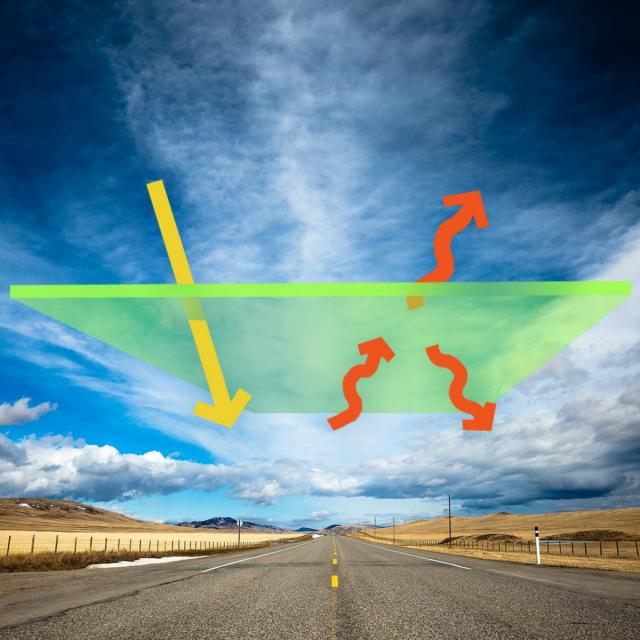
When you stop and think about, one of the most conscious acts you do everyday that connects you to entire natural world, is eating. Each morsel of food is brought to you by a complex collaborative system of people, animals, plants, wind, water, sunlight, soil and billions of micro-organisms that scientists have only begun to understand. Framed that way, it is perhaps no surprise that our food system has a greater impact on climate change than the entire global transport system. What that means for the average person, is what you eat accounts for more than a quarter of your carbon footprint. Eat Your Values takes you on a journey to develop your awareness of how the choices that you make about the food you eat, are also expressions of how you value yourself as a part of nature. As we explore how the food system impacts (and is impacted by) climate change, we will also explore how the food choices that you make can be moments of activism. Yet, we all know that making change personally and contributing to change in society is not something that happens overnight. That is why in Eat Your Values we will be exploring change through the lenses of eco psychology and cultural anthropology and learning skills that support your mental wellbeing and the development of new foodie rituals (recipes included!) that help to develop new habits. “You are what you eat” will take on much richer meaning than you have ever considered before!

Go to Class
MOOC List is learner-supported. When you buy through links on our site, we may earn an affiliate commission.

Related Courses

Sustainable Development Goal 14: Life Below Water (CanopyLAB) CanopyLAB
SDG LAB

Sustainable Development Goal 14: Life Below Water (CanopyLAB)

You might not constantly think about it, but oceans are a crucial part of the ecosystem that makes Earth habitable for humans. More than half of the oxygen we breathe comes from algae, and the oceans absorb a large amount of the carbon dioxide released by human activities, thus mitigating the impact of climate change. The oceans are also a crucial source of food and livelihood for humans. Yet today, the oceans face multiple threats including climate change, environmental degradation, pollution, and overfishing. In this course, you will learn about the important role oceans play, their current state of deterioration, and what you can do to improve it.

Self Paced
Self-Paced
Herbal Medicine (Coursera) Coursera
University of Minnesota

Herbal Medicine (Coursera)

There is strong demand for alternatives to pharmaceuticals for a variety of common illnesses due to concerns of safety, efficacy, and a desire for more “natural” products. Despite this growing interest, “conventional” healthcare providers may have little to no knowledge about herbal medicines, which is further compounded by the sometimes misleading information in the media and on the internet. This course provides the necessary background for providers to begin to incorporate herbal medicines into their practice, particularly in regards to their therapeutic properties, efficacy (or lack thereof), and safety concerns, including quality control and potential adverse effects.

Jul 1st 2026
5-12 Weeks
Sustainable Development Goal 1: No Poverty (CanopyLAB) CanopyLAB
SDG LAB

Sustainable Development Goal 1: No Poverty (CanopyLAB)

Ending poverty is one of the cross-cutting issues of the 17 Sustainable Development Goals because it is related to many other goals on the list such as decent jobs, quality education, and improving infrastructure and access to health care. It is also a cross-cutting issue in the sense that it concerns every country and every person, no matter rich or poor, young or old and any other differences in conditions of life. This is because poverty is not an isolated phenomenon; rather it is a state that anyone could all fall into if there is not a system to protect them. In this course, you will learn about the various forms that poverty can take, and how it can be battled, by the United Nations, governments, companies, humanitarian organizations, and last but not least, you.

Self Paced
Self-Paced
idea 2 IMPACT: An Introduction to Translating Assistive Health Technologies and Other Products (Coursera) Coursera
University of Pittsburgh

idea 2 IMPACT: An Introduction to Translating Assistive Health Technologies and Other Products (Coursera)

idea 2 IMPACT (i2I) is an online, 6-week course that will guide you step by step through the experience of developing an innovative and entrepreneurial idea in the area of assistive technology (AT). Each week, you will focus on a stage of the translational process as you work in teams to identify a problem, analyze stakeholders, define a solution, describe its benefits, research the competition, articulate differentiators, and create an action plan.

Jul 3rd 2026
5-12 Weeks
Community Change in Public Health (Coursera) Coursera
Johns Hopkins University

Community Change in Public Health (Coursera)

In bringing about behavior change in public health, we often focus on the individual mother, student, or farmer. We should not forget the community structure and norms constrain for encouraging individual health behaviors. This course examines the community context of the changes needed to promote the public’s health. We begin by examining the various definitions of ‘community’ and the processes by which we ‘diagnose’ or seek to understand the structure and characteristics of different types of communities.

Jun 29th 2026
5-12 Weeks
Sustainable Development Goal 9: Industry, Innovation & Infrastructure (CanopyLAB) CanopyLAB
SDG LAB

Sustainable Development Goal 9: Industry, Innovation & Infrastructure (CanopyLAB)

Goal 9: Industry, Innovation & Infrastructure covers a wide range of topics that encompass us. Think about all the clothes, food, and other products that you use, or the highways, airports and other transportation systems, or the infrastructure that delivers the internet to your home. At the same time, industry and infrastructure are the some of the main sources of CO2 emissions in the world, not to mention their contribution to social and economic inequality. In this course, you will learn about how industry, innovation, and infrastructure impact individuals, businesses and societies. From there, we will explore how the industry, innovation and infrastructure of the future can be re-imagined and re-designed so that they contribute to economic development while also reduce inequality and protect the environment.

Self Paced
Self-Paced
Clinical Epidemiology (Coursera) Coursera
Universiteit Utrecht

Clinical Epidemiology (Coursera)

Evidence forms the basis of modern medicine. Clinical research provides us with this evidence, guiding health professionals towards solutions to problems that they face in daily practice. Transferring existing problems in medical practice to a research setting is a challenging process that requires careful consideration. The practice of clinical epidemiology aims to address this through the application of established approaches for research in human populations, while at all times focussing on the problem at hand from a clinical perspective.

Jun 30th 2026
5-12 Weeks
Sustainable Development Goal 8: Decent Work and Economic Growth (CanopyLAB) CanopyLAB
SDG LAB

Sustainable Development Goal 8: Decent Work and Economic Growth (CanopyLAB)

This course aims at introducing you to Goal 8: Decent Work and Economic Growth. In Unit 1, we will take a look at what this goal means, and why the UN views it as an important goal for sustainable development. In Unit 2, we will focus on the targets set under Goal 8, and some real-world examples of how governments and businesses are doing their part to achieve the goal by 2030. In Unit 3, we will look at the organizations and figures who are making great contributions to Goal 8 and what we can learn from their dedication and approaches. Finally, in Unit 4, you will get the opportunity to take the reigns and become a champion of Goal 8 yourself.

Self Paced
Self-Paced
Sustainable Development Goal 5: Gender Equality (CanopyLAB) CanopyLAB
SDG LAB

Sustainable Development Goal 5: Gender Equality (CanopyLAB)

The course will walk you through the content and targets of the Sustainable Development Goals 5: Gender Equality, including information on the background of the goal, explanation of how different UN agencies, governments, and civil societies work to achieve this goal, and an in-depth look into how the Convention on the Elimination of All Forms of Discrimination Against Women (CEDAW Convention) paved the way for Goal 5. Throughout this course and especially at the last unit, you will get the chance to consolidate your knowledge through exercises such as research, analysis, and reflection, as well as practice the skills it takes to make gender equality a reality.

Self Paced
Self-Paced
Bioinformatic Methods I (Coursera) Coursera
University of Toronto

Bioinformatic Methods I (Coursera)

Large-scale biology projects such as the sequencing of the human genome and gene expression surveys using RNA-seq, microarrays and other technologies have created a wealth of data for biologists. However, the challenge facing scientists is analyzing and even accessing these data to extract useful information pertaining to the system being studied. This course focuses on employing existing bioinformatic resources – mainly web-based programs and databases – to access the wealth of data to answer questions relevant to the average biologist, and is highly hands-on.

Jun 29th 2026
5-12 Weeks
Future Technologies Series: 3D printing and digital manufacturing (CanopyLAB) CanopyLAB
CanopyLAB

Future Technologies Series: 3D printing and digital manufacturing (CanopyLAB)

This course is a deep-dive in our “Future Technologies” series, where we explore the basics behind the buzzwords to properly understand the impact of technological developments on society. Will you soon be able to print your own clothes? Your own food? Your own gun? This course dives into the possibilities of Digital Manufacturing, popularly known as 3D printing.

Self Paced
Self-Paced