Inquiries Into Bipedalism (Coursera)

Offered by Dartmouth College,
Inquiries Into Bipedalism (Coursera)

This course will help you learn that the shapes of bones reflect adaptations and the behaviors that animals frequently participate in. Understanding this relationship is critical for reconstructing the activities of animals in the past.

Class Deals by MOOC List - Click here and see Coursera's Active Discounts, Deals, and Promo Codes.

In this course, you will participate in two such activities. You will examine the femurs from a number of different species. You will also explore how footprint data is used to estimate the height of a species. You will participate in a dig at the Koobi Fora fossil site in Kenya. Furthermore, you will explore what a phylogenetic tree is and how they help in discovering the relative relatedness of a group of species. Virtually you will visit the Hall of Human Origins at the Smithsonian's National Museum of Natural History. This course will also help you understand the world of fossils. How fossils are formed, how paleontologists find fossils, how they are examined to find information will also be discussed here.
Every module of this course has been created with the intention of a “hands-on” learner experience, where you can play around with and learn from 3D renditions of different human and animal fossils. You will explore fossil sites as well.
This course is part of the Bipedalism: The Science of Upright Walking Specialization.

Syllabus

Module 1: Inquiry Activities
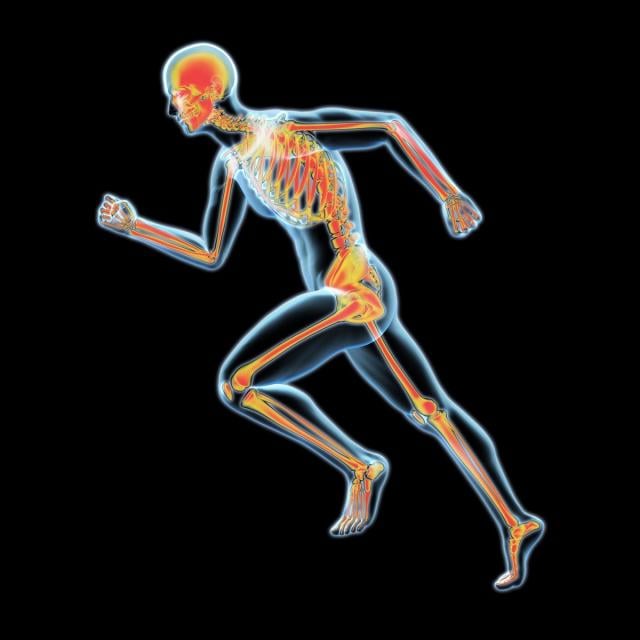
This module provides an introduction to the human skeleton and explores the scientific usage of footprint data. It also takes you to some fossil sites. You also learn about the phylogenetic tree activity based on anatomy and genetics.

Module 2: Visiting the Smithsonian National Museum of Natural History
This module explores the history of human evolution as seen in the "Hall of Human Origins" in the Smithsonian National Museum of Natural History.

Module 3: Science in Action
This module provides an understanding of how and what we learn from fossils. You will also explore the history of human origin in South Africa.

Go to Class
MOOC List is learner-supported. When you buy through links on our site, we may earn an affiliate commission.

Related Courses

Philosophy, Science and Religion: Science and Philosophy (Coursera) Coursera
University of Edinburgh

Philosophy, Science and Religion: Science and Philosophy (Coursera)

Philosophy, Science and Religion mark three of the most fundamental modes of thinking about the world and our place in it. Are these modes incompatible? Put another way: is the intellectually responsible thing to do to ‘pick sides’ and identify with one of these approaches at the exclusion of others? Or, are they complementary or mutually supportive? As is typical of questions of such magnitude, the devil is in the details. For example, it is important to work out what is really distinctive about each of these ways of inquiring about the world. In order to gain some clarity here, we’ll be investigating what some of the current leading thinkers in philosophy, science and religion are actually doing.

Jun 22nd 2026
5-12 Weeks
Structuring Values in Modern China (Coursera) Coursera
The Chinese University of Hong Kong

Structuring Values in Modern China (Coursera)

This sequence of four courses will propose a multi-disciplinary approach to the study of Chinese cultural history conceived of as a succession of modes of rationality (philosophical, bureaucratic, and economic). The focus will be on the moments of paradigm shift from one mode of rationality to another. For each of these moments, cultural facts and artifacts—thought, literature, ritual—will be examined in relationship to changing social, political, and economic systems.

Jun 22nd 2026
5-12 Weeks
Experiments and Variations in Bipedalism (Coursera) Coursera
Dartmouth College

Experiments and Variations in Bipedalism (Coursera)

This course will help you learn how fossils give us an insight into how the early members of our lineage walked bipedally. The four million years old bone of Australopithecus anamensis is the oldest undisputed evidence for bipedalism in our lineage. Similarly, Lucy’s, who was Australopithecus afarensis, fossil also helped scientists discover a lot about how bipedalism evolved over time.

Jun 15th 2026
4 Weeks
Bioinformatics: Introduction and Methods 生物信息学: 导论与方法 (Coursera) Coursera
Peking University

Bioinformatics: Introduction and Methods 生物信息学: 导论与方法 (Coursera)

A big welcome to “Bioinformatics: Introduction and Methods” from Peking University! In this MOOC you will become familiar with the concepts and computational methods in the exciting interdisciplinary field of bioinformatics and their applications in biology, the knowledge and skills in bioinformatics you acquired will help you in your future study and research.

Jun 22nd 2026
13-24 Weeks
The Brain and Space (Coursera) Coursera
Duke University

The Brain and Space (Coursera)

This course is about how the brain creates our sense of spatial location from a variety of sensory and motor sources, and how this spatial sense in turn shapes our cognitive abilities. Knowing where things are is effortless. But “under the hood,” your brain must figure out even the simplest of details about the world around you and your position in it.

Jun 22nd 2026
5-12 Weeks
The Science of the Solar System (Coursera) Coursera
Caltech

The Science of the Solar System (Coursera)

Learn about the science behind the current exploration of the solar system in this free class. Use principles from physics, chemistry, biology, and geology to understand the latest from Mars, comprehend the outer solar system, ponder planets outside our solar system, and search for habitability in our neighborhood and beyond. This course is generally taught at an advanced level assuming a prior knowledge of undergraduate math and physics, but the majority of the concepts and lectures can be understood without these prerequisites.

Jun 22nd 2026
5-12 Weeks
Constructivism and Mathematics, Science, and Technology Education (Coursera) Coursera
University of Illinois at Urbana-Champaign

Constructivism and Mathematics, Science, and Technology Education (Coursera)

This course is designed to help participants examine the implications of constructivism for learning and teaching in science, mathematics, and technology focused areas. Course readings, discussions, and assignments will examine constructivist views of learning, research on students' ideas and idea-based interactions, research on instructional approaches taking student ideas into account, and challenges in implementing constructivist perspectives in instruction.

Jun 22nd 2026
5-12 Weeks
Global Warming I: The Science and Modeling of Climate Change (Coursera) Coursera
University of Chicago

Global Warming I: The Science and Modeling of Climate Change (Coursera)

This class describes the science of global warming and the forecast for humans’ impact on Earth’s climate. Intended for an audience without much scientific background but a healthy sense of curiosity, the class brings together insights and perspectives from physics, chemistry, biology, earth and atmospheric sciences, and even some economics—all based on a foundation of simple mathematics (algebra).

Jun 1st 2026
5-12 Weeks
Climate Change and Water in Mountains: A Global Concern (Coursera) Coursera
University of Geneva

Climate Change and Water in Mountains: A Global Concern (Coursera)

What is climate change? How are mountain regions affected by the evolution of water resources and their uses? What kind of risks need to be considered? Mountains are recognized as particularly sensitive physical environments where intense and rapid changes have in the past, and may increasingly in the future, place pressure on their resource base.

Jun 15th 2026
5-12 Weeks
Teaching Science at University (Coursera) Coursera
University of Zurich

Teaching Science at University (Coursera)

This course will prepare you for teaching science in higher education. In this MOOC you will learn to make your knowledge as an excellent researcher accessible to your students. We will show you how to communicate science to novices as well as advanced students in science.

Jun 8th 2026
5-12 Weeks
Science & Religion 101 (Coursera) Coursera
University of Alberta

Science & Religion 101 (Coursera)

This course examines the nature of both science and religion and attempts to explore the possible relationships between them. The primary purpose is to dispel the popular myth that science and religion are entrenched in a never-ending conflict. As a result, this course argues that if the limits of both science and religion are respected, then their relationship can be complementary.

Jun 8th 2026
5-12 Weeks