Lymphoedema: Monitoring & Intervention After Breast Cancer (Coursera)

Offered by Macquarie University,
Lymphoedema: Monitoring & Intervention After Breast Cancer (Coursera)

Lymphoedema following breast cancer treatment is a poorly understood and under-researched condition which can significantly impact physical and psychological function, reduce quality of life and result in substantial cost burdens to both patients and the healthcare system. In these interactive modules we will cover an introduction to lymphoedema, lymphatic physiology and anatomy, assessment and treatment, as well as utilise case studies to understand the prospective surveillance and early intervention model of care in breast cancer rehabilitation.

Class Deals by MOOC List - Click here and see Coursera's Active Discounts, Deals, and Promo Codes.

This course is brought to you by the Australian Lymphoedema Education, Research and Treatment program (ALERT) at Macquarie University, Sydney, Australia.
What You Will Learn

  • Describe the prospective surveillance and early intervention model of care and outline how to implement this model across healthcare settings
  • Explain the range of clinical assessments used to detect early breast cancer related lymphedema
  • Explain why a multidisciplinary treatment approach may improve survivorship for those diagnosed with breast cancer

Syllabus

WEEK 1
Course Overview
In this module we outline what you will learn in the Lymphoedema Monitoring and Early Intervention After Breast Cancer online course and introduce you to your world-class education team.
Introduction to Lymphoedema
In this module we will explore the characteristics of lymphoedema, how it is classified, how it impacts patients and the evidence-based risk factors for breast cancer related lymphoedema.

WEEK 2
Lymphatic Physiology
In this module we will explore lymphatic physiology for breast cancer related lymphoedema.
Lymphatic Anatomy
In this module we will explore lymphatic anatomy for breast cancer related lymphoedema.

WEEK 3
Assessment & Treatment
In this module we will explore assessment and treatment strategies using a prospective surveillance and early intervention model of care for breast cancer related lymphoedema.

WEEK 4
Case Studies
In this module we will explore patient case studies to illustrate the application of a prospective surveillance and early intervention model of care.
Go to Class
MOOC List is learner-supported. When you buy through links on our site, we may earn an affiliate commission.

Related Courses

An Introduction to the U.S. Food System: Perspectives from Public Health (Coursera) Coursera
Johns Hopkins University

An Introduction to the U.S. Food System: Perspectives from Public Health (Coursera)

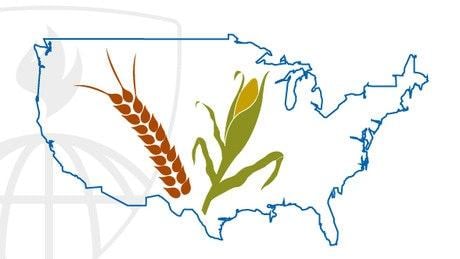
A food system encompasses the activities, people and resources involved in getting food from field to plate. Along the way, it intersects with aspects of public health, equity and the environment. In this course, we will provide a brief introduction to the U.S. food system and how food production practices and what we choose to eat impacts the world in which we live. Through several case studies, we will discuss some key historical and political factors that have helped shape the current food system and consider alternative approaches from farm to fork.

Oct 26th 2026
5-12 Weeks
Voice Disorders: What Patients and Professionals Need to Know (Coursera) Coursera
Icahn School of Medicine at Mount Sinai

Voice Disorders: What Patients and Professionals Need to Know (Coursera)

Knowledge regarding vocal production physiology and management options for voice disorders have experienced rapid growth over the past 40 years. This growth has resulted in a knowledge gap amongst patients and practitioners. Entirely new subspecialties of laryngology under otolaryngology and vocology under speech-language pathology have developed in response to this gap. This MOOC (Massive Open Online Course) is designed to educated patients, allied healthcare providers, vocal trainers/coaches, general medical practitioners and otolaryngologists.

Oct 26th 2026
5-12 Weeks
Severe to Profound Intellectual Disability: Circles of Care and Education (Coursera) Coursera
University of Cape Town

Severe to Profound Intellectual Disability: Circles of Care and Education (Coursera)

This course is about caring for and educating children (and youth) with severe to profound intellectual disability. We use the idea of 'circles' to position the child at the center of the many levels of support needed. Around the child are circles of care and education - such as the parents, family, friends, caregivers, educators, health care workers and others such as neighbors, business owners and community members.

Oct 26th 2026
4 Weeks
Meditation: A way to achieve your goals in your life (Coursera) Coursera
Korea Advanced Institute of Science and Technology - KAIST

Meditation: A way to achieve your goals in your life (Coursera)

Do we truly think that we have lived for ourselves? Perhaps we have lived for money, love, fame, family and pride etc.? Therefore, we don’t seem to be satisfied even though we are full of those things. It is because that we don’t know ourselves. Eric Fromm talked about human nature as two modes of being: “To Have” and “To Be”. If we are “Having” the nature of possessions, we are not satisfied, and feel empty and futile. Then, how can we be “Being” the nature of our inner-selves? Sometimes, we happened to be aware of this “Being” nature and try to change ourselves, but fail. But, because of our daily routines, it’s easily forgotten. And more it is hard to escape from our unwanted minds controlling us.

Oct 26th 2026
5-12 Weeks
An Introduction to Global Health (Coursera) Coursera
University of Copenhagen

An Introduction to Global Health (Coursera)

This course will provide you with an overview of the most important health challenges facing the world today. You will gain insight into how challenges have changed over time, we will discuss the likely determinants of such changes and examine future projections. Successful international strategies and programs promoting human health will be highlighted and global health governance structures will be mapped and the role of the key actors explored.

Oct 26th 2026
5-12 Weeks
Living with Dementia: Impact on Individuals, Caregivers, Communities and Societies (Coursera) Coursera
Johns Hopkins University

Living with Dementia: Impact on Individuals, Caregivers, Communities and Societies (Coursera)

Health professionals and students, family caregivers, friends of and affected individuals, and others interested in learning about dementia and quality care will benefit from completing the course. Led by Drs. Nancy Hodgson and Laura Gitlin, participants will acquire foundational knowledge in the care of persons with Alzheimer’s Disease and other neurocognitive disorders.

Oct 26th 2026
5-12 Weeks
The exposome: cracking the science about what makes us sick (Coursera) Coursera
Universiteit Utrecht

The exposome: cracking the science about what makes us sick (Coursera)

What are the causes of disease? We know that most diseases result from a combination of genes and environment (nature and nurture). Our genes alone do not determine our fate. For most complex diseases, externalities - environmental factors in the broad sense - are more important. This includes our living and working environments, diet, social support and stress, pollution, and exposure to infectious agents. Exposome research is about discovering the non-genetic drivers of health and disease.

Nov 1st 2026
5-12 Weeks
Major Depression in the Population: A Public Health Approach (Coursera) Coursera
Johns Hopkins University

Major Depression in the Population: A Public Health Approach (Coursera)

Public Mental Health is the application of the principles of medicine and social science to prevent the occurrence of mental and behavioral disorders and to promote mental health of the population. This course illustrates the principles of public health applied to depressive disorder, including principles of epidemiology, transcultural psychiatry, health services research, and prevention. It is predicted that by 2020 depressive disorder will be the most important cause of disease burden in the entire world! Every human being suffers from feeling depressed at some point or other, but only about one fifth of the population will experience an episode of depressive disorder over the course of their lives.

Oct 26th 2026
5-12 Weeks
Population Health: Study Design (Coursera) Coursera
Leiden University

Population Health: Study Design (Coursera)

Health care professionals increasingly have to make clinical decisions in aging and diverse populations. Also, they have to deal with rising health care costs, fragmented health care supply and advancing medical technologies and IT systems. These developments go beyond every day practice and will require new skills. In this course we will walk you through key steps in designing a research study, from formulating the research question to common pitfalls you might encounter when interpreting your results.

Oct 26th 2026
4 Weeks
Genomics: Decoding the Universal Language of Life (Coursera) Coursera
University of Illinois at Urbana-Champaign

Genomics: Decoding the Universal Language of Life (Coursera)

What is a genome? A genome contains all of the information that a cell needs to develop, function, and reproduce itself, and all the information needed for those cells to come together to form a person, plant, or animal. Genomes contain an organism’s complete set of genes, and also the even tinier genetic structures that help regulate when and how those genes are used. The ability to regrow a torn ligament, the clues that might predict the onset of mental illness, the nutritional potential of crops, and even the history of life itself, are all encoded in genomes. By taking this course, you will discover how scientists are deciphering the language of genomes to learn how to develop sustainable food and fuel supplies, improve disease treatment and prevention, and protect our environment.

Oct 26th 2026
5-12 Weeks
Soul Beliefs: Causes and Consequences - Unit 3: How Does It All End? (Coursera) Coursera
Rutgers University

Soul Beliefs: Causes and Consequences - Unit 3: How Does It All End? (Coursera)

Throughout history, the vast majority of people around the globe have believed they have, however defined, a “soul.” While the question of whether the soul exists cannot be answered by science, what we can study are the causes and consequences of various beliefs about the soul and its prospects of surviving the death of the body. Why are soul and afterlife beliefs so common in human history? Are there adaptive advantages to assuming souls exist?

Oct 26th 2026
5-12 Weeks