La legge di gravitazione universale (POK)

Offered by Politecnico di Milano,
La legge di gravitazione universale (POK)

Indaghiamo assieme una delle leggi fisiche più belle dell’Universo, ma non solo! Sveliamo i concetti fondamentali della meccanica orbitale, del volo e della propulsione aerospaziale. La forza di gravità è ciò che dà la forma ad ogni oggetto e corpo presente nell’Universo. I pianeti stessi e le loro orbite sono soggetti a questa forza tanto potente quanto misteriosa, come scoprirete seguendo queste lezioni.

Grazie a questo corso potrete apprendere al meglio i punti di forza e di debolezza della legge di gravitazione Universale: dopo un breve excursus inerente ai grandi scienziati del passato, verranno studiate le tre leggi di Keplero, per poi arrivare alla forza di gravità di Newton e alle teorie contemporanee. Lo studente, avendo preso confidenza con i concetti fisici che stanno alla base della legge di gravitazione Universale, sarà invitato a riflettere sul come sfruttare la forza di gravità a suo favore: "Come è possibile che gli aerei riescano a volare?"", “Come è riuscito l’uomo ad uscire dall’atmosfera?”. La magia verrà svelata!

Il corso è strutturato in due week, che non corrispondono necessariamente a settimane di apprendimento, ma piuttosto a blocchi logici.
Week 1 – L’interazione gravitazionale
Week 2 - La gravità inedita
La prima Week si compone di due moduli. Il primo, di introduzione al corso, presenta le idee della comunità scientifica prima di Isaac Newton: si affrontano le peculiarità delle interazioni fondamentali di natura e le leggi di Keplero. Vi è un esperimento eseguito con un pendolo per dimostrare le idee sostenute da Galileo Galilei.
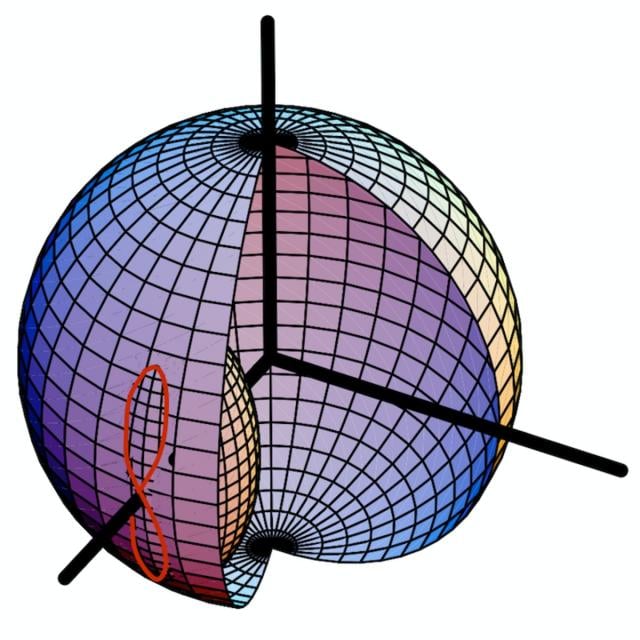
Il secondo modulo presenta una discussione incentrata sulla legge di gravitazione universale, che viene formulata in maniera matematica, senza trascurare il significato fisico delle formule presentate. Una lezione è dedicata al laboratorio “Viaggio al centro della Terra”, nel quale gli studenti sono invitati ad utilizzare un foglio di calcolo per stimare il tempo necessario per spostarsi da un polo terrestre all’altro.
La seconda week, anch'essa strutturata in due moduli, è dedicata alle idee e alla fisica adatta per “ingannare la gravità”. Il primo modulo è dedicato al volo e alla propulsione aerospaziale, ed in particolare come l’uomo è riuscito nonostante l’interazione gravitazionale ad uscire dall’atmosfera.
Il modulo conclusivo del corso prevede il passaggio dalla teoria newtoniana a quella di Albert Einstein, si discutono dunque le perplessità riguardanti la Legge di gravitazione Universale e si definiscono le onde gravitazionali. Inoltre, si presenta la forza di gravità in alcune opere letterarie e cinematografiche.
Go to Class
MOOC List is learner-supported. When you buy through links on our site, we may earn an affiliate commission.

Related Courses

Nanotechnology and Nanosensors, Part 1 (Coursera) Coursera
Technion - Israel Institute of Technology

Nanotechnology and Nanosensors, Part 1 (Coursera)

Nanotechnology and nanosensors are broad, interdisciplinary areas that encompass (bio)chemistry, physics, biology, materials science, electrical engineering and more. The present course will provide a survey on some of the fundamental principles behind nanotechnology and nanomaterials and their vital role in novel sensing properties and applications. The course will discuss interesting interdisciplinary scientific and engineering knowledge at the nanoscale to understand fundamental physical differences at the nanosensors.

Sep 7th 2026
5-12 Weeks
Understanding Einstein: The Special Theory of Relativity (Coursera) Coursera
Stanford University

Understanding Einstein: The Special Theory of Relativity (Coursera)

In this course we will seek to “understand Einstein,” especially focusing on the special theory of relativity that Albert Einstein, as a twenty-six year old patent clerk, introduced in his “miracle year” of 1905. Our goal will be to go behind the myth-making and beyond the popularized presentations of relativity in order to gain a deeper understanding of both Einstein the person and the concepts, predictions, and strange paradoxes of his theory.

Sep 7th 2026
5-12 Weeks
Introduzione alla fisica sperimentale: meccanica, termodinamica (POK) Polimi OPEN KNOWLEDGE
Politecnico di Milano

Introduzione alla fisica sperimentale: meccanica, termodinamica (POK)

Il corso affronta le tematiche della meccanica e della termodinamica partendo dall’applicazione del metodo sperimentale, per prepararsi al meglio all'ingresso all'università. The course addresses the thematic of Mechanics and thermodynamics starting from the applications of the experimental method, to better prepare to start the college experience with the fundamental knowledge.

Available
5-12 Weeks
Magic in the Middle Ages (Coursera) Coursera
University of Barcelona

Magic in the Middle Ages (Coursera)

Magical thought has always attracted human imagination. In this course we will introduce you to the Middle Ages through a wide conception of magic. Students will have an approach to medieval culture, beliefs and practices from the perspective of History and History of Science. Popular magic, as well as learned magic (alchemy, geomancy and necromancy) will be addressed. Moreover, we will also deal with how eastern practices and texts influenced western culture. In July 2016, the course will contain a brand-new module devoted to astrology. Magic in the Middle Ages offers a captivating overview of medieval society and promotes reflection about certain stereotypes associated with this period.

Sep 14th 2026
5-12 Weeks
Understanding Modern Physics III: Simplicity and Complexity (Coursera) Coursera
The Hong Kong University of Science and Technology - HKUST

Understanding Modern Physics III: Simplicity and Complexity (Coursera)

The 20th century was known as the century of physics. In the past 120 years, concepts such as space, time, energy, entropy and particles were understood to much deeper levels. New paradigms of thinking such as relativity and quantum mechanics emerged. This course is the third course in the Understanding Modern Physics series, which covers an introduction to action principle, fundamental particle physics, entropy & information and complexity.

Sep 7th 2026
4 Weeks
Exploring Light: Hands-on Activities and Strategies for Teachers (Coursera) Coursera
Exploratorium

Exploring Light: Hands-on Activities and Strategies for Teachers (Coursera)

This is an Exploratorium teacher professional development course taught by Teacher Institute staff, open to any science teacher (particularly middle or high school level) and science enthusiast. This is a hands-on workshop that explores topics and strategies teachers can use to help their students become active investigators of light.

Sep 6th 2026
4 Weeks
From the Big Bang to Dark Energy (Coursera) Coursera
The University of Tokyo

From the Big Bang to Dark Energy (Coursera)

We have learned a lot recently about how the Universe evolved in 13.7 billion years since the Big Bang. More than 80% of matter in the Universe is mysterious Dark Matter, which made stars and galaxies to form. The newly discovered Higgs-boson became frozen into the Universe a trillionth of a second after the Big Bang and brought order to the Universe.

Sep 7th 2026
4 Weeks
Electrodynamics: An Introduction (Coursera) Coursera
Korea Advanced Institute of Science and Technology - KAIST

Electrodynamics: An Introduction (Coursera)

The depth and breadth of electromagnetism, the foundation for many fields including materials science, electrical engineering, and physical chemistry, requires a long, steep, and steady learning curve. This course aims to bridge the gap between the fundamental principles taught in electromagnetism and its practical application to specific fields such as materials, physics, and chemistry related to energy storage and harvesting.

Aug 31st 2026
5-12 Weeks
Archaeoastronomy (Coursera) Coursera
Politecnico di Milano

Archaeoastronomy (Coursera)

Archaeoastronomy is the “science of stars and stones”: it studies the relationships between the ancient monuments and the sky, in order to gain a better understanding of the ideas of the architects of the past and of their religious and symbolic world. The course provides the first complete, easy introduction to this fascinating discipline.

Sep 14th 2026
5-12 Weeks
Tesoros de la Física y sus Descubridores I (Coursera) Coursera
Universidad de los Andes

Tesoros de la Física y sus Descubridores I (Coursera)

¿Sabes cómo vuelan los aviones, tan pesados y no se caen mientras vuelan? ¿Sabes que viajamos por el espacio sobre el planeta Tierra que se traslada y gira muy rápido y no lo percibimos? ¿O acaso, notas efectos de su movimiento? ¿Cuál es nuestro lugar en el universo? ¿Podemos viajar en el tiempo? ¡Preguntas, muchas preguntas! Con espíritu de descubridores nuestra curiosidad nos motiva a buscar respuestas, a explorar nuestro entorno, a entrar a lo desconocido y hallar nuevo conocimiento.

Aug 31st 2026
5-12 Weeks