Archaeoastronomy (POK)

Offered by Politecnico di Milano,
Archaeoastronomy (POK)

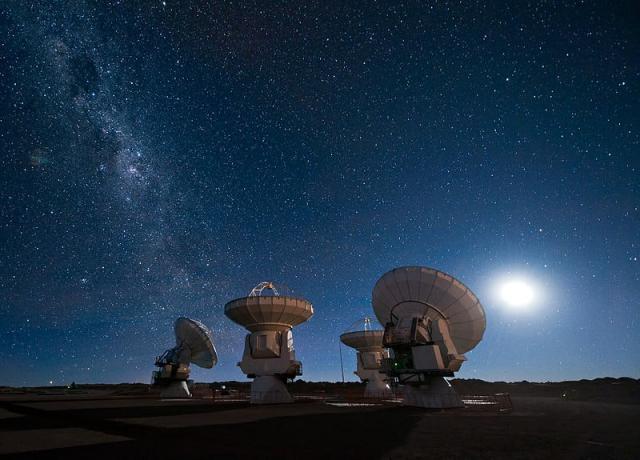
The science of stars and stones. Archaeoastronomy is the “science of stars and stones”: it studies the relationships between the ancient monuments and the sky, in order to gain a better understanding of the ideas of the architects of the past and of their religious and symbolic world. The course provides the first complete, easy introduction to this fascinating discipline.

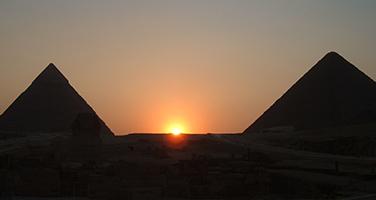
During the course, many spectacular ancient sites – such as Stonehenge in England, Giza and Karnak in Egypt, Chichen Itzá in the Yucatan, Macchu Picchu in Perù and the Pantheon in Rome – will be visited and the fascinating events occurring there in special days of the year (such as solstices, equinoxes, or the day of the foundation of Rome) will be shown and explained.

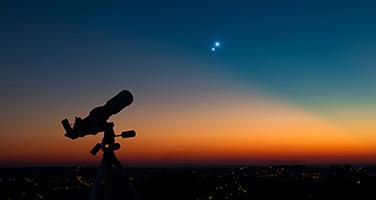
The course also provides the necessary background on Astronomy with the naked eye and a general introduction to the role of Astronomy in religion and in the management of power among ancient cultures.
Go to Class
MOOC List is learner-supported. When you buy through links on our site, we may earn an affiliate commission.

Related Courses

Introduzione alla fisica sperimentale: meccanica, termodinamica (POK) Polimi OPEN KNOWLEDGE
Politecnico di Milano

Introduzione alla fisica sperimentale: meccanica, termodinamica (POK)

Il corso affronta le tematiche della meccanica e della termodinamica partendo dall’applicazione del metodo sperimentale, per prepararsi al meglio all'ingresso all'università. The course addresses the thematic of Mechanics and thermodynamics starting from the applications of the experimental method, to better prepare to start the college experience with the fundamental knowledge.

Available
5-12 Weeks
La legge di gravitazione universale (POK) Polimi OPEN KNOWLEDGE
Politecnico di Milano

La legge di gravitazione universale (POK)

Indaghiamo assieme una delle leggi fisiche più belle dell’Universo, ma non solo! Sveliamo i concetti fondamentali della meccanica orbitale, del volo e della propulsione aerospaziale. La forza di gravità è ciò che dà la forma ad ogni oggetto e corpo presente nell’Universo. I pianeti stessi e le loro orbite sono soggetti a questa forza tanto potente quanto misteriosa, come scoprirete seguendo queste lezioni.

Available
2 Weeks
Flight mechanics - The basis (Coursera) Coursera
ISAE-SUPAERO

Flight mechanics - The basis (Coursera)

More than one century after the Wright brothers' first flight, the flight still defy our intuition. You will learn here how to name the different parts of the airplane and how to describe and quantify its geometry. For that, we need now to share a precise vocabulary to describe the airplane's movement and attitude in space, and a refresher on basic general mechanic principles. You will remind how Newton's 2nd law allows you to determine what force must be applied on an apple - or on an airplane, to modify the magnitude and direction of its speed.

Sep 21st 2026
3 Weeks
Quantum Optics 1 : Single Photons (Coursera) Coursera
École Polytechnique

Quantum Optics 1 : Single Photons (Coursera)

This course gives you access to basic tools and concepts to understand research articles and books on modern quantum optics. You will learn about quantization of light, formalism to describe quantum states of light without any classical analogue, and observables allowing one to demonstrate typical quantum properties of these states. These tools will be applied to the emblematic case of a one-photon wave packet, which behaves both as a particle and a wave.

Sep 21st 2026
5-12 Weeks
Physics 101 - Forces and Kinematics (Coursera) Coursera
Rice University

Physics 101 - Forces and Kinematics (Coursera)

This course serves as an introduction to the physics of force and motion. Upon completion, learners will have an understanding of how mathematical laws and conservation principles describe the motions and interactions of objects all around us. They will gain experience in solving physics problems with tools such as graphical analysis, algebra, vector analysis, and calculus.

Sep 7th 2026
4 Weeks
Kinematics: Describing the Motions of Spacecraft (Coursera) Coursera
University of Colorado Boulder

Kinematics: Describing the Motions of Spacecraft (Coursera)

The movement of bodies in space (like spacecraft, satellites, and space stations) must be predicted and controlled with precision in order to ensure safety and efficacy. Kinematics is a field that develops descriptions and predictions of the motion of these bodies in 3D space. This course in Kinematics covers four major topic areas: an introduction to particle kinematics, a deep dive into rigid body kinematics in two parts (starting with classic descriptions of motion using the directional cosine matrix and Euler angles, and concluding with a review of modern descriptors like quaternions and Classical and Modified Rodrigues parameters).

Sep 7th 2026
4 Weeks
Conceptos y Herramientas para la Física Universitaria (Coursera) Coursera
Tecnológico de Monterrey

Conceptos y Herramientas para la Física Universitaria (Coursera)

Este curso provee al estudiante con conceptos y herramientas matemáticas para modelar problemas en física, que al aplicar podrá enfrentar con éxito los cursos de física universitarios. Así pues, la filosofía de este curso consiste en cubrir temas conceptuales relativos a la Física y desarrollar tu capacidad de aprender y aplicarlos en tu vida profesional.

Sep 14th 2026
5-12 Weeks
Density Functional Theory (Coursera) Coursera
École Polytechnique

Density Functional Theory (Coursera)

The aim of this course is to give a thorough introduction to Density Functional Theory (DFT). DFT is today the most widely used method to study interacting electrons, and its applicability ranges from atoms to solid systems, from nuclei to quantum fluids. In this course, we introduce the most important concepts underlying DFT, its foundation, and basic ideas. We will in particular stress the features and reasons that lead DFT to become the dominant method for simulating quantum mechanical systems.

Sep 21st 2026
3 Weeks