EdX

La geografía del trazo: de la exploración paleográfica histórica a la creatividad caligráfica (edX)

La geografía del trazo: de la exploración paleográfica histórica a la creatividad caligráfica (edX)

Curso que combina el estudio de los textos manuscritos medievales y modernos con la práctica caligráfica tanto histórica como expresiva.

Class Deals by MOOC List - Click here and see EdX's Active Discounts, Deals, and Promo Codes.

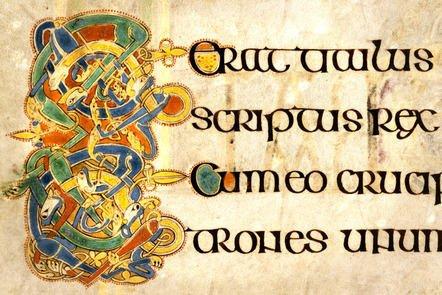
Este curso refuerza el vínculo entre paleografía y caligrafía a través del concepto de exploración geográfica en la que en cada semana se aborda la enseñanza y el aprendizaje de diversos tipos de escritura aplicados a ámbitos que hicieron del manuscrito un elemento imprescindible de gobierno, administración, gestión y expresión. Toda esta dimensión histórica documental sirve de base para abordar procesos de creatividad caligráfica y de innovación en el diseño escriturario a partir de las influencias del pasado.

What you'll learn

  • Herramientas y métodos de identificación, análisis y transcripción de textos manuscritos.
  • Comprensión del contexto histórico en el que la administración y las instituciones históricas generaron documentos.
  • Identificación de los tipos de letra empleados en cada situación histórica: características y morfología.
  • Competencias en el uso de instrumentos de escritura.

Syllabus

Semana 1: Geografía del trazo: la cartografía y la escritura
Introducción y presentación del curso. Estudio de portulanos, cartas náuticas, planos y mapas en su relación con la caligrafía y el diseño gráfico. Identificación de letras específicas. G. Mercator y las escuelas cartográficas modernas. Conversatorios.

Semana 2: Oficinas en guerra: escritura y ejército
Principales tipologías documentales en la Historia de la administración militar. Visitas a archivos militares. Formación caligráfica en el ejército. Patrimonio documental de la Defensa. Conversatorios.

Semana 3: Todo por escrito: la administración judicial y la práctica manuscrita
Instituciones de justicia en la Historia de España. Funciones, estructuras, órganos y niveles de la impartición de justicia. Producción documental y principales tipologías. La escritura de procesos. Conversatorios.

Semana 4: Asuntos económicos y escritura del negocio
Instituciones públicas y empresa privada en la Historia de España. La escritura a mano en el gobierno económico. Letras específicas de la gestión económica. Conversatorios.

Semana 5: Expresividad y legibilidad: la creatividad caligráfica
Trazos libres pero inspirados. Estímulos visuales y creatividad caligráfica. Modelos históricos escriturarios y aplicaciones actuales. Escribir bien y mal. Procesos de comunicación de inspiración manuscrita en entornos publicitarios. Escrituras expuestas y rotulación.

Semana 6: Letras conocen letras: un ecosistema del trazo (epigrafía, paleografía, caligrafía, tipografía, grafología…)
Ecosistema gráfico final. Características formales y materiales. Del trazo al grafo. Grafemas, Multigrafismo, Poligrafismo y mezcla gráfica en la documentación histórica. Alógrafos y variantes. Visión holística de la escritura. Signos y firmas. Casos prácticos. Conversatorios.
Go to Class
MOOC List is learner-supported. When you buy through links on our site, we may earn an affiliate commission.

Related Courses

Early Modern Scottish Palaeography: Reading Scotland's Records (FutureLearn) FutureLearn
University of Glasgow

Early Modern Scottish Palaeography: Reading Scotland's Records (FutureLearn)

Travel back in time through Scottish history by examining early modern Scottish handwriting. Explore Scottish history and learn more about using historical sources. Palaeography is the study of ancient handwriting and a vital skill in the historian’s toolkit. It is essential when conducting research on early modern Scotland – a period of profound political, religious and social change the effects of which can still be felt today.

Self Paced
3 Weeks
The Arctic as a System (Coursera) Coursera
University of Colorado Boulder

The Arctic as a System (Coursera)

In this course you will first learn about the Arctic as a geographic region, the peoples the Arctic, and the long history of Arctic settlement and exploration. Attention then turns to key features of the Arctic environment – its climate and weather, features of the ocean, sea ice, lands and the Greenland Ice Sheet, and some of the rapid changes being observed.

Jul 6th 2026
5-12 Weeks
Islamic Calligraphy: an Introduction to the Art of Handwriting (FutureLearn) FutureLearn
University of Malaya

Islamic Calligraphy: an Introduction to the Art of Handwriting (FutureLearn)

Understand the basics of Islamic and Arabic calligraphy and develop your calligraphy skills. Islamic calligraphy has long been admired for its beautiful form and line work. As an art form it actually includes various other types of calligraphy including Arabic, Persian and Ottoman.

Self Paced
3 Weeks
China’s First Empires and the Rise of Buddhism (edX) EdX
HarvardX,Harvard University

China’s First Empires and the Rise of Buddhism (edX)

Learn about the Qin and Han dynasties, and how Buddhism and ideas of self-realization influenced the medieval period. This course, the second in a collection on Chinese history and culture, addresses how the Qin dynasty conquered China and established a new system of government and how the Han dynasty built a stable, centralized empire that lasted for hundreds of years. We cover the early history of Buddhism in China and how the rising feudal aristocracy responded to the loss of empire by looking inward.

Self Paced
Self-Paced
Geographical Information Systems - Part 2 (Coursera) Coursera
École Polytechnique Fédérale de Lausanne

Geographical Information Systems - Part 2 (Coursera)

This course is the second part of a course dedicated to the theoretical and practical bases of Geographic Information Systems (GIS). It offers an introduction to GIS that does not require prior computer skills. It gives the opportunity to quickly acquire the basics that allow you to create spatial databases and produce geographic maps. This is a practical course that relies on the use of free Open Source software (QGIS, Geoda).

Sep 28th 2026
5-12 Weeks
Cartography (Esri) Esri
Esri

Cartography (Esri)

Once, only cartographers made maps. Today anyone can. Still, cartographers can teach people to make better maps, just as chefs can show people how to cook better meals. With coaching from experienced cartographers and practical, hands-on exercises using ArcGIS Pro, you'll become a smarter mapmaker, ready to go beyond the defaults and make better maps.

Feb 16th 2022
5-12 Weeks
Deciphering Secrets: Unlocking the Manuscripts of Medieval Burgos (Spain) (edX) EdX
Universidad Carlos III de Madrid - UC3M,UC3Mx

Deciphering Secrets: Unlocking the Manuscripts of Medieval Burgos (Spain) (edX)

Explore the medieval city of Burgos (Spain) and assess its history of Jewish, Christian, and Muslim religious and cultural coexistence. This history course delves into the medieval history of the city of Burgos, from its inception in 884 c.e. as the homeland of the Spanish Kingdom of Castile and Leon, until the completion of the Spanish Reconquista in 1492.

No sessions available
5-12 Weeks
Literature of the English Country House (FutureLearn) FutureLearn
The University of Sheffield

Literature of the English Country House (FutureLearn)

Take a journey through the literature of English country houses from the time of Thomas More to Oscar Wilde. Trace the history and context of country house literature. Through the course you will investigate and discuss the role and representation of the English country house in literature, and learn how to build your own authoritative interpretation of these texts.

Feb 8th 2021
5-12 Weeks
Changing Minds: Geographic Discoveries and New Worlds through the Eyes of a Renaissance Jewish Scholar (edX) EdX
University of Pennsylvania,PennX

Changing Minds: Geographic Discoveries and New Worlds through the Eyes of a Renaissance Jewish Scholar (edX)

This course will situate a manuscript in the context of the world from which it was produced so that we better understand both. The Italian Renaissance was a time of scientific discovery and artistic revolution, it was also a time of world exploration, religious ferment, and technological changes such as the broad dissemination of print. By understanding a single thinker, Jewish polymath Abraham ben Mordecai Farissol, and one of his most important manuscripts, Iggeret Orhot ‘Olam , in context, this course will offer a fresh.

Self Paced
Self-Paced