DNA Decoded (Coursera)

Offered by McMaster University,
DNA Decoded (Coursera)

Are you a living creature? Then, congratulations! You’ve got DNA. But how much do you really know about the microscopic molecules that make you unique? Why is DNA called the “blueprint of life”? What is a “DNA fingerprint”? How do scientists clone DNA? What can DNA teach you about your family history? Are Genetically Modified Organisms (GMOs) safe? Is it possible to revive dinosaurs by cloning their DNA?

Class Deals by MOOC List - Click here and see Coursera's Active Discounts, Deals, and Promo Codes.

DNA Decoded answers these questions and more. If you’re curious about DNA, join Felicia Vulcu and Caitlin Mullarkey, two biochemists from McMaster University, as they explore the structure of DNA, how scientists cracked the genetic code, and what our DNA can tell us about ourselves. Along the way, you’ll learn about the practical techniques that scientists use to analyze our genetic risks, to manipulate DNA, and to develop new treatments for a range of different diseases. Then, step into our virtual lab to perform your own forensic DNA analysis of samples from a crime scene and solve a murder.

Syllabus

WEEK 1
Cracking the Genetic Code
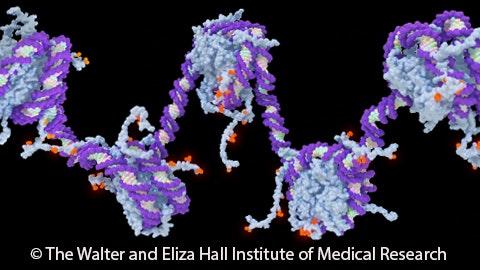
In this module, we'll explore the molecular structure of DNA. What is DNA? What are the basic building blocks of DNA? Where can you find DNA within a cell? We'll learn about how James Watson and Francis Crick were able to solve the riddle of the molecular structure of DNA by building on the work of other scientists. Their groundbreaking discovery revealed that four nucleobases (adenine, thymine, cytosine, and guanine) combine with sugar and phosphate molecules to form the familiar double helix of DNA. We'll take a look at how the molecular structure of DNA regulates its functions; for example, how the chemical bonds (covalent and noncovalent) between these molecules allow DNA to "unzip" during replication. Then we'll take a look at how you manage to fit over three billion base pairs into each of your cells. (Here's a hint: Histones, nucleosomes, and chromosomes would be great at packing for a trip!)

WEEK 2
Getting the Message Across: Transcription, Translation, and Replication
We've all heard DNA described as "the blueprint of life," but what does that actually mean? Each one of the approximately 20,000 genes in our bodies contains the instructions for building a protein. In this module, we'll explain how RNA copies the genetic information contained in our genes and uses this information to assemble amino acids into proteins. Scientists call this concept "Central Dogma": DNA makes RNA and RNA makes protein. We'll also explore how we transmit genetic information from one cell to another -- and what happens when things go wrong. Along the way, we'll learn about techniques (such as polymerase chain reactions and gel electrophoresis) that forensic scientists use in DNA fingerprinting. Join us this week for murder and mayhem in the lab!

WEEK 3
Manipulating DNA
In this module, we'll explore the techniques scientists use to manipulate DNA. Genetic engineering has allowed us to increase crop yields, diagnose illnesses, develop vaccines, and manufacture insulin. By carefully selecting a pair of molecular scissors (restriction enzymes), scientists are able to isolate a gene of interest and insert it into plasmid DNA, turning a common bacteria (E. coli) into a molecular copying machine. This week, we'll learn that mutations are genetic errors, but that not all mutations are necessarily bad — in fact, some mutations confer a selective advantage that protects against disease. We'll explain what genetically modified organisms are (and what they are not) and weigh in on the heated debates about the ethics and safety of GMOs in popular media.

WEEK 4
DNA and Me
What does your DNA say about you? You may have heard that you share 99% of your genetic material with everyone else on the planet. That's true, but this week we're going to take a look at the less than 1% that makes you unique. We'll kick off by discussing the Human Genome Project, the massive scientific collaboration that mapped out the sequence of all our genetic material. The technologies developed while mapping out the human genome ushered in a new age in DNA research. Now, genome-wide association studies can analyze massive amounts of data, searching for genetic variations that are associated with particular diseases. Pharmacogenomics may help determine which drugs are likely be most effective for you. Genetic genealogy tests (such as Ancestry DNA, 23 and Me, and Family Tree DNA) will allow you to trace random mutations in your DNA that can provide clues to your ethnic heritage. As an added bonus, we'll discuss whether it would be possible to revive extinct species by studying ancient DNA.
Go to Class
MOOC List is learner-supported. When you buy through links on our site, we may earn an affiliate commission.

Related Courses

The Little Stuff: Energy, Cells, and Genetics (Coursera) Coursera
University of Colorado Boulder

The Little Stuff: Energy, Cells, and Genetics (Coursera)

In this course, we will explore the smaller side of biology: molecular biology. We’ll cover basic topics including cell biology and how cells can go “rogue” and turn into cancer, how energy from the sun is transferred to fuel our bodies, basics of genetics and inheritance, and genetic technologies. At the end of this course, we will discuss ethical and moral implications of several exciting and new genetic technologies.

Jun 1st 2026
4 Weeks
Working with Translation: Theory and Practice (FutureLearn) FutureLearn
Cardiff University

Working with Translation: Theory and Practice (FutureLearn)

Explore what it means to communicate in multiple languages in a variety of contexts, and discover your inner translator. Translation is one of the most fundamental of human activities, allowing us to interact with one another within and across cultures. Drawing on the research and expertise of specialists at Cardiff University and the University of Namibia, on this course, you will discover a wealth of practical tips and knowledge about the nature of translation in an increasingly multilingual world.

Mar 13th 2023
4 Weeks
Introduction to Biology - The Secret of Life (edX) EdX
MIT,MITx

Introduction to Biology - The Secret of Life (edX)

Explore the secret of life through the basics of biochemistry, genetics, molecular biology, recombinant DNA, genomics and rational medicine. 7.00x is an introductory level biology course hosted by professor Eric Lander, who was one of the leaders of the Human Genome Project. The course content reflects the topics taught in the MIT introductory biology courses and many biology courses across the world.

Mar 12th 2024
13-24 Weeks
Non-Invasive Prenatal Testing (NIPT): An Introduction for Healthcare Professionals (FutureLearn) FutureLearn
St George's, University of London

Non-Invasive Prenatal Testing (NIPT): An Introduction for Healthcare Professionals (FutureLearn)

Get broad insight into the key issues surrounding Non-Invasive Prenatal Testing with this course for healthcare professionals. Learn about the history, limitations, and ethical considerations of NIPT. Non-Invasive Prenatal Testing (NIPT) is a timely issue in the UK. Already available within the private healthcare system, this maternal blood test is set to be offered by England’s National Health Service (NHS) in 2019.

Nov 14th 2022
3 Weeks
Molecular Biology - Part 1: DNA Replication and Repair (edX) EdX
MIT,MITx

Molecular Biology - Part 1: DNA Replication and Repair (edX)

An in-depth adventure through DNA replication and repair to strengthen your scientific thinking and experimental design skills. You’re acquainted with your DNA, but did you know that your cells synthesize enough DNA during your lifetime to stretch a lightyear in length? How does the cellular machinery accomplish such a feat without making more mistakes than you can survive?

Apr 16th 2024
5-12 Weeks
Personalised Medicine from a Nordic Perspective (Coursera) Coursera
University of Iceland,University of Copenhagen

Personalised Medicine from a Nordic Perspective (Coursera)

The technical revolution has generated large amounts of data in healthcare and research, and a rapidly increasing knowledge about factors of importance for the individual’s health. This holds great potential to support a change from the one-size-fits-all paradigm to personalised or precision medicine, to guide and thereby improve each health decision of expected benefit for the patient.

Jun 1st 2026
5-12 Weeks
Introduction to Genetics and Evolution (Coursera) Coursera
Duke University

Introduction to Genetics and Evolution (Coursera)

Introduction to Genetics and Evolution is a college-level class being offered simultaneously to new students at Duke University. The course gives interested people a very basic overview of some principles behind these very fundamental areas of biology. We often hear about new "genome sequences," commercial kits that can tell you about your ancestry (including pre-human) from your DNA or disease predispositions, debates about the truth of evolution, why animals behave the way they do, and how people found "genetic evidence for natural selection." This course provides the basic biology you need to understand all of these issues better, tries to clarify some misconceptions, and tries to prepare students for future, more advanced coursework in Biology (and especially evolutionary genetics). No prior coursework is assumed.

Jun 8th 2026
5-12 Weeks
Understanding Plants - Part I: What a Plant Knows (Coursera) Coursera
Tel Aviv University

Understanding Plants - Part I: What a Plant Knows (Coursera)

For centuries we have collectively marveled at plant diversity and form—from Charles Darwin’s early fascination with stems and flowers to Seymour Krelborn’s distorted doting in Little Shop of Horrors. This course intends to present an intriguing and scientifically valid look at how plants themselves experience the world—from the colors they see to the sensations they feel. Highlighting the latest research in genetics and more, we will delve into the inner lives of plants and draw parallels with the human senses to reveal that we have much more in common with sunflowers and oak trees than we may realize.

Jun 8th 2026
5-12 Weeks
Translation in Practice (Coursera) Coursera
Nanjing University

Translation in Practice (Coursera)

This course offers you basic but valuable techniques used by a good translator in the translation between English and Chinese. We’ll discuss what is translation, what is good translation, and learn about how to produce good translations. All the examples used in this course are taken from the course instructor's own translations of various genres and topics of writing.

May 18th 2026
5-12 Weeks
Machine Translation (Coursera) Coursera
Karlsruhe Institute of Technology - KIT

Machine Translation (Coursera)

Welcome to the CLICS-Machine Translation MOOC. This MOOC explains the basic principles of machine translation. Machine translation is the task of translating from one natural language to another natural language. Therefore, these algorithms can help people communicate in different languages. Such algorithms are used in common applications, from Google Translate to apps on your mobile device.

Jun 8th 2026
5-12 Weeks