Invitation to Ex-Noguchi Room: Preservation and Utilization of Cultural Properties in Universities (FutureLearn)

Offered by Keio University,
Invitation to Ex-Noguchi Room: Preservation and Utilization of Cultural Properties in Universities (FutureLearn)

Learn how to preserve, restore and utilize cultural properties in universities—a case study from Keio University, Tokyo. In this course, we will examine how to bring attention to cultural properties in a university, preserve and utilize them. The course focuses on the ‘Ex-Noguchi Room’ as a case study, which is a cultural property of Keio University in Tokyo. The space and what its contents are no longer in thier original state due to the partial reconstruction.

Class Deals by MOOC List - Click here and see FutureLearn's Active Discounts, Deals, and Promo Codes.

Cultural properties and art resources can be found in a variety of places, not just museums and galleries. Universities are one of these places. Many universities have their own art resources, but they are often not recognized as valuable and left under-utilized or not utilized at all. What is the situation regarding cultural properties in your university or school?
This course is made possible and supported by the lsamu Noguchi Foundation and Garden Museum and The lsamu Noguchi Foundation of Japan, Inc.
What topics will you cover?
This course will introduce the cultural properties at Keio University’s Mita Campus in Tokyo and trace the background of the creation of ‘Noguchi Room,’ which was a common room designed through a collaboration between the sculptor lsamu Noguchi (1904-88) and the architect Yoshiro Taniguchi (1904-79).
This course will draw attention to the particularities of cultural properties in universities through the example of the partial relocation of Noguchi Room (now we call it ‘Ex-Noguchi Room’ after the relocation), an incident that resulted from a lack of concern of cultural properties on campus.
This course will provide an opportunity to reflect on how to preserve the cultural properties in a university, showing the actual example of Ex-Noguchi Room, such as the conservation efforts being by university staff and conservators.
This course will serve as a practical guideline for using cultural properties. It would be useful for those who hope to utilize the resources in universities and strike a balance between utilization and preservation.
What will you achieve?
By the end of the course, you‘ll be able to...

  • Explore the cultural properties in Keio University Mita campus in Tokyo.
  • Discuss how to preserve the cultural properties in universities
  • Reflect on how to make good use of the cultural properties in universities and around us.
  • Reference a practical guideline for using cultural properties.
  • Explain the background and history of the Ex- Noguchi Room.
  • Summarise and demonstrate the regulations for using the Ex-Noguchi Room.
  • Develop the skill and knowledge to deal with cultural properties, especially those relating to architecture.

Go to Class
MOOC List is learner-supported. When you buy through links on our site, we may earn an affiliate commission.

Related Courses

Liver Disease: Looking After Your Liver (FutureLearn) FutureLearn
University of Birmingham

Liver Disease: Looking After Your Liver (FutureLearn)

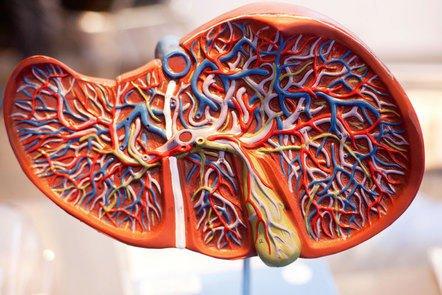
Learn about how your liver works, ways to look after it and how liver damage is caused, studied and treated around the world. We are currently experiencing an international explosion of liver disease that continues to have enormous impact upon healthcare systems and global health. In the UK we have seen a 20% increase in deaths related to liver disease since 2000 and this pattern reflects the global situation.

Self Paced
3 Weeks
Sharks! (edX) EdX
University of Queensland,CornellX,Cornell University,UQx

Sharks! (edX)

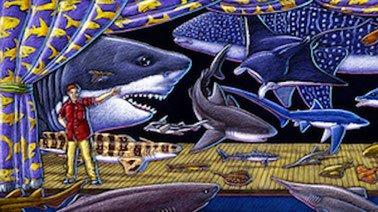
Learn about the most fascinating animals on Earth, their sophisticated senses and how sharks and their relatives have impacted human history and culture. Did you know that you can track some sharks’ movements on Twitter? Or that the scales on their skin have influenced the way humans design boats, planes, and even swimsuits? Or that sharks have more senses than humans?

Jul 3rd 2023
4 Weeks
Primate Conservation (Coursera) Coursera
University of Colorado Boulder

Primate Conservation (Coursera)

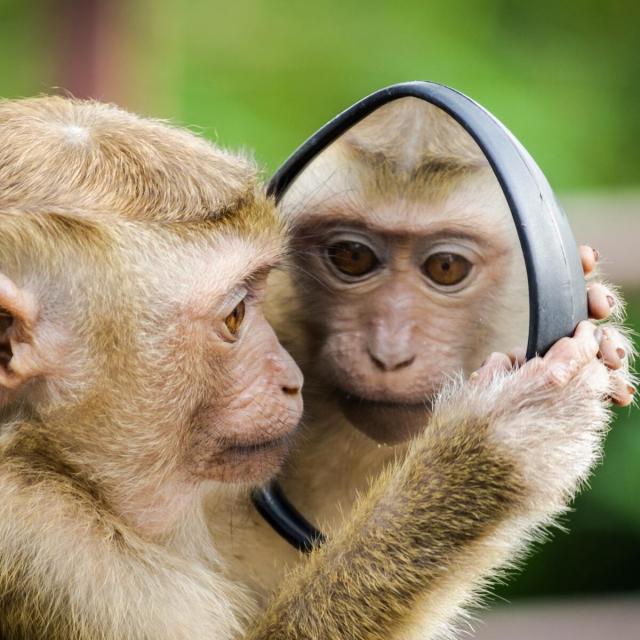
We are presently facing a potential extinction crisis for the order Primates (and many other life forms). In this course we will learn about threats to primate conservation globally. We will be using the, “Primates in Peril: The World’s 25 Most Endangered Primates 2018-2020” by Schwitzer et al (2019) as a basis for the discussion of global primate populations.

Oct 26th 2026
5-12 Weeks
Ecology: from cells to Gaia (Coursera) Coursera
National Research Tomsk State University

Ecology: from cells to Gaia (Coursera)

This course presents the principles of evolution and ecology for citizens and students interested in studying biology and environmental sciences. It discusses major ideas and results. Recent advances have energised these fields with evidence that has implications beyond their boundaries: ideas, mechanisms, and processes that should form part of the toolkit of all biologists and educated citizens.

Jul 18th 2022
5-12 Weeks
The Many Faces of Dementia (FutureLearn) FutureLearn
University College London

The Many Faces of Dementia (FutureLearn)

Gain a unique insight into dementia through the stories, symptoms and science behind four less common diagnoses. Explore key issues in dementia care and research, through four less common forms. Dementia is one of the foremost priorities in global health and is estimated to affect over 44 million people worldwide.

Self Paced
4 Weeks
Western Religions & Ecology (Coursera) Coursera
Yale University

Western Religions & Ecology (Coursera)

At first glance the fields of religion and ecology may seem and unlikely pairing, but a deeper consideration reveals the two have a great deal to contribute to one another and are indeed inextricably linked. Religions recognize the unity and interdependence of humans with nature. Ecological sciences affirm this deep interconnection with the natural world. This partnership can inspire work for the wellbeing of the Earth community

Oct 26th 2026
5-12 Weeks