REcube: REthink, REvive, REuse (POK)

Offered by Politecnico di Milano,
REcube: REthink, REvive, REuse (POK)

The course aims to impart knowledge for the green regeneration of the European Concrete Heritage. The MOOC provides an introductory overview of the conservation of modern reinforced concrete architecture.

The course starts with a general introduction on intervention strategies and priorities, and explores available data analysis techniques aimed at improving the historical knowledge the structure under examination.
The analysis of geometry, materials and construction techniques is followed by an overview of typical structural defects, together with a discussion of common diagnostic and monitoring approaches.
Total workload of the course: 15 hours
This MOOC is provided by Politecnico di Milano, Technische Universiteit Delft, Universidade do Minho, Università degli Studi di Roma La Sapienza, Università degli Studi di Napoli Federico II, Université Libre de Bruxelles, Politecnico di Torino, Middle East Technical University, Budapest University of Technology and Economics, Universidad Politecnica de Madrid, HafenCity Universität Hamburg, Fondation PLN Project and ICOMOS Italia – Consiglio Italiano dei Monumenti e dei Siti.

Intended Learning Outcomes
By actively participating in this MOOC, you will achieve different intended learning outcomes (ILOs).

Week 1
Distinguish between the different approaches required by different starting points of conservation, preservation and maintenance.
Evaluate the correct approach to be implemented in the intervention on existing construction.

Week 2
Recognize the proper archival survey methodology and apply the right documental evaluation.
Empower the correct historical analysis of materials and construction techniques.

Week 3
Collect information about the building while selecting the most significant for the intervention.
Understand and analyze the construction technique.

Week 4
Analyze typical pathologies of reinforced concrete structures and their mitigation measure.
Understand the role of sensors in the monitoring and the analysis of existing structures.
Grasp the fundamentals of fire safety of materials and structures.

Week 5
Interpret the cracking patterns on reinforced concrete existing buildings.
Understand the basics of the available diagnostic techniques.

Go to Class
MOOC List is learner-supported. When you buy through links on our site, we may earn an affiliate commission.

Related Courses

Modellazione digitale 3D: strumenti operativi per iniziare (POK) Polimi OPEN KNOWLEDGE
Politecnico di Milano

Modellazione digitale 3D: strumenti operativi per iniziare (POK)

Valutare e gestire i principali dispositivi per la modellazione e la grafica digitale in architettura. Il corso si propone di fornire indicazioni utili per la valutazione e la gestione dei principali dispositivi impiegati nell’ambito della modellazione e della grafica digitale in architettura. Ci si soffermerà in particolare sulla configurazione del PC e sull’installazione di software in ambiente Windows e MacOS.

Available
2 Weeks
Invitation to Ex-Noguchi Room: Preservation and Utilization of Cultural Properties in Universities (FutureLearn) FutureLearn
Keio University

Invitation to Ex-Noguchi Room: Preservation and Utilization of Cultural Properties in Universities (FutureLearn)

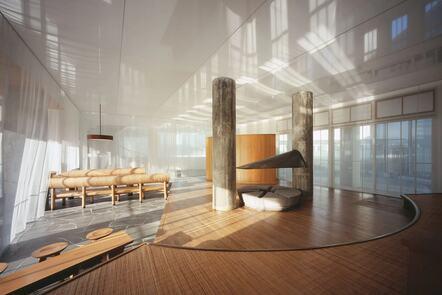
Learn how to preserve, restore and utilize cultural properties in universities—a case study from Keio University, Tokyo. In this course, we will examine how to bring attention to cultural properties in a university, preserve and utilize them. The course focuses on the ‘Ex-Noguchi Room’ as a case study, which is a cultural property of Keio University in Tokyo. The space and what its contents are no longer in thier original state due to the partial reconstruction.

Self Paced
2 Weeks
Introduction to Religions & Ecology (Coursera) Coursera
Yale University

Introduction to Religions & Ecology (Coursera)

At first glance the fields of religion and ecology may seem and unlikely pairing, but a deeper consideration reveals the two have a great deal to contribute to one another and are indeed inextricably linked. Religions recognize the unity and interdependence of humans with nature. Ecological sciences affirm this deep interconnection with the natural world. This partnership can inspire work for the wellbeing of the Earth community
.

Oct 12th 2026
5-12 Weeks
Interpreting Vernacular Architecture in Asia (edX) EdX
University of Hong Kong,HKUx

Interpreting Vernacular Architecture in Asia (edX)

Discover the value of local peoples' traditional built environments in Asia, find inspiration in these buildings, and learn how to conserve them for future generations. This course is about architecture. But it’s not about grand structures such as monuments or royal palaces. Rather, it is about the built environment that the ordinary people live in. Instead of the architectural techniques, we use stories to understand the processes through which people make their building decisions.

Self Paced
Self-Paced
Coexistence in Medieval Spain: Jews, Christians, and Muslims (Coursera) Coursera
University of Colorado System

Coexistence in Medieval Spain: Jews, Christians, and Muslims (Coursera)

This course explores Jewish, Christian, and Muslim intercultural relations in Iberia from the Visigothic era (6th century CE) until the creation of Queen Isabel I and King Ferdinand II Catholic Spain (late 15th century). We evaluate the many identities of the peninsula known as Christian Hispania, Jewish Sefarad, and Islamic al-Andalus. We trace the origins and trajectory of conflict between these communities (the Muslim conquest of Spain, Christian Reconquista, prohibitions blocking intermixing of peoples, and expulsions).

Oct 12th 2026
5-12 Weeks
Modellazione digitale 3D: dal file al modello fisico (POK) Polimi OPEN KNOWLEDGE
Politecnico di Milano

Modellazione digitale 3D: dal file al modello fisico (POK)

Costruire modelli architettonici con l’aiuto di tecnologie CNC, per il taglio di materiali in lastra attraverso: laser, lama o filo a caldo e per la realizzazione di elementi tridimensionali tramite stampa 3D. Il corso presenta diverse tecnologie CNC utilizzabili nella realizzazione di modelli architettonici. In particolare per il taglio di materiali in lastra attraverso: plotter laser, plotter a lama o plotter a filo a caldo e per la realizzazione di elementi tridimensionali tramite stampa 3D a filamento e a resina liquida. Il corso si propone di fornire le conoscenze necessarie ad una scelta consapevole delle diverse tecnologie in base ai materiali scelti per la realizzazione del modello e fornisce le informazioni base per la produzione di idonei disegni CAD.

Available
2 Weeks
East Asian Religions & Ecology (Coursera) Coursera
Yale University

East Asian Religions & Ecology (Coursera)

At first glance the fields of religion and ecology may seem and unlikely pairing, but a deeper consideration reveals the two have a great deal to contribute to one another and are indeed inextricably linked. Religions recognize the unity and interdependence of humans with nature. Ecological sciences affirm this deep interconnection with the natural world. This partnership can inspire work for the wellbeing of the Earth community

Oct 12th 2026
5-12 Weeks
Service-Oriented Architecture (Coursera) Coursera
University of Alberta

Service-Oriented Architecture (Coursera)

Based on an understanding of architectural styles, you will review architectures for web applications, then explore the basics of Service-Oriented Architecture (SOA) in two approaches: Web Services (WS*) and Representational State Transfer (REST) architecture. In the Capstone Project you will connect a Java-based Android application with Elasticsearch, a web service with a REST application programmer interface (API).

Oct 5th 2026
4 Weeks