Primate Conservation (Coursera)

Primate Conservation (Coursera)

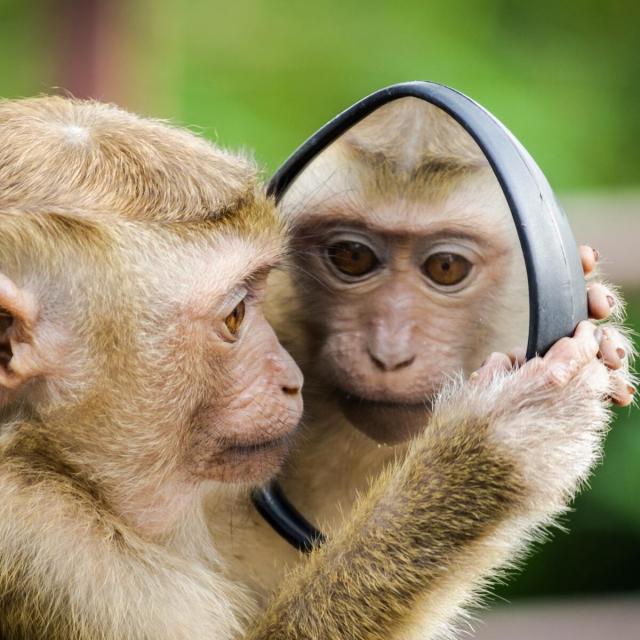
We are presently facing a potential extinction crisis for the order Primates (and many other life forms). In this course we will learn about threats to primate conservation globally. We will be using the, “Primates in Peril: The World’s 25 Most Endangered Primates 2018-2020” by Schwitzer et al (2019) as a basis for the discussion of global primate populations.

Class Deals by MOOC List - Click here and see Coursera's Active Discounts, Deals, and Promo Codes.

We will investigate conservation status, threats to conservations, success and failures within protecting our closest evolutionary cousins.
What You Will Learn

  • Identify conservation threats to Primates globally
  • Understand and identify conservation threat categories
  • Recognize threats to primate conservation across the areas where non-human primates live (Central/South America, Asia, and Africa)
  • Relate environmental changes to primate conservation

Syllabus

WEEK 1
Introduction to Conservation & Conservation Concerns
In the first module, I will introduce myself and begin defining the Order Primates. Many people have a ‘love’ of ‘monkeys’ without really understanding how incredibly diverse our Order is! This module starts with a definition of primates and then shows where the current radiation of primates still live.

WEEK 2
How We Define Threats
This module will begin by introducing the IUCN (International Union for the Conservation of Nature), the IUCN RedList, and how species are designated in threat categories. We will also discuss different types of threats to primates globally.

WEEK 3
Exploring Primates throughout Various Regions
In this module, we will focus on the Top 25 Most Endangered Primates list. We will go region to region to learn about the primates and the threats they face toward the possibility of extinction.

WEEK 4
Conservation Organizations
This module will address conservation organizations in multiple contexts. We will learn about 'in situ' and 'ex situ' conservation methodology. Finally, we will look at a number of conservation organizations and think about ways that the public can get involved.

WEEK 5
Case Study: Vietnam
Vietnam is home to an incredible diversity of primates. There are currently 25 species and subspecies living in this tropical country (Covert et al., 2017). In this module, we will discuss the diversity of primates, threats to conservation, and the groups that are helping to conserve these animals (and landscapes!).
Go to Class
MOOC List is learner-supported. When you buy through links on our site, we may earn an affiliate commission.

Related Courses

Information & Digital Literacy for University Success (Coursera) Coursera
The University of Sydney

Information & Digital Literacy for University Success (Coursera)

This Specilaization is aimed at preparing students for undergraduate study in an English-speaking university. The course equips you for full participation and engagement with your studies by building awareness and understanding of the core values and expectations of academic culture, and providing you with practical strategies to apply to your studies. In this course, you will learn how to develop your Information & Digital Literacy Skills to help you achieve success in your university studies.

Jun 8th 2026
5-12 Weeks
Atrévete a innovar tu enseñanza con pensamiento de diseño (Coursera) Coursera
Universidad Nacional Autónoma de México

Atrévete a innovar tu enseñanza con pensamiento de diseño (Coursera)

¿Quieres conocer nuevas formas de enseñar y no sabes por dónde empezar? La mayoría de nosotros estamos conscientes de que innovar en educación es necesario e importante para que las instituciones educativas respondan a una sociedad en constante cambio. Sin embargo, no existe un consenso sobre qué cambios se requieren ni sobre cómo llevarlos a cabo.

Jun 8th 2026
5-12 Weeks
Communication Skills for University Success (Coursera) Coursera
The University of Sydney

Communication Skills for University Success (Coursera)

This Specialization is aimed at preparing students for undergraduate study in an English-speaking university. The course equips you for full participation and engagement with your studies by building awareness and understanding of the core values and expectations of academic culture, and providing you with practical strategies to apply to your studies. In this course, you will learn how to develop your Communication Skills to help you achieve success in your university studies.

Jun 8th 2026
5-12 Weeks
Social Norms, Social Change I (Coursera) Coursera
University of Pennsylvania

Social Norms, Social Change I (Coursera)

This is a course on social norms, the rules that glue societies together. It teaches how to diagnose social norms, and how to distinguish them from other social constructs, like customs or conventions. These distinctions are crucial for effective policy interventions aimed to create new, beneficial norms or eliminate harmful ones. The course teaches how to measure social norms and the expectations that support them, and how to decide whether they cause specific behaviors.

Jun 8th 2026
4 Weeks
Expanding SEL (Coursera) Coursera
University of Colorado Boulder

Expanding SEL (Coursera)

Social and emotional learning, or SEL, programs have flourished in schools during the last decade. In this course the instructors (Emily Price and Ben Kirshner) introduce and help you examine community based and youth-empowerment approaches to social and emotional learning. Some of these approaches address the impact of social and political systems, such as immigration and structural racism, on children’s social and emotional experiences.

Jun 8th 2026
5-12 Weeks
Multilevel Modeling (Coursera) Coursera
Erasmus University Rotterdam

Multilevel Modeling (Coursera)

In this course, PhD candidates will get an introduction into the theory of multilevel modelling, focusing on two level multilevel models with a 'continuous' response variable. In addition, participants will learn how to run basic two-level model in R. The objective of this course is to get participants acquainted with multilevel models. These models are often used for the analysis of ‘hierarchical’ data, in which observations are nested within higher level units (e.g. repeated measures nested within individuals, or pupils nested within schools).

Jun 8th 2026
4 Weeks
New Learning: Principles and Patterns of Pedagogy (Coursera) Coursera
University of Illinois at Urbana-Champaign

New Learning: Principles and Patterns of Pedagogy (Coursera)

Education is in a state of flux – transitioning from traditional architectures and practices to new ecologies of teaching and learning influenced by the tremendous social and technological changes of our times. What changes are afoot today in workplaces, civic life and everyday community life? What are their implications for education? What are the possible impacts of contemporary social transformations on teaching and learning - including in the areas of technology, media, globalization, diversity, changing forms of work in the “knowledge society”, and, in these contexts, changing learner needs and sensibilities? This course explores three pedagogical paradigms: “didactic”, “authentic” and “transformative” learning.

Jun 8th 2026
4 Weeks
University Teaching (Coursera) Coursera
University of Hong Kong

University Teaching (Coursera)

University Teaching is an introductory course in teaching and learning in tertiary education, designed by staff at the Centre for the Enhancement of Teaching and Learning at the University of Hong Kong. With input from instructors, guests and interviewees, including teaching award winners, students, and experts in the fields, you will be exposed to research evidence in relation to effective university teaching and practical instructional design strategies. You will also be exposed to multiple examples of effective teaching, and hear the views of teachers whose teaching has been judged to be excellent.

Jun 8th 2026
5-12 Weeks
Overcoming Dyslexia (Coursera) Coursera
Yale University

Overcoming Dyslexia (Coursera)

Dyslexia is everywhere, touching so many children and adults, and while science has made extraordinary progress in understanding and clarifying the condition, this incredible powerful knowledge rarely reaches those who most need to know and would greatly benefit from it. Our goal is to change all this with the Coursera you are about to view, produced by Dr. Sally Shaywitz, the Audrey G. Ratner Professor in Learning Development, both the leading scientist studying dyslexia and the most devoted advocate for helping those who are dyslexic.

Jun 13th 2026
5-12 Weeks
Serious Gaming (Coursera) Coursera
Erasmus University Rotterdam

Serious Gaming (Coursera)

Have you ever wondered how playing games can help us to train people, deal with societal challenges or raise awareness of contemporary social issues? In this MOOC you will learn the ins and outs of games that are designed with exactly those purposes in mind: serious games. We will define serious games and discuss the different types that have been developed. We will explain why people like to play them and what impact they may have.

Jun 8th 2026
5-12 Weeks