EdX

Sharks! (edX)

Sharks! (edX)

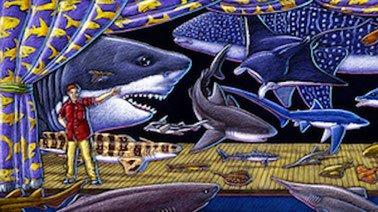
Learn about the most fascinating animals on Earth, their sophisticated senses and how sharks and their relatives have impacted human history and culture. Did you know that you can track some sharks’ movements on Twitter? Or that the scales on their skin have influenced the way humans design boats, planes, and even swimsuits? Or that sharks have more senses than humans?

Class Deals by MOOC List - Click here and see EdX's Active Discounts, Deals, and Promo Codes.

In this biology course, you will learn how scientists study sharks. You will join researchers on location in labs, aquariums, and oceans across the globe to learn about the biodiversity, biology, and conservation of sharks, rays, and chimaeras.

In this activity‑rich course, you’ll track movements of a wild shark, observe shark habitats and behavior, and dig deep into the fossil record. You will also examine topics in the functional anatomy, sensory biology, reproduction, behavior, and ecology of many of the 1,200 living species.
This is an exciting time to be a shark biologist. An explosion of new research methods and technologies are leading to a surprising world of discovery. We’ll introduce new, as well as traditional techniques, for classifying sharks, understanding behavior, and unraveling the mysteries of shark evolution. You’ll be invited to explore global shark populations and consider shark-human interactions and their impacts on history and culture.
You’ll be rewarded by your ability to see virtually any animal with new eyes. Practice thinking like a biologist while honing critical skills that can lead to broader observations about the ongoing history of life on Earth.

What you'll learn:

  • Habitats and distributions of sharks from around the world.
  • Evolutionary history and relationships of sharks and allies.
  • Functional anatomy of swimming, breathing, and eating.
  • Aspects of sensory biology, reproduction, and behavior.
  • Ecological roles of sharks.
  • Historical and cultural aspects of shark-human interactions.
  • The impacts of human behavior on shark populations.
  • How biology can inform conservation efforts.

Syllabus

Week 1: The Big Picture - Biodiversity and Evolution
Week 2: Miracles of Evolution - Functional Morphology and Physiology
Week 3: Thinking Like a Shark - Brains and Behavior
Week 4: Sharks in the World - Human Interactions, Ecology, and Conservation
Go to Class
MOOC List is learner-supported. When you buy through links on our site, we may earn an affiliate commission.

Related Courses

AP® Biology - Part 2: Genetics (edX) EdX
Rice University,RiceX

AP® Biology - Part 2: Genetics (edX)

The second course in a comprehensive series designed to prepare you for the AP Biology exam, focusing on genetics and DNA. Preparing for the AP Biology exam requires a deep understanding of many different topics in biology as well as an understanding of the format of the AP exam and the types of questions it asks. This course is Part 2 of the AP Biology series designed to prepare you for the AP Biology exam.

No sessions available
5-12 Weeks
Exploring Psychology's Core Concepts | 走进心理学 (edX) EdX
Tsinghua University,TsinghuaX

Exploring Psychology's Core Concepts | 走进心理学 (edX)

How do you interpretThe Da Vinci Code? Isa sleepwalker aware of themselves? Is language before the mind or the contrary? This course will answer these questions and more with psychology theories. How to decipher the Da Vinci Code? Does a person know that he is sleepwalking? Which came first, language or thought? This course will use the latest and coolest psychological theories to answer these questions.

Self Paced
Self-Paced
Fundamentals of Neuroscience, Part 2: Neurons and Networks (edX) EdX
HarvardX,Harvard University

Fundamentals of Neuroscience, Part 2: Neurons and Networks (edX)

Discover what makes your brain tick in this second part of a four-part introductory series in Neuroscience. Neurons in isolation are fascinating and complicated, but the real magic of neuroscience happens in the interaction between neurons. In this course, we examine how neurons pass signals to one another and how complex dynamics can result from just a few neurons arranged in relatively simple circuits.

Self Paced
Self-Paced
Super-Earths And Life (edX) EdX
HarvardX,Harvard University

Super-Earths And Life (edX)

Learn about the Earth, life, and how we can search for life elsewhere in the universe. Are we alone in this universe? What new information and observations on exoplanets have we discovered? In the past decade, astronomers have made incredible advances in the discovery of planets outside our solar system. Thirty years ago, we knew only of the planets in our own solar system. Now we know of thousands circling nearby stars.

Self Paced
Self-Paced
BioStatistics (edX) EdX
DoaneX,Doane University

BioStatistics (edX)

This college-level, credit-eligible Biostatistics course will teach you the skills required for success in future analytical studies in biology. In this undergraduate-level biostatistics course, the learners will be introduced to the use of statistics and study designs in biology. Upon successful completion of this course, learners will be able to design experimental, quasi-experimental and observational studies that will meet regulatory guidelines; collect, analyze, and interpret data using appropriate statistical tools.

Self Paced
Self-Paced
Cell Biology: Transport (edX) EdX
MIT,MITx

Cell Biology: Transport (edX)

How do we know what we know about cells? Enhance your scientific thinking and data analysis skills with this in-depth adventure through cell biology. This is the first cell biology course in a four-part series. How do we know what we know about cells at a molecular level and how can we use that knowledge to design experiments to test hypotheses in cell biology?

Feb 8th 2022
5-12 Weeks
Specialized Cells (edX) EdX
University of Queensland,UQx

Specialized Cells (edX)

An introduction to cell physiology. Learn how specialized cells perform specific functions. The human body is composed of trillions of cells working together to perform essential body functions. Cells operate in a regulated internal environment, with different types of cells having unique properties suited to their specific functions. In this course we will dive into the complex world of human physiology, starting at the cellular level.

May 31st 2022
5-12 Weeks
Algorithms and Data Structures Capstone (edX) EdX
University of California, San Diego,UC San DiegoX

Algorithms and Data Structures Capstone (edX)

Synthesize your knowledge of algorithms and biology to build your own software for solving a biological challenge. Building a fully-fledged algorithm to assemble genomes from DNA fragments on a real dataset is an enormous challenge with major demand in the multi-billion dollar biotech industry. In this capstone project, we will take the training wheels off and let you design your own optimized software program for genome sequencing.

Self Paced
Self-Paced
Irrigation Efficiency: more food with less water (edX) EdX
KU Leuven University,KULeuvenX

Irrigation Efficiency: more food with less water (edX)

Learn to improve the efficiency of different irrigation system components over varying scales in order to extract less water from our resources while producing more food. How can we meet the demands of our ever hungrier and thirstier world? Irrigation water uses 70% of the fresh water extraction worldwide to produce 40% of the food.

Self Paced
Self-Paced
Principles of Biochemistry (edX) EdX
HarvardX,Harvard University

Principles of Biochemistry (edX)

This introduction to biochemistry explores the molecules of life, starting at simple building blocks and culminating in complex metabolism. Principles of Biochemistry integrates an introduction to the structure of macromolecules and a biochemical approach to cellular function. Topics addressing protein function will include enzyme kinetics, the characterization of major metabolic pathways and their interconnection into tightly regulated networks, and the manipulation of enzymes and pathways with mutations or drugs.

Self Paced
Self-Paced