EdX

Introduction to Urban Geo-Informatics (edX)

Introduction to Urban Geo-Informatics (edX)

Learning about geospatial technologies, such as GIS, Remote Sensing, GNSS and Underground Mapping, to solve urban environmental issues. In this course, you will explore various technologies involved in Geo-Informatics, how the technologies help us to retrieve spatial data, and more importantly how the geographical data becomes the information used in decision making.

Class Deals by MOOC List - Click here and see EdX's Active Discounts, Deals, and Promo Codes.

“Where does geographical data come from?”
“How do we monitor our environment?”
“How do we navigate with our phones?”
“What is happening beneath our feet?”
These are just some of the questions that crop up every so often as we wander around the streets of our urban metropolises. Many of the technologies we used, many of the decisions we made are based on spatial data, most of which are acquired from Geospatial Technologies. This data and the interpretation of the data is known as “Geo-Informatics”.

You will explore the fields of Remote Sensing, Geographic Information Systems (GIS), Global Navigation Satellite Systems (GNSS) such as GPS, and Underground Mapping. Additionally, the concept of Smart City and the Urban Environment will be introduced to you. From this, you will gain an understanding of how these technologies help us to shape and understand the world that we are living in.

What you'll learn

  • Issues surrounding the Urban Environment
  • History and skills involved in the different Geospatial Technologies (Remote Sensing, GIS, GNSS, Underground Mapping)
  • Discover how Geospatial data is collected, analyzed and used to shape our world

Syllabus

Week 1: The Urban Environment
Introduction to the urban environment and its issues.

Week 2: GIS
Introduction to Geographic Information Systems (GIS); its role and how data are analysed inside a GIS, the applications of GIS and how it is integrated into our lives.

Week 3: Remote Sensing
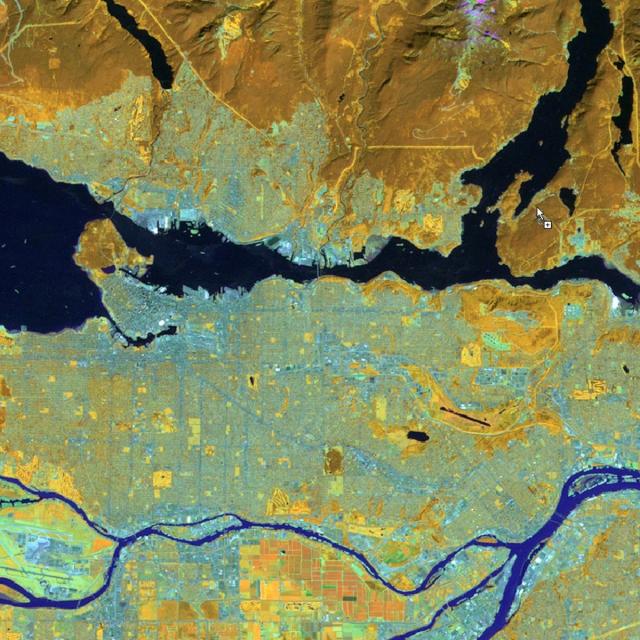
Introduction to Remote Sensing; its history and techniques, how data are acquired through Remote Sensing technologies and how they are processed.

Week 4: Underground Survey & Mapping
Introduction to methods for Underground Mapping, how to see the unseen.

Week 5: Navigational Systems
Introduction to how we position ourselves on Earth, how we navigate through our surroundings, and the different Systems.

Week 6: Smart Cities
Introduction to what is a Smart City, where Big Data come from, and how we can use Big Data to shape our world.

Go to Class
MOOC List is learner-supported. When you buy through links on our site, we may earn an affiliate commission.

Related Courses

Data Science for Smart Cities (edX) EdX
Purdue University,PurdueX

Data Science for Smart Cities (edX)

Learn various scientific techniques that will allow the analysis, inference and prediction of large-scale data (e.g. GPS vehicular data, social media data, mobile phone data, individual social network data etc.) that are present in city networks. The availability of low cost and ubiquitous sensors in city infrastructure provides high granular data at unprecedented spatiotemporal scales. “Smart Cities” envision to utilize this data to provide a healthy, happy and sustainable urban ecosystem by integrating the information and communication technology (ICT), Internet of things (IoT) and citizen participation to effectively manage and utilize city infrastructure and services.

No sessions available
13-24 Weeks
GIS Image Analysis in ArcGIS Pro (edX) EdX
University of Alaska Fairbanks,AlaskaX

GIS Image Analysis in ArcGIS Pro (edX)

Learn fundamentals of remote sensing, image analysis, image processing and its application on real-world problems such as vegetation health, wildfire severity, and flooding. Image analysis is extraction of meaningful information from an image to accomplish a simple task like understanding the landscape or to solve a complex problem like face recognition.

Self Paced
Self-Paced
Getting Started with CyberGIS (Coursera) Coursera
University of Illinois at Urbana-Champaign

Getting Started with CyberGIS (Coursera)

This course is intended to introduce students to CyberGIS—Geospatial Information Science and Systems (GIS)—based on advanced cyberinfrastructure as well as the state of the art in high-performance computing, big data, and cloud computing in the context of geospatial data science. Emphasis is placed on learning the cutting-edge advances of cyberGIS and its underlying geospatial data science principles.

Jun 8th 2026
4 Weeks
Éléments de Géomatique (Coursera) Coursera
École Polytechnique Fédérale de Lausanne

Éléments de Géomatique (Coursera)

Les nouvelles technologies de l’information ont facilité l’accès à de nombreuses bases de données offrant au grand public, mais surtout aux professionnels, une multitude de services. Le domaine de l’information géographique a également suivi ce mouvement en modernisant l’ensemble des supports, des plans, des cartes topographiques et de tous les types de données à référence spatiale. Face au déploiement massif des cartes numériques et des nombreux services basés sur la localisation, il s’agit de rester critique et surtout de développer les capacités nécessaires afin de choisir les outils et jeux de géodonnées adaptés aux besoins professionnels.

Jun 1st 2026
5-12 Weeks
Cities and the Challenge of Sustainable Development (edX) EdX
SDGAcademyX,SDG Academy

Cities and the Challenge of Sustainable Development (edX)

What is a sustainable city? Learn the basics here. According to the United Nations, urbanization and population growth could result in an increase of 2.5 billion people into urban populations by 2050, with associated impacts ranging from increased transportation needs to more building. How do we make cities sustainable to support this growth?

Self Paced
Self-Paced
GIS Applications Across Industries (Coursera) Coursera
University of California, Davis

GIS Applications Across Industries (Coursera)

Geographic Information Systems (GIS) is becoming an essential business skill across a variety of different disciplines. In this course, you will explore how GIS skills are commonly applied and used in a variety of industries focusing specifically on: environmental studies, public health, emergency management, and business development. You will be empowered to conduct GIS-based analyses that are commonly used in these areas and benefit from how each industry uses GIS to tackle common analysis needs. Additionally, you will work through a series of hands-on exercises that will improve your knowledge of the advanced analysis capabilities of ArcGIS Pro.

Jun 22nd 2026
4 Weeks
Digitalisation in Space Research (Coursera) Coursera
Technische Universität München - TUM

Digitalisation in Space Research (Coursera)

This course provides an overview of the most important digital applications in the field of aerospace research. The course instructors discuss how digitalisation is impacting and changing both satellite-based and manned spaceflight research. One unit is specifically devoted to exploring the use of artificial intelligence in the evaluation of satellite data.

Jun 15th 2026
3 Weeks
Spatial Data Science and Applications (Coursera) Coursera
Yonsei University

Spatial Data Science and Applications (Coursera)

Spatial (map) is considered as a core infrastructure of modern IT world, which is substantiated by business transactions of major IT companies such as Apple, Google, Microsoft, Amazon, Intel, and Uber, and even motor companies such as Audi, BMW, and Mercedes. Consequently, they are bound to hire more and more spatial data scientists. Based on such business trend, this course is designed to present a firm understanding of spatial data science to the learners, who would have a basic knowledge of data science and data analysis, and eventually to make their expertise differentiated from other nominal data scientists and data analysts.

Jun 15th 2026
5-12 Weeks
3D GIS (edX) EdX
University of Alaska Fairbanks,AlaskaX

3D GIS (edX)

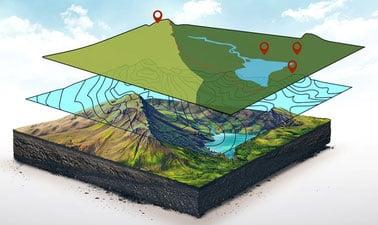
Take your maps into the third dimension: Learn GIS concepts and tools to visualize, analyze, and interpret spatial data in 3D. Reveal patterns that can lead to better decision making. Maps are graphic representations of reality and help us understand and navigate the world around us. Maps can incorporate third dimension through contours, hillshading (3D modeling), and profile views.

Self Paced
Self-Paced