GIS Applications Across Industries (Coursera)

GIS Applications Across Industries (Coursera)

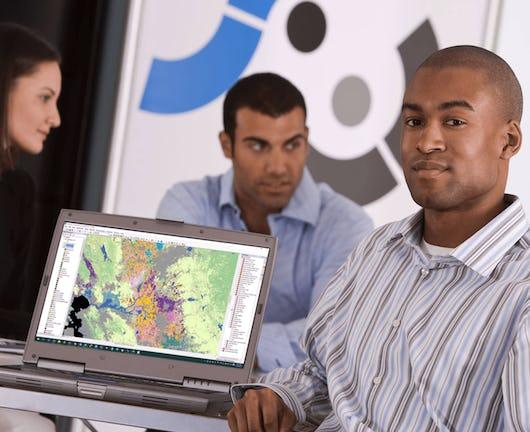
Geographic Information Systems (GIS) is becoming an essential business skill across a variety of different disciplines. In this course, you will explore how GIS skills are commonly applied and used in a variety of industries focusing specifically on: environmental studies, public health, emergency management, and business development. You will be empowered to conduct GIS-based analyses that are commonly used in these areas and benefit from how each industry uses GIS to tackle common analysis needs. Additionally, you will work through a series of hands-on exercises that will improve your knowledge of the advanced analysis capabilities of ArcGIS Pro.

Class Deals by MOOC List - Click here and see Coursera's Active Discounts, Deals, and Promo Codes.

This course is part of the Geographic Information Systems (GIS) Specialization.

What you'll learn
Expand their knowledge for geospatial analysis and develop new skills on how to use the advanced geoprocessing tools inside of ArcGIS Pro.

Syllabus

Getting Started and GIS for Environment
By the end of this module, you will be able describe what land use planning is and the planning process. You will be able to describe how GIS is commonly used in land use and conservation planning. You will be able to identify and find GIS datasets and common data sources and describe the processing steps used in land use change analysis. You will be able to conduct an analysis using land cover datasets to measure changes in land use over time. You'll be able to describe what a buildout analysis is and conduct a buildout analysis to evaluate the potential development growth in a given location. You will be able to explore common datasets, analytical tools and processes used in conservation planning. You'll be able to analyze a location and define its watershed boundaries as well as analyze GPS monitoring data to define wildfire ranges. You will be able to analyze and prioritize candidate locations for conservation efforts and be able to describe what citizen science is and the role it plays in community-based conservation strategies.

GIS for Public Health
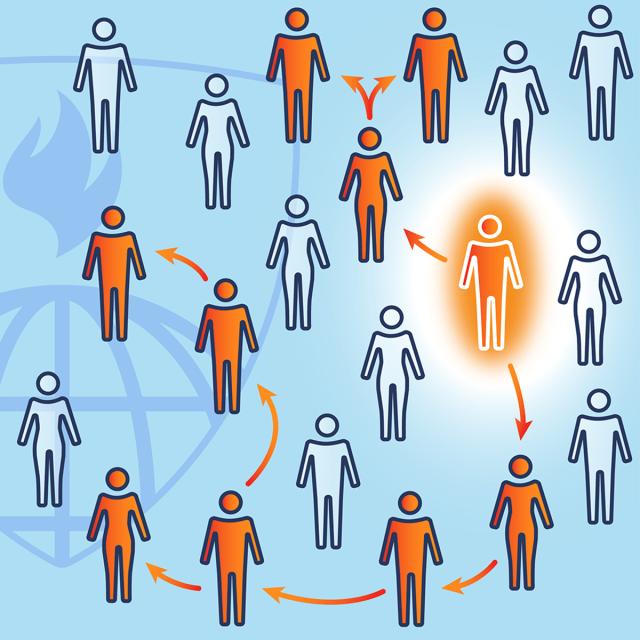
By the end of this module, you will be able to describe common GIS applications used in Public Health. You'll explore how GIS is used to track the spread of disease and analyze disease prevalence data and create maps showing the spread of disease. You will be able to explain what social determinates of health are and how they can be mapped using ArcGIS Pro. You will also be able to analyze and map the social determinates of health in a given community and describe how to measure community access to health-promoting resources.

GIS for Emergency Management
By the end of this module, you will be able to describe how GIS is commonly used in Emergency Management. You will be able to define what hazard mitigation planning is and how GIS is commonly used in mitigation planning activities. You'll be able to analyze the wildfire risks of a community and describe how GIS is used to inform emergency preparedness activities. You will apply GIS methods to aid in the development of an evacuation plan and use GIS to aid first responders during an emergency event. Lastly, you'll be able to describe how GIS is used to track the progress of recovery from an emergency event.

GIS for Business
By the end of this module, you will be able to describe how GIS is used in business applications and use GIS to identify potential customers and markets for a new business. You will be able to analyze demographic and employment data to locate a potential site for a new business. You will be able to describe how GIS can be used to inform Supply Chain Management and analyze potential warehouse locations based on the number of customers they can easily serve. You'll also be able to define location-base services and their common use cases, as well as discuss the role GIS plays in creating digital twins and in 3D visualization. You will also have the chance to create a 3D scene using ArcGIS Pro.

Go to Class
MOOC List is learner-supported. When you buy through links on our site, we may earn an affiliate commission.

Related Courses

Evaluation of Digital Health Interventions (Coursera) Coursera
Imperial College London

Evaluation of Digital Health Interventions (Coursera)

This course focuses on data, evaluation methods and the economic evaluation of digital health interventions. This module focuses on key data considerations for digital health including data management, data visualisation and methods for evaluating digital health interventions. The key focus is on experimental and quasi-experimental design approaches that can be applied to evaluating digital health interventions and key considerations for the economic evaluation of digital health interventions.

Jun 22nd 2026
4 Weeks
Value-Based Care: Reimbursement Models (Coursera) Coursera
University of Houston

Value-Based Care: Reimbursement Models (Coursera)

This course is designed to help you build high-level knowledge of the current medical coding and payment mechanisms of most U.S. healthcare services, referred to as fee-for-service. You will explore why the fee-for-service model has contributed to higher costs in the U.S. healthcare system without clearly improving health outcomes. You will examine the importance of coding to reflect chronic conditions and other diagnoses accurately and how value-based care and payments utilize these measures and data. As you learn about a model to replace fee-for-service, you’ll encounter a range of payment options considered to be value-based that utilize a framework from the Health Care Payment Learning and Action Network (HCP-LAN). To build on those options, you will learn how risk-adjustment, quality scores, and patient satisfaction measures are critical parts of value-based care and payment contracts. In the summative assignment, you will demonstrate your knowledge by comparing fee-for-service and value-based contracts, using specific examples to explain and justify the importance of documentation and coding, and identifying ways that risk-adjustment and patient satisfaction are incorporated into value-based care contracts.

Jun 22nd 2026
3 Weeks
Developing the Opportunity for Corporate Entrepreneurs (Coursera) Coursera
University of Maryland, College Park

Developing the Opportunity for Corporate Entrepreneurs (Coursera)

For an increasing number of established companies, creating new businesses and programs within the company is an imperative for success. Maturing technologies and aging product portfolios are requiring established companies to create, develop, and sustain innovative new initiatives.

Jun 22nd 2026
4 Weeks
Validity and Bias in Epidemiology (Coursera) Coursera
Imperial College Business School

Validity and Bias in Epidemiology (Coursera)

Epidemiological studies can provide valuable insights about the frequency of a disease, its potential causes and the effectiveness of available treatments. Selecting an appropriate study design can take you a long way when trying to answer such a question. However, this is by no means enough. A study can yield biased results for many different reasons. This course offers an introduction to some of these factors and provides guidance on how to deal with bias in epidemiological research.

Jun 22nd 2026
4 Weeks
Fundamentals of GIS (Coursera) Coursera
University of California, Davis

Fundamentals of GIS (Coursera)

Explore the world of spatial analysis and cartography with geographic information systems (GIS). What you will learn: define core geospatial concepts; practice with subset data using selections and feature attributes; create map books using advanced mapping techniques; create layer and map packages.

Jun 22nd 2026
4 Weeks
Outbreaks and Epidemics (Coursera) Coursera
Johns Hopkins University

Outbreaks and Epidemics (Coursera)

Professional epidemiologists are often called on to investigate outbreaks and epidemics. This course serves as an introduction to the essentials of investigation, identifying pathogens, figuring out what's going on, reporting, and responding. You'll learn how to ask precise epidemiologic questions and apply epidemiologic tools to uncover the answers.

Jun 22nd 2026
4 Weeks
Public Involvement in Research (Coursera) Coursera
Imperial College London

Public Involvement in Research (Coursera)

This course focuses on participatory approaches in research, known as 'public involvement' in the UK. You'll specifically, consider why citizens and patients would be involved in research and explore participatory approaches across and within the research cycle in more detail, diving into questions such as: What kinds of participation can be undertaken at each of the 7 stages of the cycle? How can you utilise participation in research? What examples of using participatory approaches exist in research?

Jun 24th 2026
4 Weeks
Disease Screening in Public Health (Coursera) Coursera
University of Geneva

Disease Screening in Public Health (Coursera)

Current and future public health is characterized by the increase of chronic and degenerative diseases, corresponding to the worldwide ageing of the population. The increasing prevalence of these conditions together with the long incubation period of the chronic diseases and the restless technological innovations, offer new opportunities to develop strategies for early diagnosis.

Jun 22nd 2026
5-12 Weeks
Surveillance Systems: The Building Blocks (Coursera) Coursera
Johns Hopkins University

Surveillance Systems: The Building Blocks (Coursera)

Epidemiology is often described as the cornerstone science and public health and public health surveillance is a cornerstone of epidemiology. This course will help you build your technical awareness and skills for working with a variety of surveillance systems. Along the way, we'll focus on system objectives, data reporting, the core surveillance attributes, and performance assessment.

Jun 22nd 2026
4 Weeks
Master Class for Corporate Entrepreneurs (Coursera) Coursera
University of Maryland, College Park

Master Class for Corporate Entrepreneurs (Coursera)

The Master Class experience is designed to serve as the final project experience for the Corporate Entrepreneurship Specialization. Alternatively, professionals with experience in opportunity analysis, business modeling, and corporate finance are invited to complete the Master Class experience without the preliminary courses.

Jun 22nd 2026
4 Weeks
Geographical Information Systems - Part 1 (Coursera) Coursera
École Polytechnique Fédérale de Lausanne

Geographical Information Systems - Part 1 (Coursera)

This course is organized into two parts presenting the theoretical and practical foundations of geographic information systems (GIS). Together theses courses constitute an introduction to GIS and require no prior knowledge. By following this introduction to GIS you will quickly acquire the basic knowledge required to create spatial databases and produce high-quality maps and cartographic representations. This is a practical course and is based on free, open-source software, including QGIS.

Jun 22nd 2026
5-12 Weeks
Epidemics - the Dynamics of Infectious Diseases (Coursera) Coursera
Pennsylvania State University

Epidemics - the Dynamics of Infectious Diseases (Coursera)

Not so long ago, it was almost guaranteed that you would die of an infectious disease. In fact, had you been born just 150 years ago, your chances of dying of an infectious disease before you've reached the tender age of 5 would have been extremely high. Since then, science has come a long way in understanding infectious diseases - what they are, how they spread, and how they can be prevented. But diseases like HIV/AIDS, Malaria, Tuberculosis, or the flu are still major killers worldwide, and novel emerging diseases are a constant threat to public health. In addition, the bugs are evolving. Antibiotics, our most potent weapon against bacterial infections, are losing their power because the bacteria are becoming resistant. In this course, we'll explore the major themes of infectious diseases dynamics.

Jun 22nd 2026
5-12 Weeks