Introduction to Small Molecule Drug Discovery & Development (Coursera)

Introduction to Small Molecule Drug Discovery & Development (Coursera)

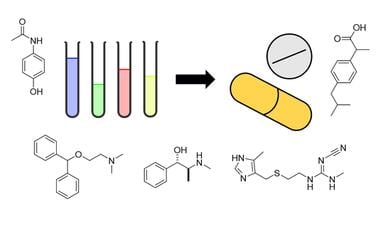
What does it take to advance a new drug from the laboratory bench to the patient’s bedside? Historically, drugs were discovered serendipitously and were usually isolated from natural sources. Today, drug discovery efforts take many years and cost hundreds of millions of dollars. They also require the input of dozens of specialists from a multitude of backgrounds to ensure that therapeutic molecules are efficacious and safe.

Class Deals by MOOC List - Click here and see Coursera's Active Discounts, Deals, and Promo Codes.

This four-week course takes a high-level tour of what it takes to research and develop a new drug. We will meet different scientists and professionals across the drug discovery value chain as we explore the different stages of discovery and development, including the different tools and technologies that are influencing how we think about new medicines today.
Starting off with the needs of the patient and the early phases of drug discovery, we will cover drug metabolism, pharmacokinetics and drug safety all the way to clinical development and beyond. This course is relevant for scientists who are new to drug discovery research or already have some experience, health professionals, or anyone who is interested in knowing what had to happen to ensure that their medicine is effective and safe.

What you'll learn

  • The different stages of drug discovery and development, including the tools and technologies influencing how we think about new medicines.
  • Investigate drug metabolism, pharmacokinetics and drug safety all the way to clinical development and beyond from the needs of the patient.

Syllabus

The starting point for drug discovery: The needs of the patient
This week covers an introduction to the drug discovery and development process. It starts off by considering the patient, as the ultimate beneficiary of new and improved drugs, to ensure that they are kept at the centre of and integrated into all subsequent decision-making. Through a case study, the concept of an unmet medical need is introduced and provides a backdrop for understanding further critical concepts which underlie drug discovery and development. An overview of various drug discovery strategies is presented, along with approaches to screening and hit discovery. Various scientific, medical and humanitarian considerations need to be taken into account if effective delivery of new and improved drugs is to be achieved. Some of the challenges are presented, and a panel discussion highlights different, and similar, perspectives in the academic and industry approach to drug discovery projects.

The early phases of drug discovery
This week explores the early phases of drug discovery. As outlined previously, the starting point is always the needs of the patient and their biomedical realities. Understanding disease biology is a critical next step and sets the scene for mapping the context for immune response and the origins of ill health and how the progression of disease can be controlled or arrested. Case studies, particularly in the context of tuberculosis (TB), demonstrate the rationale behind molecular biology studies of the pathogen and the host. Key concepts such as the essentiality and vulnerability of targets and their 'druggability' are introduced. Medicinal chemistry drives the chemical modification of drug-like molecules to improve their activity and safety. The various tools and approaches that the medicinal chemist has at their disposal, including the value of the screening cascade, will be discussed.

Drug metabolism, pharmacokinetics and drug safety
This week picks up the drug discovery and development story at the point at which promising drug candidates have already been identified. The crucial importance in this phase of investigating the pharmacokinetics and pharmacodynamics of potential drugs is introduced, as these are key parameters for the effectiveness of a new drug and a positive patient experience. These properties have a bearing on bioavailability and metabolic processes and provide a backdrop for animal model studies, and the extent to which the biological properties of the drug are retained in mammalian systems. The ethical considerations and technological advances pertaining to in vivo testing are discussed. Drug testing, safety profiling, and toxicology and efficacy in preparation for clinical trials are presented, and an introduction to process optimization and API manufacturing is also discussed.

Development phase
This week outlines and examines the clinical development phase. Once a drug candidate has successfully progressed through the phases outlined previously, it qualifies for filing as an Investigational New Drug (IND) and a Clinical Trial Application (CTA) and the accompanying review process. An overview is given of the regulatory framework governing this, and a description of the various phases of clinical trials. The extensive teamwork that is required during the clinical trial is outlined, as well as the various role-players in this process, and some of the critical aspects, such as the submission and approval process, protocols that need to be established, informed consent and site management, are described. Finally, we look to the future and consider how new technologies are changing the face of drug discovery and development and how this may ultimately bring newer and safer medicines to the patient more rapidly.
Go to Class
MOOC List is learner-supported. When you buy through links on our site, we may earn an affiliate commission.

Related Courses

Public Involvement in Research (Coursera) Coursera
Imperial College London

Public Involvement in Research (Coursera)

This course focuses on participatory approaches in research, known as 'public involvement' in the UK. You'll specifically, consider why citizens and patients would be involved in research and explore participatory approaches across and within the research cycle in more detail, diving into questions such as: What kinds of participation can be undertaken at each of the 7 stages of the cycle? How can you utilise participation in research? What examples of using participatory approaches exist in research?

Jun 24th 2026
4 Weeks
Pharmacology of Antibacterial Agents (Coursera) Coursera
E-Learning Development Fund,RUDN University

Pharmacology of Antibacterial Agents (Coursera)

The online course “Pharmacology of antibacterial agents” has been designed and developed by the team of authors of Department of General and Clinical Pharmacology, Medical Institute of People’s Friendship University of Russia (RUDN University). The main objective of the course is to provide systemic knowledge on pharmacokinetic and pharmacodynamic parameters of the main groups of antibacterial agents and insight into their proper and safe use.

Jul 18th 2022
5-12 Weeks
Prescription Drug Regulation, Cost, and Access: Current Controversies in Context (edX) EdX
HarvardX,Harvard University

Prescription Drug Regulation, Cost, and Access: Current Controversies in Context (edX)

Understand how the FDA regulates pharmaceuticals and explore debates on prescription drug costs, marketing, and testing. Prescription drugs are among the most common health care interventions and have turnedsome once-fatal diseases into manageable conditions — but they have also been a growing source of controversy.

Self Paced
Self-Paced
Clinical Pharmacokinetics: Dosing and Monitoring (FutureLearn) FutureLearn
Taipei Medical University

Clinical Pharmacokinetics: Dosing and Monitoring (FutureLearn)

Understanding pharmacokinetics, from basic principles to clinical applications. Explore the key principles of pharmacokinetics and how to apply them. On this course you will learn about the principles of clinical pharmacokinetics, including factors that affect the absorption, distribution, metabolism, excretion, and binding of drugs.

Feb 6th 2023
5-12 Weeks
Capstone Project: Advanced AI for Drug Discovery (Coursera) Coursera
LearnQuest

Capstone Project: Advanced AI for Drug Discovery (Coursera)

In this capstone project course, we'll compare genome sequences of COVID-19 mutations to identify potential areas a drug therapy can look to target. The first step in drug discovery involves identifying target subsequences of theirs genome to target. We'll start by comparing the genomes of virus mutations to look for similarities. Then, we'll perform PCA to cut down our number of dimensions and identify the most common features.

Jun 15th 2026
3 Weeks
Future Healthcare Payment Models (Coursera) Coursera
Northeastern University

Future Healthcare Payment Models (Coursera)

This course will review the drivers of healthcare cost and solutions that have been proposed to address cost, quality and value of health care. Many point blame for high costs on payment models that pay healthcare providers for every service they provide to patients, essentially paying more for volume and service intensity. This is called a Fee for Service (FFS) payment model. Some solutions, arguably the more sustainable solutions, are the combined strategies of new payment models, care management, insurance plan designs, consumer engagement tools, and technology.

Jun 24th 2026
4 Weeks
Drug Discovery (Coursera) Coursera
University of California, San Diego

Drug Discovery (Coursera)

The University of California San Diego, Skaggs School of Pharmacy and Pharmaceutical Sciences Drug Discovery course brings you lectures from both faculty and industry experts. With this course, recorded on campus at UCSD, we seek to share our access to top people in the field who bring an unprecedented range of expertise on drug discovery. In this course you will learn the drug discovery process up to the filing of an Initial New Drug Application or IND. Each week you will learn the steps that a pharmaceutical or biotech company goes through to discover a new therapeutic drug.

Jun 15th 2026
3 Weeks
Introduction to Good Clinical Practice (Coursera) Coursera
Novartis

Introduction to Good Clinical Practice (Coursera)

Welcome to 'Introduction to Good Clinical Practice'! This course is designed to introduce you to the basic principles and practices of Good Clinical Practice (GCP), which are essential for conducting clinical trials and ensuring the safety and well-being of human subjects. Whether you are new to the field or seeking to refresh your knowledge, this course and its coming sequel, 'Fundamentals of Good Clinical Practice' will equip you with the necessary skills and understanding to begin to navigate the complex world of clinical research.

Jun 8th 2026
3 Weeks
Drug Discovery in Prevention and Treatment of COVID-19 (edX) EdX
Tsinghua University,TsinghuaX

Drug Discovery in Prevention and Treatment of COVID-19 (edX)

This curriculum includes research into fundamental knowledge of clinical diagnosis, prevention and treatment of COVID-19. The beginning of 2020 have witnessed the emergence of COVID-19 escalating to a world pandemic. This virus have claimed more than 100,000 death reported by WHO, 10 times more than the seasonal flu does. Since the severity of the virus is becoming crystal clear, it is essential to grasp related knowledge to prepare us for self-protection and future drug development.

Self Paced
Self-Paced