Travelling Books: History in Europe and Japan (FutureLearn)

Travelling Books: History in Europe and Japan (FutureLearn)

Discover how travelling books sparked cultural exchanges between Europe and Japan, and how they live on in the digital era. Unlock the history of travelling books in Europe and Japan. Books are cultural artefacts that are easily transported and translated. As such, they have been important in fostering relationships between countries for hundreds of years. On this three-week course presented by Keio University and the British Library, you’ll learn more about the history of European and Japanese literature promoting cultural exchange, how this continues in the digital era, and how vital this exchange is.

Class Deals by MOOC List - Click here and see FutureLearn's Active Discounts, Deals, and Promo Codes.

Delve into the history of travelling books
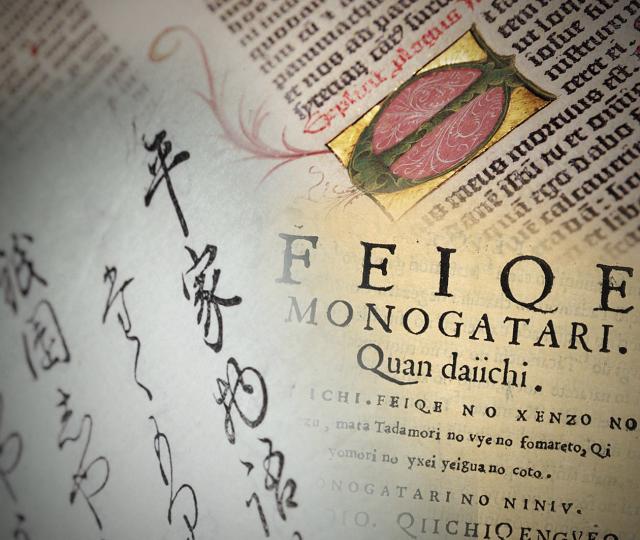
To start you’ll find out how books moved between Europe and Japan, beginning in the 16th century.
Discover how the books were received, compare printing styles, and find out about the role that Jesuit priests played in these book-sharing interactions.

Explore the rich heritage of travelling books and travel books
In the second and third weeks of the course, you’ll get to appreciate how travelling books influenced individuals, society, and European and Japanese literature.
Besides explaining the importance of rare and illustrated books, the course shows you how to trace physical signs on the pages that show what life was like for readers and collectors in the past.
Finally, you’ll learn about the way travel books led to great cultural exchange by allowing people to learn about places that they would never otherwise have experienced. The way these books exist in the digital era will be examined throughout.

Expand your history know-how with leading experts
The course is jointly produced by Japan’s Keio University and the British Library, which are both recognised in their own countries and abroad.
With their rich resources and longtime friendship, these institutions will deepen your understanding and appreciation of European culture, Japanese culture, and how books brought (and bring) them together.

Syllabus

Week 1: West Met East
Week 2: Travelling Books
Week 3 :Travel Books

What will you achieve?
By the end of the course, you‘ll be able to...

  • Explain how books from different cultures interacted and promoted a cultural exchange between the East and the West.
  • Summarise the role of Jesuit missionaries in exchanging book cultures between the East and the West in the 16th century.
  • Compare the European-type books printed in Japan in the 16th-century and their European counterparts.
  • Identify the traces in the early books that can tell you about past readers and collectors.
  • Identify the similarities and differences in the physical features of the travel books that make them easy to carry on a journey.
  • Explore how illustrations in travel books (fiction and non-fiction) help the reader to imagine the places that they have never been to or can visit only in fantasy.
  • Discuss the materiality of the books in the digital era.

Who is the course for?
This course is designed for anyone interested in European and Japanese literature, printing and historical books. Those who want to explore the lessons that can be learned by comparing books from different cultures will especially enjoy it.


Go to Class
MOOC List is learner-supported. When you buy through links on our site, we may earn an affiliate commission.

Related Courses

Summer School in Sociologies of Education (EMMA) EMMA
University of Naples Federico II

Summer School in Sociologies of Education (EMMA)

This MOOC features the SUSEES Summer School lectures where renowned scholars present the way they use particular theories and approaches to study education. The scope of the lecture series is to provide new insights into the potential of theoretical resources in producing new research questions for studying the European dimension of education.

No sessions available
5-12 Weeks
Cultures and Identities in Europe (FutureLearn) FutureLearn
European University Institute - EUI

Cultures and Identities in Europe (FutureLearn)

What does it mean to be European? Discover European cultures, identities and policies with this course. What is European identity? What do we understand and promote as European culture? On this course you will answer these questions and others as you critically consider the formation of diverse identities and cultures in Europe.

Oct 3rd 2022
3 Weeks
Cultural Studies and Modern Languages: an Introduction (FutureLearn) FutureLearn
University of Bristol

Cultural Studies and Modern Languages: an Introduction (FutureLearn)

Explore the culture, language and national identity of eight countries through their books, images, slogans and monuments. Are you interested in other countries? Do you want to study and understand other cultures? This free online course will take you on a journey through a number of periods from the medieval to the modern day, from Russia to Europe and all the way to Latin America.

No sessions available
4 Weeks
European Business Law: Doing Business in Europe (Coursera) Coursera
Lund University

European Business Law: Doing Business in Europe (Coursera)

This six-week course titled Doing Business in Europe is the second in a series of three exploring some of the main business aspects of European Union law. Besides providing learners with a sound knowledge base of European laws and regulations relevant to establishing and managing a company within the European Union, the course also explores business considerations within a broader perspective by including inputs from leading law practitioners in the field.

Jun 1st 2026
5-12 Weeks
Visualizing Japan (1850s-1930s): Westernization, Protest, Modernity (edX) EdX
MIT,MITx

Visualizing Japan (1850s-1930s): Westernization, Protest, Modernity (edX)

A MITx/HarvardX collaboration, this course explores Japan’s transition into the modern world through the historical visual record. This MITx course was developed in collaboration with HarvardX and is co-taught by MIT, Harvard, and Duke historians. You will examine Japanese history in a new way—through the images created by those who were there—and the skills and questions involved in reading history through images in the digital format.

Self Paced
Self-Paced
International migrations: a global issue (Coursera) Coursera
Sciences Po

International migrations: a global issue (Coursera)

The world is moving, but not all opinions and governments are willing to accept this poorly understood reality. The issue affects both states and the planet, in a process of globalization and of regionalization of migrations, and raises new questions for international relations, now including the South. This course aims at improving knowledge of the subject, addressing the key issues raised by international migration, and assessing the trends of tomorrow.

Jun 1st 2026
5-12 Weeks
Visualizing Postwar Tokyo, Part 2 (edX) EdX
The University of Tokyo,UTokyoX

Visualizing Postwar Tokyo, Part 2 (edX)

Identify the geopolitics historically involved in the practice of “visualizing postwar Tokyo.” The history of postwar Tokyo reveals an essential feature of the modern city, i.e., the city as a place of visualities. In postwar Tokyo, countless gazes fell upon others; gazes from and upon Americans and the Emperor, gazes going up skyscrapers or rushing aggressively through the cityscape, and gazes twining and wriggling among classes, genders, and ethnic groups in downtown Tokyo.

Self-Paced
Self-Paced
Les clés de la laïcité - le rôle des collectivités territoriales (FUN) FUN
Centre National de la Fonction Publique Territoriale - CNFPT

Les clés de la laïcité - le rôle des collectivités territoriales (FUN)

Qu’est-ce que la laïcité... et que n’est-elle pas ? Le principe de la séparation des églises et de l’état, c’est-à-dire de leur indépendance réciproque, a été posé par la loi du 9 décembre 1905. La France est ainsi une République indivisible, laïque, démocratique et sociale (article premier de la Constitution de la Vème République).

Feb 8th 2021
5-12 Weeks
Strong sustainability and Europe (FUN) FUN
Université Clermont Auvergne

Strong sustainability and Europe (FUN)

Sustainable development, popularized by the Brundtland Report, was defined at the end of the 1980s in three spheres (economic, environmental and social). It is this representation that continues today to be disseminated to the public and to large companies. The objective of this MOOC is to question the major challenges of development for Europe in a perspective of strong sustainability (energy, climate, biodiversity, food, mobility, agriculture, natural resources, education...) and to propose alternatives.

Sep 12th 2022
5-12 Weeks