Genealogy: Researching Your Family Tree (FutureLearn)

Genealogy: Researching Your Family Tree (FutureLearn)

Dive into your family ancestry and learn how to create a family tree on this online genealogy course. Discover the basics of genealogy and build your own family tree. Have you ever wondered about your family ancestry or wanted to create a family tree of your own? On this 6-week genealogy course for beginners, you’ll learn how to uncover the past and record your family history. The information on this course does not apply to just one country, so you can learn about your family lineage no matter where you’re from.

Class Deals by MOOC List - Click here and see FutureLearn's Active Discounts, Deals, and Promo Codes.

Gain an introduction to genealogy
Learn how to find and analyse sources, discover different research strategies, and tackle genealogy databases and wildcards. You’ll learn about the importance of names and explore the challenges that name changes cause for genealogists.
You’ll be introduced to the main source types including civil, church, census and military records and learn how to use these different kinds of data.

Discover DNA testing
Learn about the more technical sides of genealogical research such as the principles of the Genealogical Proof Standard, where you’ll discover how to establish proof.
You’ll be a scientist for the day and find out how DNA testing works in genealogical research. You’ll learn about the principles of genealogical inheritance, find out how autosomal DNA testing helps genealogists and learn about Y chromosome inheritance.

Create a family tree
Uncover the secrets of your family’s past and turn your genealogy into a tangible family history. You’ll discover the best ways to record your research, document it and protect it so that it lasts for generations to come.
You’ll learn how to balance genealogical data and historical context, delve into local and general histories, and use maps and photographs to bring your family history to life.
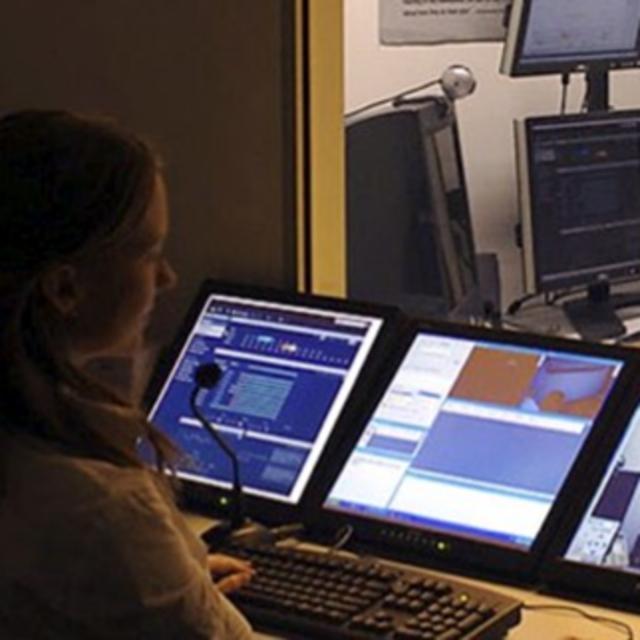
Throughout the course, you’ll also follow one woman’s journey as she researches her family tree and learns about her past.

Syllabus

Week 1: Analysing documents
Week 2: Effective searching techniques
Week 3: Using major source types
Week 4: Genealogical proof and DNA testing
Week 5: Putting your research into context
Week 6: Documenting and communicating your research results and sources

What will you achieve?
By the end of the course, you'll be able to...

  • Design a research plan for tracing family history.
  • Apply key techniques used when searching for and analysing genealogical records.
  • Describe the differences between genealogical source types and why they may cause problems for the researcher.
  • Develop an awareness of the use of historic and social context in family history research.
  • Develop an understanding of the ways in which genealogical information can be recorded and communicated.

Who is the course for?
This course is designed for anyone with an interest in genealogy.
The course will be suitable if you:

  • have no experience with genealogy or family history research;
  • have some experience with genealogical research but want to develop your skills and knowledge further;
  • are a more experienced genealogical researcher but want to learn new searching, analytical or communication techniques or
  • find it difficult to access opportunities for training and development.

Go to Class
MOOC List is learner-supported. When you buy through links on our site, we may earn an affiliate commission.

Related Courses

Understanding Medical Research: Your Facebook Friend is Wrong (Coursera) Coursera
Yale University

Understanding Medical Research: Your Facebook Friend is Wrong (Coursera)

How can you tell if the bold headlines seen on social media are truly touting the next big thing or if the article isn't worth the paper it's printed on? Understanding Medical Studies, will provide you with the tools and skills you need to critically interpret medical studies, and determine for yourself the difference between good and bad science. The course covers study-design, research methods, and statistical interpretation. It also delves into the dark side of medical research by covering fraud, biases, and common misinterpretations of data. Each lesson will highlight case-studies from real-world journal articles.

Aug 10th 2026
5-12 Weeks
Introduction to Psychological Research Methods (edX) EdX
University of Queensland,UQx

Introduction to Psychological Research Methods (edX)

Learn how to plan, conduct and analyze psychological research and effectively communicate the results. Do we really only use 10% of our brain? How can we answer questions like this? We shouldn’t just rely on our intuition, because unfortunately that can sometimes give us the incorrect answer. In this psychology course, learn how psychological research is conducted, how to analyze the findings and results and effectively write a research report.

Self Paced
Self-Paced
社会调查与研究方法 (上)Methodologies in Social Research (Part I) (Coursera) Coursera
Peking University

社会调查与研究方法 (上)Methodologies in Social Research (Part I) (Coursera)

社会调查与研究方法,首先,是一套观察社会现象、测量社会现象的工具;其次,是一套分析和运用社会现象数据的科学方法;最高境界,则是一套针对社会、经济、教育、政治、法律、管理、公共卫生、新闻报道等人类的生产与生活现象,进行科学沟通的思维逻辑与表达方式。

Aug 10th 2026
5-12 Weeks
Research Methods in Psychology: Using Animal Models to Understand Human Behaviour (FutureLearn) FutureLearn
University of Padova

Research Methods in Psychology: Using Animal Models to Understand Human Behaviour (FutureLearn)

Learn how animal models can help us learn about human psychology, cognitive skills, and the neurobiology of learning and memory. Discover how animal research has helped us understand how we perceive and learn. Did you know that we can learn a lot about humans through animal research? Animal models derived from invertebrates have helped us to understand the neurobiology of learning and memory. From cats, we have learned how visual experience informs the human visual system, and recent research has identified fish as a promising model to understand the genetic bases of learning disabilities such as dyscalculia!

Self Paced
4 Weeks
Forensic Archaeology and Anthropology (FutureLearn) FutureLearn
Durham University

Forensic Archaeology and Anthropology (FutureLearn)

Enter the fascinating world of forensics, and learn how the deceased are located, recovered and analysed using DNA and pathology. Learn the science behind the exhumation and identification of skeletal remains. The location, exhumation and identification of the dead requires highly specialised expertise. On this course, you’ll learn the latest scientific techniques for body location, recovery and analysis.

Self Paced
5-12 Weeks
Data Literacy Capstone – Evaluating Research (Coursera) Coursera
Johns Hopkins University

Data Literacy Capstone – Evaluating Research (Coursera)

This is the final course in the Data Literacy Specialization. In this capstone course, you'll apply the skills and knowledge you have acquired in the specialization to the critical evaluation of an original quantitative analysis. The project will first require you to identify and read a piece of high-quality, original, quantitative research on a topic of your choosing. You’ll then interpret and evaluate the findings as well as the methodological approach. As part of the project, you’ll also review other students’ submissions. By the end of the project, you should be empowered to be a critical consumer and user of quantitative research.

Jul 27th 2026
3 Weeks
社会调查与研究方法 (下)Methodologies in Social Research (Part 2) (Coursera) Coursera
Peking University

社会调查与研究方法 (下)Methodologies in Social Research (Part 2) (Coursera)

社会调查与研究方法, 首先,是一套观察社会现象、测量社会现象的工具; 其次,是一套分析和运用社会现象数据的科学方法; 最高境界,则是一套针对社会、经济、教育、政治、法律、管理、公共卫生、新闻报道等人类的生产与生活现象,进行科学沟通的思维逻辑与表达方式。

Aug 10th 2026
5-12 Weeks
Quantitative Methods (Coursera) Coursera
University of Amsterdam

Quantitative Methods (Coursera)

Discover the principles of solid scientific methods in the behavioral and social sciences. Join us and learn to separate sloppy science from solid research! This course will cover the fundamental principles of science, some history and philosophy of science, research designs, measurement, sampling and ethics. The course is comparable to a university level introductory course on quantitative research methods in the social sciences, but has a strong focus on research integrity. We will use examples from sociology, political sciences, educational sciences, communication sciences and psychology.

Jul 20th 2026
5-12 Weeks
Positive Psychology: Character, Grit and Research Methods (Coursera) Coursera
University of Pennsylvania

Positive Psychology: Character, Grit and Research Methods (Coursera)

Learners discover how apply to research methods to their study of Positive Psychology. In this course, we study with Dr. Angela Duckworth and Dr. Claire Robertson-Kraft. Through an exploration their work "True Grit" and interviews with researchers and practitioners, you develop a research hypothesis and learn how to understand the difference between internal and external validity. You also begin to understand and apply the strengths and weaknesses associated with different types of measurements and evaluation designs. You then interpret the results in an empirical study.

Jul 27th 2026
4 Weeks
Foundations of Health Equity Research (Coursera) Coursera
Johns Hopkins University

Foundations of Health Equity Research (Coursera)

Introduces students to the core principles of health equity research. Covers topics such as defining health equity, engaging community and policy stakeholders, patient-centeredness, cultural competence, and dissemination of research findings. Content will recognize different geographic, cultural, and social contexts where health inequities occur.

Jul 20th 2026
5-12 Weeks