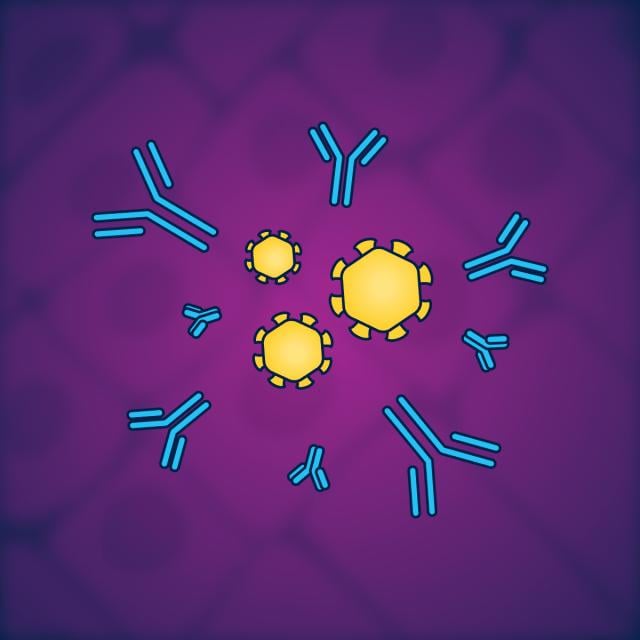
Immunology: Adaptive Immune System (Coursera)

Immunology: Adaptive Immune System (Coursera)

In this course, you will learn about the role of immune responses of the adaptive (acquired) immune system which provides specialised immunity against pathogens. Guided by our researchers in the Department of Immunity and Inflammation, we will take a closer look at the lymphocyte subsets and mechanisms involved in this delayed finely tuned response occurring days to weeks after the initial exposure to microbial antigens.

Class Deals by MOOC List - Click here and see Coursera's Active Discounts, Deals, and Promo Codes.

We will also focus on the versatile cellular components which can distinguish between self- and nonself antigens and on how age affects the immune responses.
Course 2 of 5 in the Immunology: The Immune System and its Failures Specialization.

What You Will Learn

  • In this course, you will explore the two main types of adaptive immune cells, T and B lymphocytes.
  • You will understand how their various sub-sets contribute to the overall immune response.
  • Finally, you will explore the effect of age on the function of the immune system.

Syllabus

WEEK 1
B cell effector functions and tolerance
In module one, learners will discover who B lymphocytes are and how they contribute to our immune response against pathogens. Together, we will explore how they develop, commit to becoming functional effector cells and what their effector mechanisms are. We will also investigate how the immune system prevents them from over-reacting against health cells.

WEEK 2
T cell activation, T helper subsets and receptors
In module two, learners will discover how T lymphocytes develop, differentiate into two main sub-types and how these contribute to the orchestration of the adaptive immune response and the direct destruction of infected cells. We will also discuss the mechanism that our body has put in place to prevent these very powerful cells from turning against the host’s healthy cells.

WEEK 3
Cytotoxic killing
In module three, we will explore the ability of some T lymphocytes to directly kill infected and tumour cells. We will learn about the mechanisms that activate them, contrast this with other complementary immune mechanisms of direct killing, and understand how their activation is kept under tight control to avoid the destruction of healthy cells.

WEEK 4
Regulatory T cells
In module four, we will explore the development and function of a particular type of T lymphocytes, regulatory T cells, whose main role is to regulate the overall immune response to avoid serious detrimental outcome for the host. We will look at their mechanisms of action in more details and discuss their therapeutic application for human health.

WEEK 5
Lymphocyte recirculation and homing
In module five, learners will be taken on a travel journey into our body to understand how the correct immune cells get to the correct site of infection. This will involve understanding the mechanisms by which immune cells migrate from the blood stream to infected tissues and sites of activation. Importantly, together with our expert here at Imperial, we will also explore the importance for this ability to be tightly regulated.

WEEK 6
The effect of age on the function of the immune system
In module six, we will explore the impact ageing has on the immune system. We will identify what inflammaging is, its causes and its consequences on the immune system. We will reflect on what this means in terms of therapeutical approaches for human health.
Go to Class
MOOC List is learner-supported. When you buy through links on our site, we may earn an affiliate commission.

Related Courses

Epidemiology: The Basic Science of Public Health (Coursera) Coursera
University of North Carolina

Epidemiology: The Basic Science of Public Health (Coursera)

Often called “the cornerstone” of public health, epidemiology is the study of the distribution and determinants of diseases, health conditions, or events among populations and the application of that study to control health problems. By applying the concepts learned in this course to current public health problems and issues, students will understand the practice of epidemiology as it relates to real life and makes for a better appreciation of public health programs and policies. This course explores public health issues like cardiovascular and infectious diseases – both locally and globally – through the lens of epidemiology.

Jun 22nd 2026
5-12 Weeks
Foundations of Public Health Practice: Health Protection (Coursera) Coursera
Imperial College London

Foundations of Public Health Practice: Health Protection (Coursera)

The Health Protection course is the fourth instalment of the wider Foundations of Public Health Practice specialisation from Imperial College London's Global Master of Public Health (MPH). The scope and content of this course has been developed from the ground up by a combined team of academics and practitioners drawing on decades of real-world public health experience as well as deep academic knowledge. Through short video lectures, practitioner interviews and a wide range of interactive activities, learners will be immersed in the world of public health practice.

Jun 15th 2026
3 Weeks
The Heart, Blood, and Lungs (Coursera) Coursera
MedCerts

The Heart, Blood, and Lungs (Coursera)

In this course on The Heart, Blood, and Lungs, you will learn about the wonderful diversity of the cardiovascular, immune, and respiratory systems and the medical language that is used to describe these systems. Throughout each Lesson, the roots of terms are explained to help students understand how medical terminology works in healthcare and to increase their knowledge and understanding of the material discussed.

Jun 15th 2026
3 Weeks
Fundamentals of Immunology: T Cells and Signaling (Coursera) Coursera
Rice University

Fundamentals of Immunology: T Cells and Signaling (Coursera)

Course 2 of a three course specialization called Fundamentals of Immunology. Each course in the specialization presents material that builds on the previous course's material. This is the second half of the journey through the defenses your body uses to keep you healthy. In the first part we learned about innate immunity and B cell function. The second part covers T cell function and coordination of the immune response.

Jun 15th 2026
5-12 Weeks
Ebola: Essential knowledge for health professionals (Coursera) Coursera
University of Amsterdam,Universiteit Utrecht

Ebola: Essential knowledge for health professionals (Coursera)

March 2014 marked the starting point of the largest outbreak of Ebola virus disease in history. Although the disease seems to be on a decrease, we are not there yet and new outbreaks will surely emerge. New efforts to combat the outbreak are necessary. This is why we developed this online course about Ebola, targeted at health professionals across the world. In this course you will cover the fundamental knowledge any health professional should have with expected or confirmed cases or a general interest in the Ebola disease.

Jun 1st 2026
5-12 Weeks
COVID-19: What You Need to Know (CME Eligible) (Coursera) Coursera
Osmosis

COVID-19: What You Need to Know (CME Eligible) (Coursera)

COVID-19 is a global pandemic that has already resulted in hundreds of thousands of infections and thousands of deaths, with many more anticipated. This course is a go-to resource that will be regularly updated with all of the current information put forth by the CDC, WHO, and other leading agencies and covers the basics, personal protective equipment, diagnostics, and other material.

Jun 21st 2026
1 Week
Building on the SIR Model (Coursera) Coursera
Imperial College London

Building on the SIR Model (Coursera)

The other two courses in this specialisation require you to perform deterministic modelling - in other words, the epidemic outcome is predictable as all parameters are fully known. However, this course delves into the many cases – especially in the early stages of an epidemic – where chance events can be influential in the future of an epidemic.

Jun 15th 2026
4 Weeks
Fundamentals of Immunology: Death by Friendly Fire (Coursera) Coursera
Rice University

Fundamentals of Immunology: Death by Friendly Fire (Coursera)

Course 3 of a three course specialization called Fundamentals of Immunology. Each course in the specialization presents material that builds on the previous course's material. This is the third leg of the journey through the defenses your body uses to keep you healthy. In the first course we learned about innate immunity and B cell function. In the second course we studied T cell function and coordination of the immune response.

Jun 15th 2026
5-12 Weeks
Virology and Epidemiology in the Time of COVID-19 (Coursera) Coursera
American Museum of Natural History

Virology and Epidemiology in the Time of COVID-19 (Coursera)

This course covers the science and social impacts of viral infectious diseases. We will begin by covering the basics: what a virus is, the structural and functional diversity of viruses, and how viruses use our bodies and the bodies of other organisms to replicate. Then we will dive into the human response: how our immune systems work to protect us from pathogenic viruses and how we use science and social systems to fend off viruses through vaccines and public health measures.

Jun 22nd 2026
5-12 Weeks
Immunology: Autoimmunity, Allergy, and Transplants (Coursera) Coursera
Imperial College London

Immunology: Autoimmunity, Allergy, and Transplants (Coursera)

In this course, you will explore the mechanisms and immune responses involved in autoimmune diseases and in hyper-responsive phenomena, such as asthma. You will examine in detail the potential causes and factors behind an overactive immune system and the disorders that might ensue if the response is not adequately controlled. you will also analyse the effects of overactive immune response in transplant rejection.

Jun 15th 2026
5-12 Weeks
COVID-19 Contact Tracing (Coursera) Coursera
Johns Hopkins University

COVID-19 Contact Tracing (Coursera)

The COVID-19 crisis has created an unprecedented need for contact tracing across the country, requiring thousands of people to learn key skills quickly. The job qualifications for contact tracing positions differ throughout the country and the world, with some new positions open to individuals with a high school diploma or equivalent.

Jun 22nd 2026
1 Week
Infectious Disease Transmission Models for Decision-Makers (Coursera) Coursera
Johns Hopkins University

Infectious Disease Transmission Models for Decision-Makers (Coursera)

During the COVID-19 pandemic, both the promise and perils of using infectious disease transmission models to make public health policy decisions became clearer than ever. Optimal use of modeled output requires that public health policy makers be informed consumers of models, that they understand the strengths and limitations of possible approaches, and they know the right questions to ask about the vulnerabilities of the model results. **Free enrollment available until July 30, 2025. Valid for one enrollment per person.**

Jun 8th 2026
1 Week