Virology and Epidemiology in the Time of COVID-19 (Coursera)

Virology and Epidemiology in the Time of COVID-19 (Coursera)

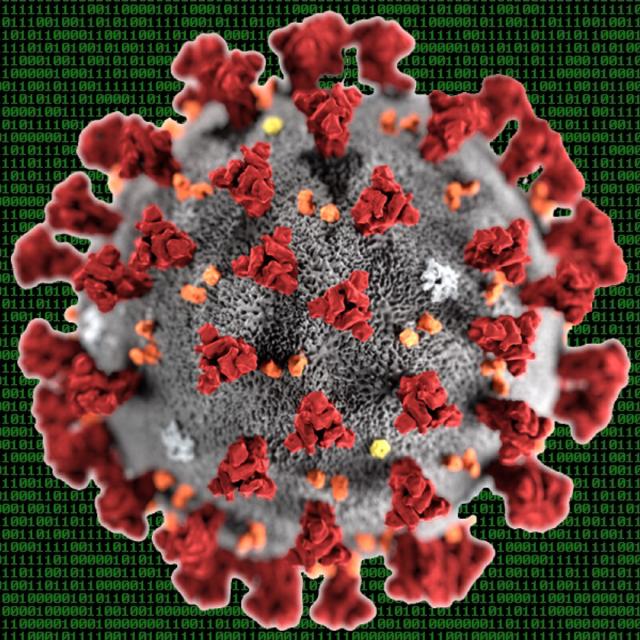
This course covers the science and social impacts of viral infectious diseases. We will begin by covering the basics: what a virus is, the structural and functional diversity of viruses, and how viruses use our bodies and the bodies of other organisms to replicate. Then we will dive into the human response: how our immune systems work to protect us from pathogenic viruses and how we use science and social systems to fend off viruses through vaccines and public health measures.

Class Deals by MOOC List - Click here and see Coursera's Active Discounts, Deals, and Promo Codes.

We will look closely at the COVID-19 pandemic, examining the emergence of the SARS-CoV-2 virus, the development of the vaccines, and how social and economic disparities influenced risk during the pandemic. Throughout the course, we will hear from experts in the fields of molecular biology, epidemiology, environmental biology, medicine, and public health to learn how technology and engineering solutions are helping scientists understand, track, and model viruses and disease outbreaks.

Syllabus

WEEK 1
What is a Virus?
Course author Dr. Rob DeSalle starts by posing a few seminal questions: What is a virus? Are viruses alive? What even is life? While there are no simple answers and much is still unknown, scientists have developed frameworks to understand how viruses fit into the complexity of life on Earth. In the first essay of the course, we cover virus basics: the difference between viruses and microorganisms such as bacteria; viral geometry and structural diversity; and viral life cycles and replication. Next, virologist Dr. Koenraad Van Doorslaer explains how viruses are classified and why this classification is important. When COVID-19 became a pandemic, understanding how viruses are related to one another enabled scientists to quickly identify SARS CoV-2 and its variants. This week’s video explores the connections among humans, viruses, other organisms, and the ecosystems we all inhabit.

WEEK 2
How Do Viruses Make Us Sick?
The key to understanding what a virus is lies in understanding how it replicates itself within its host. Dr. DeSalle explains the three categories of viruses—DNA viruses, RNA viruses, and reverse-transcribing viruses—and their replication cycles. While they employ different strategies, they all produce mRNA, which is translated into proteins that all viruses need to function. Next, Dr. Michael Tessler explains how scientists use genomics and bioinformatics to identify viruses that become pathogenic. Finally, we take a closer look at two viral diseases: HIV and HPV. In one case (HIV), scientists have been working toward a vaccine for more than 40 years and a vaccine is beyond their grasp. In the other case (HPV), a vaccine has successfully prevented cancers for over a decade. In the first of the four-part video series about the making of a COVID-19 vaccine, we set the stage by asking: How do you prepare for a pandemic of a virus that doesn’t yet exist?

WEEK 3
How Do We Fight Viruses?
As we have learned, viruses that cause disease are formidable foes, but our bodies have ways of fighting back. We have an innate immune system that works to stop all invading microbes, and an adaptive immune system that learns how to fight particular ones. We explain some of the mechanisms of this very complex system and the medicines that we use to aid our natural defenses. Dr. Tessler breaks down the different methods that scientists use to identify viruses that have broken through our defenses and made us sick. In the week’s final essay, we meet Dr. Julie Ledgerwood, who oversaw the clinical trials that led to a revolutionary mRNA vaccine for COVID-19. Two videos cover vaccines: how they work and how they were developed and tested.

WEEK 4
How Do Viruses Spread Through Populations?
While diseases have shaped the course of humanity for millennia, we are witnessing the emergence of novel pathogens and pandemics at an unprecedented rate. COVID-19 is at least the seventh pandemic to affect humans in the past century. Why is this? How do pathogens that start off in nonhuman animal species spread to humans? This week we are introduced to Dr. Pallavi Kache and Dr. Neil Vora and the field of disease ecology, which seeks to understand the interactions between pathogens and their hosts in the context of their evolution and environment. They explain how pathogens emerge from nonhuman hosts into human populations and how our increasingly urban environments affect the spread of disease. Then, Dr. Jeffrey Shaman explains how, once a pathogen has infected humans, it then spreads from human to human, and how we measure the dynamics of disease spread. A series of videos explores pandemics from history to the present, and we discuss how we know that the COVID-19 vaccines are safe and effective.

WEEK 5
What Is the Impact of Viral Spread on Populations and How Do We Know?
Computer modeling has been an important tool during the COVID-19 pandemic. Dr. DeSalle explains the process by which epidemiologists use models to monitor the spread of the pandemic, to evaluate efforts to control it, and to guide policymakers as they make decisions about measures like vaccination, closing schools, and allocating healthcare resources. In this week’s case study of Dr. Jude Kong, we learn how modeling helped one community make informed decisions about public health policy during the COVID-19 pandemic and saved lives. Finally, we look at how diseases and pandemics affect different communities differently, and how public health experts are working to address health inequities. In the final part of the video series about the making of a COVID-19 vaccine, we ask how we can use our new knowledge about mRNA technology and health inequities to ensure better outcomes for the future.

WEEK 6
How Do We Manage Future Viral Outbreaks?
We start this week by zooming in on New York City, which was one of the epicenters of the COVID-19 pandemic in early 2020. Officials at the New York City Department of Heath describe what it was like to manage the pandemic on the ground and explain lessons they learned. Then we zoom out to look at the past, present, and future of emerging infectious diseases. Humans have lived with infectious diseases for millenia, but why are there an increasing number of spillover events, in which viruses jump from nonhuman animals to us? What do we know now that could protect us from future outbreaks? In the final essay of the course, Dr. DeSalle answers the question: How can we prepare for future pandemics locally and as a global community, through testing, vaccines, surveillance, and treatment?

Go to Class
MOOC List is learner-supported. When you buy through links on our site, we may earn an affiliate commission.

Related Courses

Developing the SIR Model (Coursera) Coursera
Imperial College London

Developing the SIR Model (Coursera)

Compartmental modelling is a cornerstone of mathematical modelling of infectious diseases and this course will introduce some of the basic concepts in building compartmental models, including how to interpret and represent rates, durations and proportions. You'll learn to place the mathematics to one side and concentrate on gaining intuition into the behaviour of a simple epidemic, and be introduced to further basic concepts of infectious disease epidemiology, such as the basic reproduction number (R0) and its implications for infectious disease dynamics.

Jun 1st 2026
4 Weeks
AI in Healthcare Capstone (Coursera) Coursera
Stanford University

AI in Healthcare Capstone (Coursera)

This capstone project takes you on a guided tour exploring all the concepts we have covered in the different classes up till now. We have organized this experience around the journey of a patient who develops some respiratory symptoms and given the concerns around COVID19 seeks care with a primary care provider. We will follow the patient's journey from the lens of the data that are created at each encounter, which will bring us to a unique de-identified dataset created specially for this specialization. The data set spans EHR as well as image data and using this dataset, we will build models that enable risk-stratification decisions for our patient.

Jun 8th 2026
5-12 Weeks
Surveillance Systems: The Building Blocks (Coursera) Coursera
Johns Hopkins University

Surveillance Systems: The Building Blocks (Coursera)

Epidemiology is often described as the cornerstone science and public health and public health surveillance is a cornerstone of epidemiology. This course will help you build your technical awareness and skills for working with a variety of surveillance systems. Along the way, we'll focus on system objectives, data reporting, the core surveillance attributes, and performance assessment.

Jun 8th 2026
4 Weeks
Essential Epidemiologic Tools for Public Health Practice (Coursera) Coursera
Johns Hopkins University

Essential Epidemiologic Tools for Public Health Practice (Coursera)

In order to make a difference in the health and well-being of a population, we must understand the burden of all problems and conditions that affect the population, as well as how well our efforts to mitigate these problems are actually working. This course provides you with some essential skills and tools that will enhance your ability to describe and understand the health of your community

Jun 8th 2026
4 Weeks
Fundamentals of Immunology: Dueling with the Dark Side (Coursera) Coursera
Rice University

Fundamentals of Immunology: Dueling with the Dark Side (Coursera)

Fundamentals of Immunology, Course 4: Dueling with the Dark Side, covers the constant battle between your immune system and threats to your health. The first two lectures discuss viral and cellular pathogens, focusing on specific tactics they use to deflect immune attack. Next, a cheerier lecture describes other immune-based therapies, beginning with the use of engineered antibodies to treat specific diseases.

Jun 8th 2026
5-12 Weeks
Foundations of Public Health Practice: Health Protection (Coursera) Coursera
Imperial College London

Foundations of Public Health Practice: Health Protection (Coursera)

The Health Protection course is the fourth instalment of the wider Foundations of Public Health Practice specialisation from Imperial College London's Global Master of Public Health (MPH). The scope and content of this course has been developed from the ground up by a combined team of academics and practitioners drawing on decades of real-world public health experience as well as deep academic knowledge. Through short video lectures, practitioner interviews and a wide range of interactive activities, learners will be immersed in the world of public health practice.

Jun 1st 2026
3 Weeks
Measuring Disease in Epidemiology (Coursera) Coursera
Imperial College London

Measuring Disease in Epidemiology (Coursera)

Epidemiological research is ubiquitous. Even if you don’t realise it, you come across epidemiological studies and the impact of their findings every single day. You have probably heard that obesity is increasing in high income countries or that malaria is killing millions of people in low income countries. It is common knowledge that smoking causes cancer and that physical activity is protective against heart disease. These facts may seem obvious today, but it took decades of epidemiological research to produce the necessary evidence. In this course, you will learn the fundamental tools of epidemiology which are essential to conduct such studies, starting with the measures used to describe the frequency of a disease or health-related condition.

Jun 8th 2026
4 Weeks
The Influence of Social Context on Health (Coursera) Coursera
University of Michigan

The Influence of Social Context on Health (Coursera)

Why are some groups healthier than others, and how do these differences emerge and persist over the life course? How do social policies (e.g., housing, transportation, employment) relate to health and health inequalities? Why are there health disparities even in countries that have free universal health care? This course will address conceptual models for understanding health disparities in the US and internationally, how population science identifies the main sources of these disparities, and how public health can inform policy efforts to address these disparities.

Jun 8th 2026
4 Weeks
Transmitting and Fighting Infectious Diseases (Coursera) Coursera
University of Leeds

Transmitting and Fighting Infectious Diseases (Coursera)

Understanding how pathogens cause infections and how infectious diseases are transmitted is crucial for preventing and controlling the spread of illnesses. In this course, you will learn how diseases like the common flu spread, the mechanisms behind bacterial resistance, the body's defence mechanisms, and the importance of immunization.

Jun 8th 2026
2 Weeks
Ebola: Essential knowledge for health professionals (Coursera) Coursera
University of Amsterdam,Universiteit Utrecht

Ebola: Essential knowledge for health professionals (Coursera)

March 2014 marked the starting point of the largest outbreak of Ebola virus disease in history. Although the disease seems to be on a decrease, we are not there yet and new outbreaks will surely emerge. New efforts to combat the outbreak are necessary. This is why we developed this online course about Ebola, targeted at health professionals across the world. In this course you will cover the fundamental knowledge any health professional should have with expected or confirmed cases or a general interest in the Ebola disease.

Jun 1st 2026
5-12 Weeks
Global Disease Masterclass: Communicable Diseases Epidemiology, Intervention and Prevention (Coursera) Coursera
Imperial College London

Global Disease Masterclass: Communicable Diseases Epidemiology, Intervention and Prevention (Coursera)

This course is all about infectious diseases. We’ve selected four disease areas — HIV, Malaria, Emerging Infectious Diseases (Ebola and Zika), and TB — and we will go through each in turn. We’ve selected these diseases because they span a range of different types of disease and allow us to look at important issues that relevance of other diseases too. We will look at each disease in the same way: we begin by looking at the aetiology and epidemiology of the diseases.

Jun 8th 2026
4 Weeks