Ebola: Essential knowledge for health professionals (Coursera)

Ebola: Essential knowledge for health professionals (Coursera)

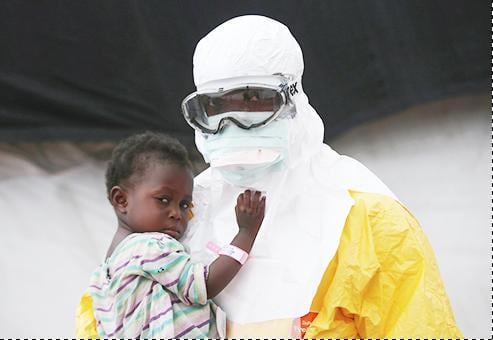
March 2014 marked the starting point of the largest outbreak of Ebola virus disease in history. Although the disease seems to be on a decrease, we are not there yet and new outbreaks will surely emerge. New efforts to combat the outbreak are necessary. This is why we developed this online course about Ebola, targeted at health professionals across the world. In this course you will cover the fundamental knowledge any health professional should have with expected or confirmed cases or a general interest in the Ebola disease.

Class Deals by MOOC List - Click here and see Coursera's Active Discounts, Deals, and Promo Codes.

You will discuss the epidemiology of the disease, its pathophysiology and transmission, the clinical presentation including differential diagnosis and confirmation of disease. You will also discuss the general therapeutic approach to the care of Ebola suspected or confirmed patients and discuss the novel vaccine and drug developments.
As the Ebola crisis continues to rage through the affected areas, we need health professionals like yourself to be informed and involved. We look very much forward to welcoming you to the course coming March.
This course is developed in collaboration with colleagues at the University of Amsterdam, the University Medical Center Utrecht (Julius Center/Julius Global Health), Elevate Health, Médecins Sans Frontières and the Lion Heart Foundation.

Syllabus

WEEK 1
About the course
Here you will find general information about the course. The learning objectives, the structure, the format and the requirements of completion will be presented to you. The course credits and a short survey are part of this first learning unit as well.

WEEK 2
Epidemiology
This learning unit describes the epidemiology of Ebola virus disease, past outbreaks and the current West African Ebola outbreak.

WEEK 3
Transmission and natural reservoirs
This learning unit describes the probable transmission routes and reservoir(s) of Ebola viruses, which can cause a wide array of symptoms and are often fatal.

WEEK 4
Pathophysiology
This unit will focus on what happens when the virus enters and spreads throughout the body.

WEEK 5
Clinical presentation, differential diagnosis, diagnosis
In this learning unit, the focus lies on the clinical symptoms you may encounter when examining patients suspected of ebola virus disease (EVD). The modes of infection of Ebola, incubation time, symptoms, lab findings, differential diagnosis, clinical characteristics of the current epidemic, and complications and outcomes will be discussed.

WEEK 6
Therapeutic approaches
The primary objective of this learning unit is to provide you with sufficient knowledge on how to fight the Ebola epidemic from a clinical perspective: how is Ebola virus disease (EVD) treated and how can transmission of the virus be prevented? In addition, this unit gives an overview of the experimental therapeutic options and vaccines.

WEEK 7
Ebola in the field: The Médecins Sans Frontières experience
In this learning unit you will explore the reality in the field of the care for Ebola patients through the experiences of Médecins Sans Frontières (MSF). Since the start of the Ebola outbreak in West-Africa, MSF has provided care to Ebola patients in Ebola Management Centers (EMCs) across the affected countries Guinea, Liberia, Sierra Leone and the interventions in DRC (Democratic Republic of the Congo), Mali, Senegal and Nigeria.

WEEK 8
Ebola in the field: confronted with Ebola in an existing hospital of the Lion Heart Foundation in Sierra Leone
In this learning unit an example will be given of what consequences the Ebola outbreak has had in the practice. We present you the tough reality in a NGO hospital in Sierra Leone, hear from its staff and experience their work. While reading you can watch corresponding videos.

WEEK 9
Final assignment and survey

Go to Class
MOOC List is learner-supported. When you buy through links on our site, we may earn an affiliate commission.

Related Courses

International Women's Health and Human Rights (Coursera) Coursera
Stanford University

International Women's Health and Human Rights (Coursera)

This course focuses on women’s health and human rights issues from infancy through old age, including information about positive interventions relating to those issues. Learners are encouraged to interact with each other through interactive discussions. It is important to us that this course be available to all learners. We encourage you to apply for Coursera's financial aid (see link to left) if the cost of the course certificate is difficult for you to afford. Please note that you may view all materials in this course, and participate in it, without purchasing a certificate.

Jun 29th 2026
5-12 Weeks
In the footsteps of Zika… approaching the unknown (Coursera) Coursera
University of Geneva

In the footsteps of Zika… approaching the unknown (Coursera)

Welcome to this on-demand MOOC “In the footsteps of Zika… approaching the unknown”. This MOOC has been produced by Université de Genève Institut Pasteur, Université Paris Descartes and Centre Virchow-Villermé. With the help of the intervention of faculty members and international experts, we will explore together the recent Zika phenomenon, a previously rare benign virus that recently turned unexpectedly into the limelight when on the 1st of February 2016 it was declared by the WHO as a Public Health Emergency of International Concern.

Jun 29th 2026
5-12 Weeks
Clinical Epidemiology (Coursera) Coursera
Universiteit Utrecht

Clinical Epidemiology (Coursera)

Evidence forms the basis of modern medicine. Clinical research provides us with this evidence, guiding health professionals towards solutions to problems that they face in daily practice. Transferring existing problems in medical practice to a research setting is a challenging process that requires careful consideration. The practice of clinical epidemiology aims to address this through the application of established approaches for research in human populations, while at all times focussing on the problem at hand from a clinical perspective.

Jun 30th 2026
5-12 Weeks
Science of Exercise (Coursera) Coursera
University of Colorado Boulder

Science of Exercise (Coursera)

Learners who complete Science of Exercise will have an improved physiological understanding of how your body responds to exercise, and will be able to identify behaviors, choices, and environments that impact your health and training. You will explore a number of significant adjustments required by your body in order to properly respond to the physical stress of exercise, including changes in carbohydrate, fat and protein metabolism, nutritional considerations, causes of muscle soreness & fatigue, and the effectiveness and dangers of performance enhancing drugs.

Jun 29th 2026
4 Weeks
MRI Fundamentals (Coursera) Coursera
Korea Advanced Institute of Science and Technology - KAIST

MRI Fundamentals (Coursera)

Welcome! In this course learners will develop expertise in basic magnetic resonance imaging (MRI) physics and principles and gain knowledge of many different data acquisition strategies in MRI. In particular, learners will get to know what is magnetic resonance phenomenon, how magnetic resonance signals are generated, how an image can be formulated using MRI, how soft tissue contrast can change with imaging parameters.

Jun 29th 2026
5-12 Weeks
Global Health at the Human-Animal-Ecosystem Interface (Coursera) Coursera
University of Geneva

Global Health at the Human-Animal-Ecosystem Interface (Coursera)

The University of Geneva, Institute Pasteur, University of Montreal and Centre Virchow-Villermé/University Paris Descartes welcome you to this new MOOC on "Global Health at the Human-Animal-Ecosystem Interface"! Over the next 5 weeks, you will explore and learn about some of the major and current Global Health Challenges at the Human-Animal-Ecosystem Interface: zoonotic emerging infections (e.g. Ebola, Nipah, MERS, Avian Influenza), antimicrobial resistance, neglected tropical diseases (e.g. rabies, leishmaniasis, zoonotic TB), snakebite and other human-animal conflicts etc.

Jun 29th 2026
5-12 Weeks
The Truth About Cats and Dogs (Coursera) Coursera
University of Edinburgh

The Truth About Cats and Dogs (Coursera)

What is your cat revealing to you when she purrs? What is your dog expressing when he yawns or wags his tail? Understanding your cat and dog’s behaviour and the way they communicate with you, will enable you to better understand their needs and strengthen your relationship with them. This MOOC is divided into five topics, the appliance of science; behaviour and body language, senses and perception; challenges for the human-animal relationship, including pet problem behaviour; and how to improve the quality of life for cats and dogs in our care.

Jun 29th 2026
5-12 Weeks
The People, Power, and Pride of Public Health (Coursera) Coursera
Johns Hopkins University

The People, Power, and Pride of Public Health (Coursera)

The People, Power, and Pride of Public Health provides an engaging overview of the incredible accomplishments and promise of the public health field. The first module includes interviews with legendary public health figures whose work led to millions of lives saved with vaccines, air bags and car seats, and the federal Women Infants and Children (WIC) nutrition program.

Jun 29th 2026
3 Weeks