Immunology: Innate Immune System (Coursera)

Immunology: Innate Immune System (Coursera)

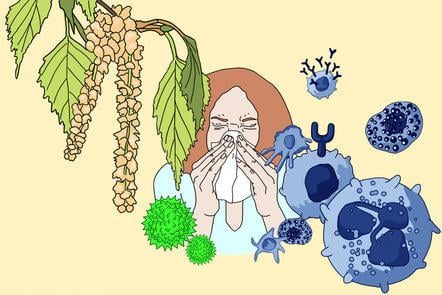
Our immune system relies on an innate and an adaptive arm that communicate and collaborate to provide us with an optimal response against pathogens. This course focuses on our innate immunity which provides us our first, fast and inherited defence against infections. In this course, you will take a closer look at the mechanisms and cellular components involved in this swift response that occurs within minutes of exposure to a threat.

Class Deals by MOOC List - Click here and see Coursera's Active Discounts, Deals, and Promo Codes.

Throughout the course, and guided by our active researchers, you will have opportunities to recognise its key protective mechanisms and to explain their importance for our overall health. You will learn about the mechanisms it uses to inform our adaptive immune system of the presence of a threat, and understand how some environmental factors, such as our own internal microbiome, influences it. Finally, you will have opportunities to reflect on current related issues and controversies in this fascinating field of research.
Course 1 of 5 in the Immunology: The Immune System and its Failures Specialization.

What You Will Learn

  • You will identify key innate immunity cells, molecules, and direct defence mechanisms.
  • You will also learn how our microbiota, the overall micro-organisms found in our body, influences our innate immune response.
  • Finally, you will understand how our innate immune cells inform our adaptive system of the presence of a threat.

Syllabus

WEEK 1
Components of the innate immune system
In module one, we will explore the main component of the innate immune system. We will start by looking at the surfaces that are first exposed to potential pathogens and how they prevent most pathogens from entering our body. We will then learn about our main innate protective mechanisms and discuss how this inherited system is able to recognise and combat infection. By the end of this module, learners will be able to describe these actors and mechanisms in detail.

WEEK 2
The complement system
In module two, we will explore a key soluble component of our innate immune system: the complement. We will learn about its main components, how it gets activated by pathogens and how the outcome leads to pathogens destruction. We will also explore how the complement system contributes to other innate immune activities, such as phagocytosis, that is the uptake of microorganisms by immune cell for destruction.

WEEK 3
Programming of innate immunity by the microbiota
In module three, we will investigate how our microbiota plays a protective role in our health. We will first define the human microbiome in more details and explore its influence on various common pathologies such as asthma, diabetes or cancer. The module ends on an opportunity for learners to reflect and share with others on the effects of pro-biotics on our health.

WEEK 4
Antigen processing - MHC Class I and Class II
In module four, we will understand how the innate system communicates with the adaptive immune cells. We will explore which cells oversee this essential function and how they capture, digest and present pathogenic molecules to the adaptive immune cells to for their activation. Importantly, we will also investigate how the innate immune response helps this second phase of response to ‘adapt’ to the nature of the infection.

WEEK 5
Natural killer cells
In module five, we will look at one example of innate cells, called Natural Killers, that are directly able to destroy infected and tumour cells. We will explore how they interact with other immune cells, how they recognise their target cells and the mechanisms they use to lead to their death. Importantly, we will also discover the mechanisms that prevent their mis-activation to prevent the disastrous destruction of health host cells.
Go to Class
MOOC List is learner-supported. When you buy through links on our site, we may earn an affiliate commission.

Related Courses

International Law in Action: the Arbitration of International Disputes (Coursera) Coursera
Leiden University

International Law in Action: the Arbitration of International Disputes (Coursera)

‘The Arbitration of International Disputes’ is the third course of Leiden University’s series on International Law in Action. The first course covered generalities on the international courts and tribunals in The Hague, while the second course provided an insider's perspective into the work of international criminal courts and tribunals. This third course explores the major aspects of international arbitration as one of the most common method of international dispute settlement .

Apr 6th 2026
4 Weeks
Transmitting and Fighting Infectious Diseases (Coursera) Coursera
University of Leeds

Transmitting and Fighting Infectious Diseases (Coursera)

Understanding how pathogens cause infections and how infectious diseases are transmitted is crucial for preventing and controlling the spread of illnesses. In this course, you will learn how diseases like the common flu spread, the mechanisms behind bacterial resistance, the body's defence mechanisms, and the importance of immunization.

Jun 8th 2026
2 Weeks
Making a Cell Therapy: Principles and Practice of Manufacturing (edX) EdX
MIT,MITx

Making a Cell Therapy: Principles and Practice of Manufacturing (edX)

Cell therapies, such as CAR-T and stem cell therapies, are an exciting new class of therapeutics with the potential to revolutionize medicine. Learn the biology, engineering, and analytical chemistry behind how these amazing new products are manufactured. The success of CAR-T cell therapies, driven by their unprecedented efficacy and recent regulatory approvals, has kick-started a new wave of interest into cells as therapies.

Self Paced
Self-Paced
So You Want to Study Life Science? (FutureLearn) FutureLearn
University of Glasgow

So You Want to Study Life Science? (FutureLearn)

Explore the exciting subjects within life sciences and the rewarding careers that studying life sciences at university lead to. This short, free online course will introduce you to studying life sciences at university level.We’ll take you on a whistle stop tour of the exciting world of life sciences, exploring the vast array of subjects within the discipline – from anatomy to zoology and everything in between, including immunology, cellular and molecular biology, genetics, physiology and parasitology.

No sessions available
2 Weeks
Liver Transplant: the Ins and Outs (FutureLearn) FutureLearn
University of Birmingham

Liver Transplant: the Ins and Outs (FutureLearn)

Learn about the science behind having a liver transplant with this free online course from the Centre for Liver Research. In this free, three-week course, we will teach you about the fascinating field of liver transplantation. We will cover the history of liver transplantation - from early experiments in the late 1960s to exciting new technological advances in organ preservation happening today.

Available now
3 Weeks
Innate Immunity (FUN) FUN
Institut Pasteur

Innate Immunity (FUN)

More than a century ago, Elie Metchnikoff established the bases of cellular innate immunity when he discovered the mechanism of phagocytosis. However, during most of the XXth century, adaptive immunity (also known as specific immunity) focused most of the interest of the researchers, until Charles Janeway and Polly Matzinger revisited the definition of immunology. What was called “non-specific immunity” was renamed “innate immunity”, and the understanding of the sensing of the exogenous or endogenous dangers signals, and their identification revolutionized our understanding of the early mechanism aimed to defend the integrity of the host against any type of attacks including pathogens.

Jan 14th 2022
5-12 Weeks
HIV Science (FUN) FUN
Institut Pasteur

HIV Science (FUN)

Since the start of the epidemic HIV has infected over 75 million people and provoked more than 35 million deaths. Today, although HIV replication can be controlled by antiretroviral treatment, HIV infection remains an outstanding global health issue, with 36.7 million infected people and 1 million HIV-related deaths in 2016, according to WHO. Half of the infected population does not have access to antiretroviral treatment and 2 million new infections are registered every year. In addition there is currently no cure for HIV and antiretroviral treatment needs to be maintained for life. In this MOOC we will review different aspects of HIV infection: from its biological origin and its identification as the causative agent of AIDS to the perspectives of eradication.

No sessions available
5-12 Weeks
Fundamentals of Immunology: Innate Immunity and B-Cell Function (Coursera) Coursera
Rice University

Fundamentals of Immunology: Innate Immunity and B-Cell Function (Coursera)

Course 1 of a three course specialization called Fundamentals of Immunology. Each course in the specialization presents material that builds on the previous course's material. This is the first leg of a three-part journey through the defenses your body uses to keep you healthy. In this part we hope to give you the vocabulary and concepts you need to interact with the medical community and to provide them in a context that makes them memorable.

Jun 1st 2026
5-12 Weeks
Immunology: Adaptive Immune System (Coursera) Coursera
Imperial College London

Immunology: Adaptive Immune System (Coursera)

In this course, you will learn about the role of immune responses of the adaptive (acquired) immune system which provides specialised immunity against pathogens. Guided by our researchers in the Department of Immunity and Inflammation, we will take a closer look at the lymphocyte subsets and mechanisms involved in this delayed finely tuned response occurring days to weeks after the initial exposure to microbial antigens.

Jun 1st 2026
5-12 Weeks
Immunology: Autoimmunity, Allergy, and Transplants (Coursera) Coursera
Imperial College London

Immunology: Autoimmunity, Allergy, and Transplants (Coursera)

In this course, you will explore the mechanisms and immune responses involved in autoimmune diseases and in hyper-responsive phenomena, such as asthma. You will examine in detail the potential causes and factors behind an overactive immune system and the disorders that might ensue if the response is not adequately controlled. you will also analyse the effects of overactive immune response in transplant rejection.

Jun 1st 2026
5-12 Weeks